
The Australian Antarctic Division's bespoke ice core drill, designed to drill ice more than 3000 metres deep and over one million years old, has collected its first ice core.
The successful extraction of the almost one metre-long core, at 151 metres depth, is a major milestone after seven years of work to design, build, test and commission the drill.
Ultimately the drill, built as part of the Million Year Ice Core (MYIC) project, will be used to extract ice all the way to bedrock, 3000 metres below, containing trapped gases and other chemicals that provide a continuous record of past climate.
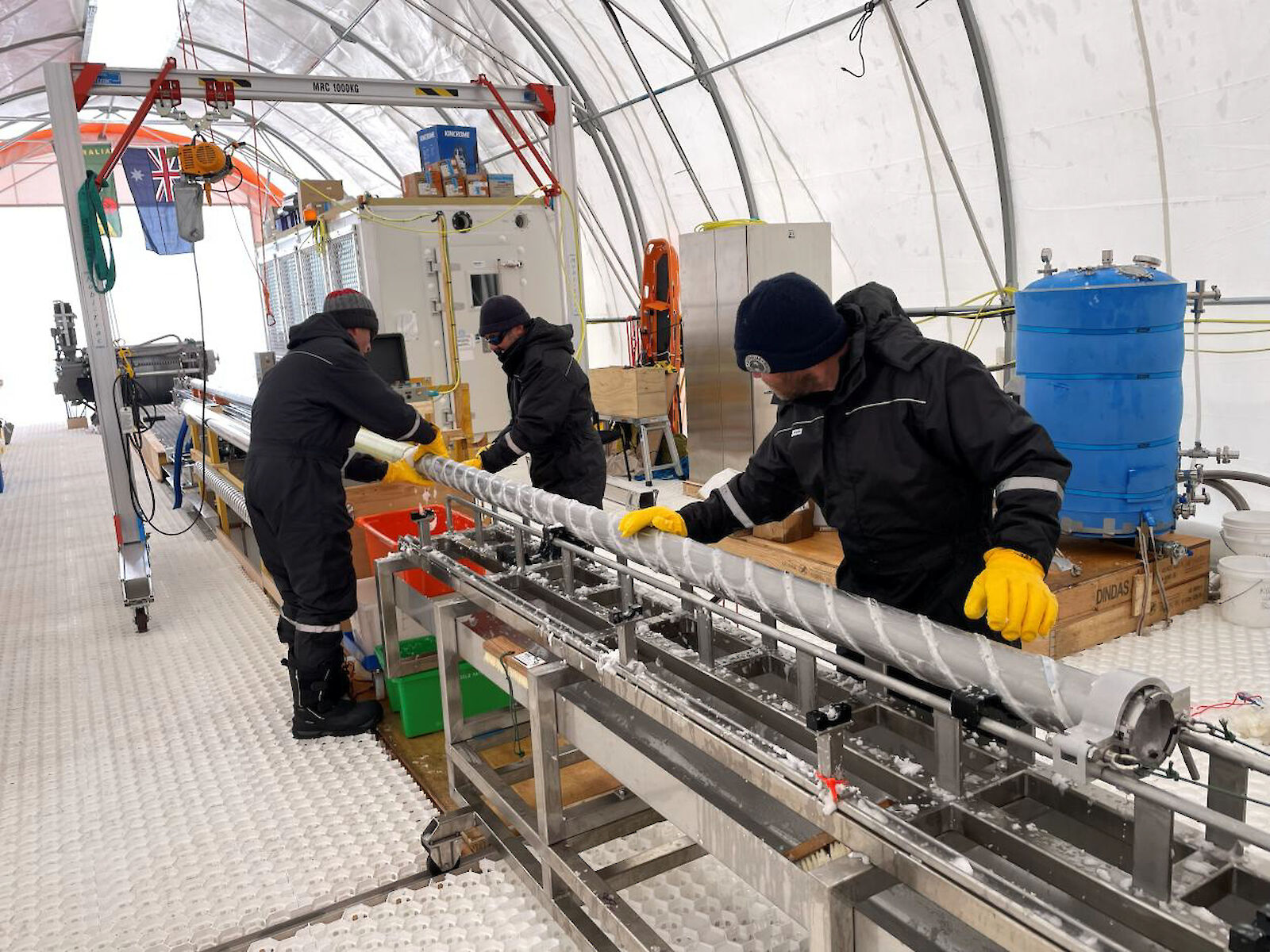
The 8.4 metre-long drill was built by Australian Antarctic Division scientists, engineers and instrument technicians by adapting drawings, based on a Danish design, for Australian Antarctic operating conditions.
These conditions include temperatures as low as -55°C and pressures up to 300 kilograms per square centimetre.
The MYIC project team has been working at the Dome C North drilling site (1200 km from Casey research station and 3239 metres above sea level) since late November 2025, alongside the supporting tractor-traverse team.
Together the teams have de-winterised and powered up the remote inland station and set up additional infrastructure and equipment to support the deep drilling.
This included the installation and commissioning of a four tonne winch that raises and lowers the deep ice core drill into the ice sheet.
The work follows a successful drilling season last year with a shallow drill that enabled the team create a 'pilot hole' for the deep drill, and extract 150 metres of ice core containing a climate history dating back 4000 years.
The team will continue work with the deep drill until late January, when temperatures become too cold to support further operations.
Drilling to the base of the ice sheet is planned over the next three Antarctic summer field seasons.
MYIC science lead, Dr Joel Pedro, said the full-length ice core is expected to extend the current ice core climate record well beyond 1.2 million years, and help solve a climate mystery involving a shift in the cycle of ice ages.
"An ice core record of over one million years can help us answer why that shift in the climate state occurred, and that will provide really important information to test models and better predict climate in the future," Dr Pedro said.


