
Key points
- For the first time, the Bega Valley community is uniting across sectors with an aim to build Australia's most circular regional economy.
- CSIRO science is guiding the transition through baselining, metrics and circular resource modelling.
- The collaborative partnership offers a data-driven model for reducing waste and inspiring national pathways to circular prosperity.
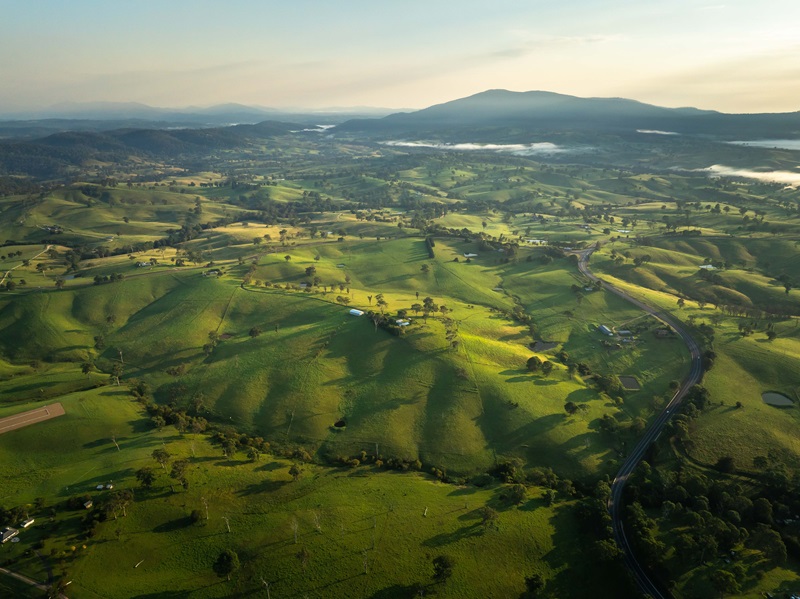
Long before the term 'circular economy' was coined, the Djiringanj and Thaua people of the Yuin Nation were practising it in the Bega Valley in south-eastern New South Wales.
For thousands of years, resources flowed through their lands in cycles of renewal – shells became tools and later burial offerings; seeds, ochre and fibre were traded across Country. Nothing was wasted. This deep tradition of reciprocity and regeneration still echoes across the valley's rivers and ridgelines.
That history framed the opening of the first Bega Circular Valley Community Workshop , held in 2025, where Aunty Glenda Dixon and Aunty Ellen Mundy welcomed participants to Country and shared stories of long-standing circular practices from the region.
The initiative is a reminder that Australia's circular transition must be shaped by place, noted CSIRO's Circular Economy Lead Dr Heinz Schandl and co-facilitator Dr Colleen MacMillan.
"In the Bega Valley, they've had circular practices for a very long time. First Nations leaders spoke compellingly about what circularity meant in the past – and how it still matters today, working together with non-Indigenous people and within the modern economy," Heinz said.
"We're learning from past experience, and we're also adapting and, together, the community is doing it in their own way."
From that foundation, the workshop unfolded. The Bega Valley Commemorative Civic Centre filled with business owners, educators, manufacturers, artists, farmers, community groups, government representatives, high school students, scientists – more than 140 community leaders re-imagining their region not as a line of production and waste, but as a living system where resources, knowledge and wellbeing can circulate continuously.
"Across key themes like entrepreneurship, land management, construction, education and tourism, discussion flowed about how circularity is currently practiced in the Bega Valley and how it could work even more for them in the future – and how science could play a part," Colleen added.
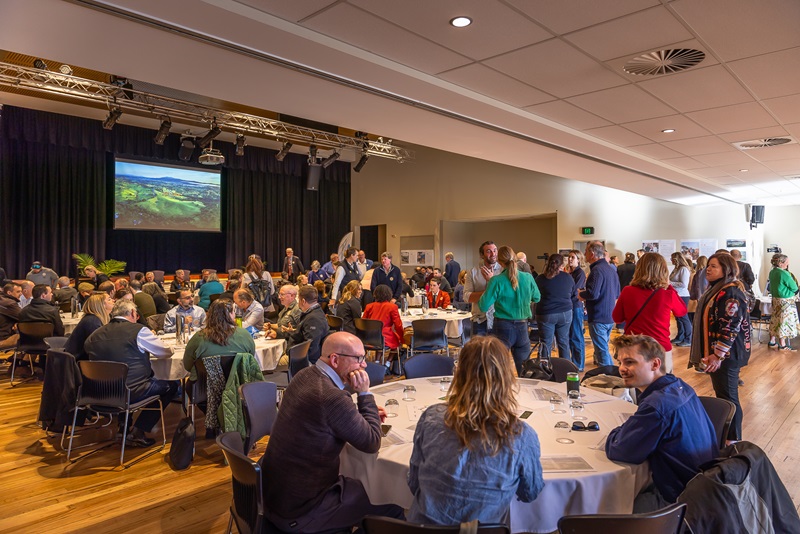
Now captured in the Bega Circular Valley Community Leaders Workshop Report , the event stands as a national testbed – showing how Australia communities could evolve from linear to regenerative economies.
Australia's most circular valley
The Bega Circular Valley story begins with Barry Irvin, Executive Chairman of Bega Group – the company behind Vegemite, Dairy Farmers and Farmers Union Greek Style yogurt. A fifth-generation dairy farmer, Irvin wants his valley to become a world leader in circularity: a place where local industries turn by-products into new resources, and where business decisions consider both environmental and social value.
A circular economy rethinks the traditional 'take–make–dispose' model. It designs out waste and pollution by keeping materials and products in use for as long as possible, while regenerating natural systems in the process.
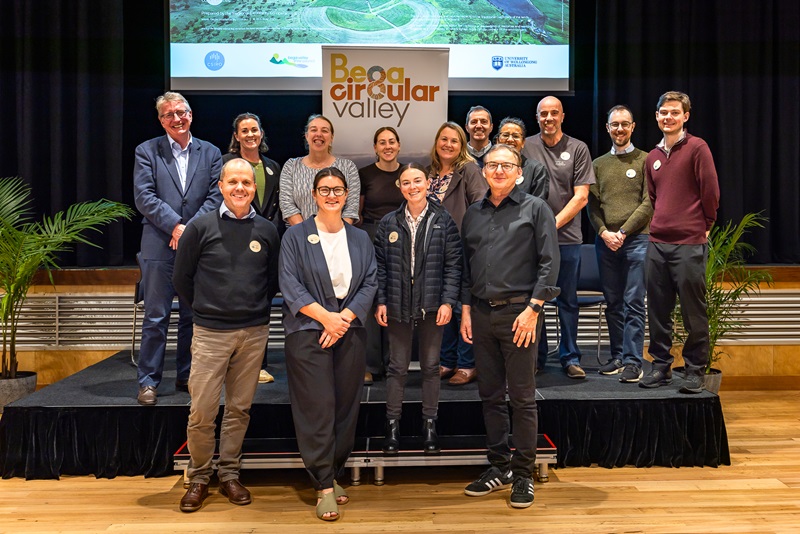
"Our goal with the Bega Circular Valley program is to create a legacy for the future generations of the region and to be an example for others to follow, as the most circular region in Australia," Barry said. "We want to demonstrate what's possible using the Bega Valley as a 'living lab' and inspire other regions in Australia and around the world to embark on their own circular journeys."
Recognising the potential of what was unfolding in Bega, CSIRO formalised a five-year partnership with the Regional Circularity Co-operative, the organisation leading the Bega Circular Valley program, starting in 2024. Together, they set four priorities:
- mapping how materials move through the valley to identify opportunities for businesses to share and reuse resources
- rethinking plastics and other materials to keep them in circulation
- supporting the region's drive toward net zero emissions; and
- embedding circular economy thinking in local education and skills programs for a vibrant future.
This partnership is designed not just to measure progress, but to build the knowledge and capacity needed to sustain it.
"This partnership is about turning ambition into action. The community brings creativity and drive, and CSIRO provides the science and tools to make progress visible and measurable," Michelle Colgrave, CSIRO Deputy Director of Agriculture and Food said.
Science at the heart of change
The Bega Circular Valley partnership is grounded in CSIRO's Mission–Oriented Research and Theory of Change: Driving Australia's Transition to a Circular Economy which outlines how circular transitions unfold – starting with local experimentation, building to national acceleration, and eventually linking into global systems.
"Circularity doesn't happen from the top down," Heinz said. "It starts where communities can test, learn and adapt. Places like the Bega Valley show what's possible when you bring science and people together under a unified vision."
At the workshop, participants explored 10 themes including entrepreneurship, land management, manufacturing, tourism, education, arts & culture and more, and identified where materials could loop back into productive use. For example, timber offcuts from forestry might become inputs for local builders, and food waste from hospitality could feed soil regeneration programs.
The discussions were practical but visionary.
"One of the biggest findings was the lack of baseline data," Heinz notes. "The community didn't yet know exactly what resources they had or how they flowed – the quantities of agricultural residues, construction waste, forestry by–products for example. Without that data, you can't close loops effectively or decide where to prioritise your efforts to drive the transition."
CSIRO's next step is to help build that evidence base. Working closely with key leaders in the community, scientists will use regional data, modelling and mapping to establish a clear picture of resource flows – the starting point for new metrics that can measure circularity progress.
"It's essentially creating a resource inventory for the future," Colleen said. "From there, we can track change over time – how much waste is avoided, how value is retained, and how emissions are reduced."
Circularity with a social dimension
While the economic and technical sides of circularity are compelling, the Bega Valley's approach also demonstrates the centring of human value.
"In regional Australia, you can't separate the environment from the community," Colleen said. "The question here is not just how to recycle better, but how to build better futures for young people."
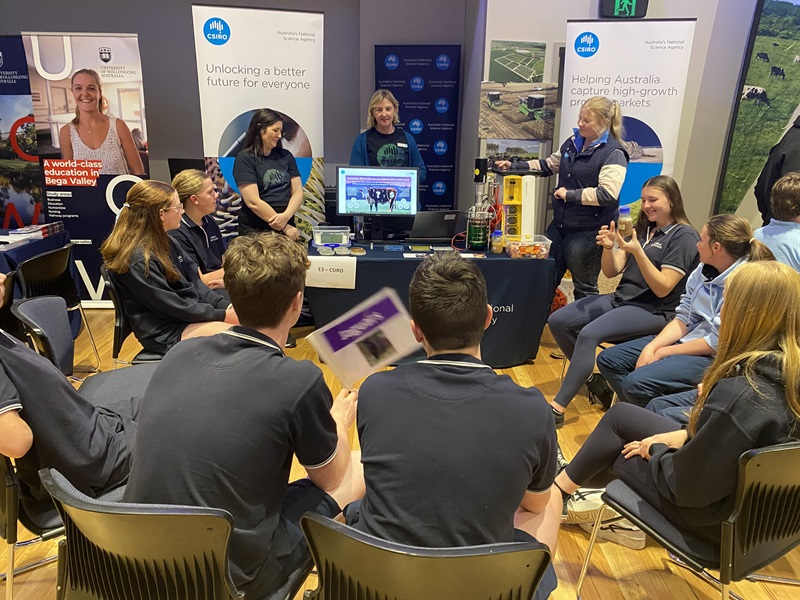
One story from the workshop stayed with her. A local enterprise, Grow the Future , works with young people in the Bega Valley who are seeking a hands-on education and employment experience that complements their mainstream education or other employment. They are mentored in growing food, restoring soil, marketing produce, managing finances and cooking what they harvest.
"When you buy a bag of regeneratively grown carrots from them, you're not just buying vegetables – you're investing in the human capital that grew them," Colleen said. "That's circularity too."
Such initiatives show how social, environmental and economic outcomes intertwine in the circular economy. The CSIRO framework calls this the 'practice' element of circularity – changing not only what we produce, but how we live and work together.
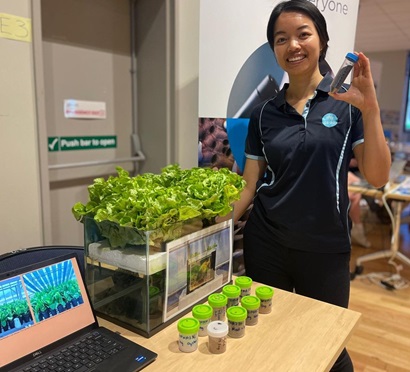
CSIRO scientists have been actively engaging in Bega Circular Futures events in 2024 and 2025 inspiring and engaging with school students about careers and science that support the circular economy, such as food manufacturing and value-adding tech, aquaculture, fermentation, and digital agronomy.
Scaling from the valley to the nation
The Bega Valley's progress offers a glimpse of how Australia's circular transition could unfold. It embodies the third phase of CSIRO's Theory of Change – mobilising local action – and is already informing the next: accelerating national efforts.
This science spans everything from baselining regional resource flows to developing metrics that track progress, and modelling new products and services created through industrial symbiosis between businesses.
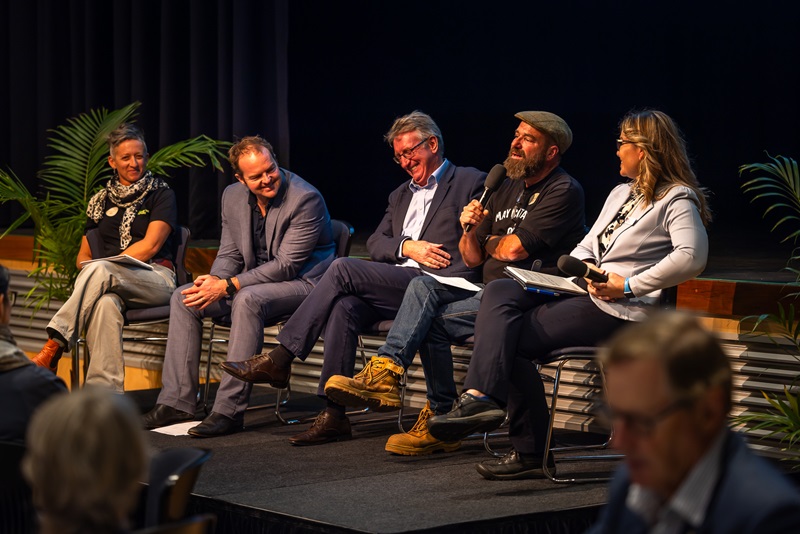
"Regions like the Bega Valley are the laboratories of transformation," Colleen said. "They show us what enables change – the data, partnerships and incentives that come together to make circularity work in real life."
CSIRO researchers are building on these lessons to develop national tools: consistent metrics for measuring circular performance, frameworks for industrial symbiosis, and education programs that embed circular thinking into regional economies. By connecting these efforts across multiple valleys and towns, Australia can scale circularity sector by sector – from food and fibre to energy, housing and waste.
Back in the Bega Circular Valley, the momentum continues. The workshop report is already shaping council plans, school programs and business collaborations – as well as helping inform the development of Australia's National Centre for Circular Discovery , an ambitious circularity 'inspiration centre' supported by funding from Bega Group and the New South Wales and Federal governments, that is due to open in Bega in mid-2027.
"Our next key partnership milestone is completing the baselining," Heinz says. "That's when we'll be able to show, with data, how circularity delivers measurable outcomes – reduced emissions, economic uplift and stronger social connections. Science gives us the ability to see the loops forming."
What began as a local gathering on the far south coast of New South Wales is now informing a national conversation about how Australia can prosper while sustaining the systems that support it.
In the Bega Valley, those loops are tightening, the data is coming into focus – and a new way of thinking about resources, relationships and regeneration is taking hold.


