The processes by which artists identifying as LGBTQ+ use textiles, ceramics and other materials to explore queer histories on personal and broader levels is the focus of a groundbreaking new book published this month.
Queer Crafts: Material Practices and the Making of Identity is the first to bring together craft studies and queer theory, opening new discussions around how contemporary practitioners use these materials as powerful vehicles for self-expression, community building, and social critique.
Encompassing leading artists from around the world, the book, written by Dr Daniel Fountain of the University of Exeter, is based upon years of research and practice in the field.
Queer Crafts has been published by Bloomsbury this week as part of its new Critical Crafts Series.
"What I set out to achieve in the pages of this book was to bring together the many disparate threads that constitute the theory and practice of queer craft," said Dr Fountain, Senior Lecturer in Art History and Visual Culture, in Exeter's Department of Languages, Cultures and Visual Studies. "While material exists across various disciplines, this is the first book that comprehensively assembles these perspectives and places craft studies and queer theory in sustained dialogue with one another.
"My goal was to open new avenues for research by demonstrating how these fields are related and how they can mutually enrich one another. But I also wanted to acknowledge their inherent tensions and 'messiness' too."
Dr Fountain took three years to write the book, and it features several practitioners with whom he has either longstanding collaborations or current projects. These include American textile artist, LJ Roberts, Australian contemporary artist, Paul Yore, and Tim Tate, the renowned US-based glass sculptor.
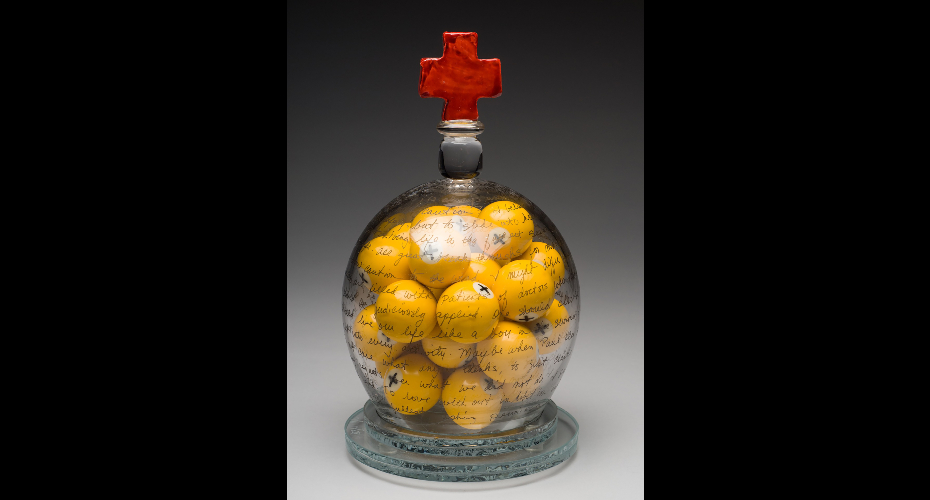
The book also draws from his archival research and interactions with organisations such as the Museum for Art in Wood, in Philadelphia, with whom he will become Scholar in Residence in June.
Each chapter of Queer Crafts is devoted to a different material, such as ceramics, in which Dutch artist Rose Schmits (perhaps best known in the UK for her role on Channel 4's The Great Pottery Throw Down) and American ceramicist Nikki Green are featured. Dr Fountain says that in their creation of "chamber pots, medicine jars, sinks, and urinals", their works are "familiar, playful, and humorous, yet underpinned by a serious narrative".
He said: "Both artists engage the inherent malleability of clay as a potent metaphor for the crafting of trans identity, emphasising how the body can be shaped, reworked, and continually remade. The longevity of fired clay means that these objects will endure as vital archives of trans experience, testifying to the resistance and resilience of trans communities across Europe, America, and beyond, today."
An expert in textiles and recognised in Apollo's '40 Under 40' list in 2024, Dr Fountain found his research into the harder materials of metal and glass to be particularly revelatory. Contrary to his expectations, he said, many of the practitioners interviewed found great fluidity in their materials, particularly in their hot states, with some drawing parallels to the fluid nature of gender itself. Among those featured are Los Angeles practice, Affect Metals, whose intricate, hand-crafted chainmail garments are designed to empower and protect the wearer.

"By centring material practices and emphasising process over finished 'objects', I hope the book resonates not only with scholars but also with practitioners and readers with a general interest in craft," adds Dr Fountain. "For members of the LGBTQ+ community, I hope that they find moments of recognition, representation, and connection within its pages too."