
Peatlands cover upwards of 12 per cent of Canada's landscape and store more carbon than all other ecosystems in the country combined, making them one of Canada's most powerful natural climate allies. Yet until now, information on these critical ecosystems has been difficult to find. To address this gap, the Can-Peat Network at the University of Waterloo launched the Canadian Peatland Data Portal in early January, the country's first national platform dedicated to centralizing peatland carbon metadata.
By offering a single, accessible entry point for discovering where a diverse catalogue of peatland data exists and how it can be used responsibly, the portal empowers researchers, governments, industry partners and Indigenous and local communities to collaborate more effectively and advance evidence‑based action to protect one of Canada's most essential climate resources.
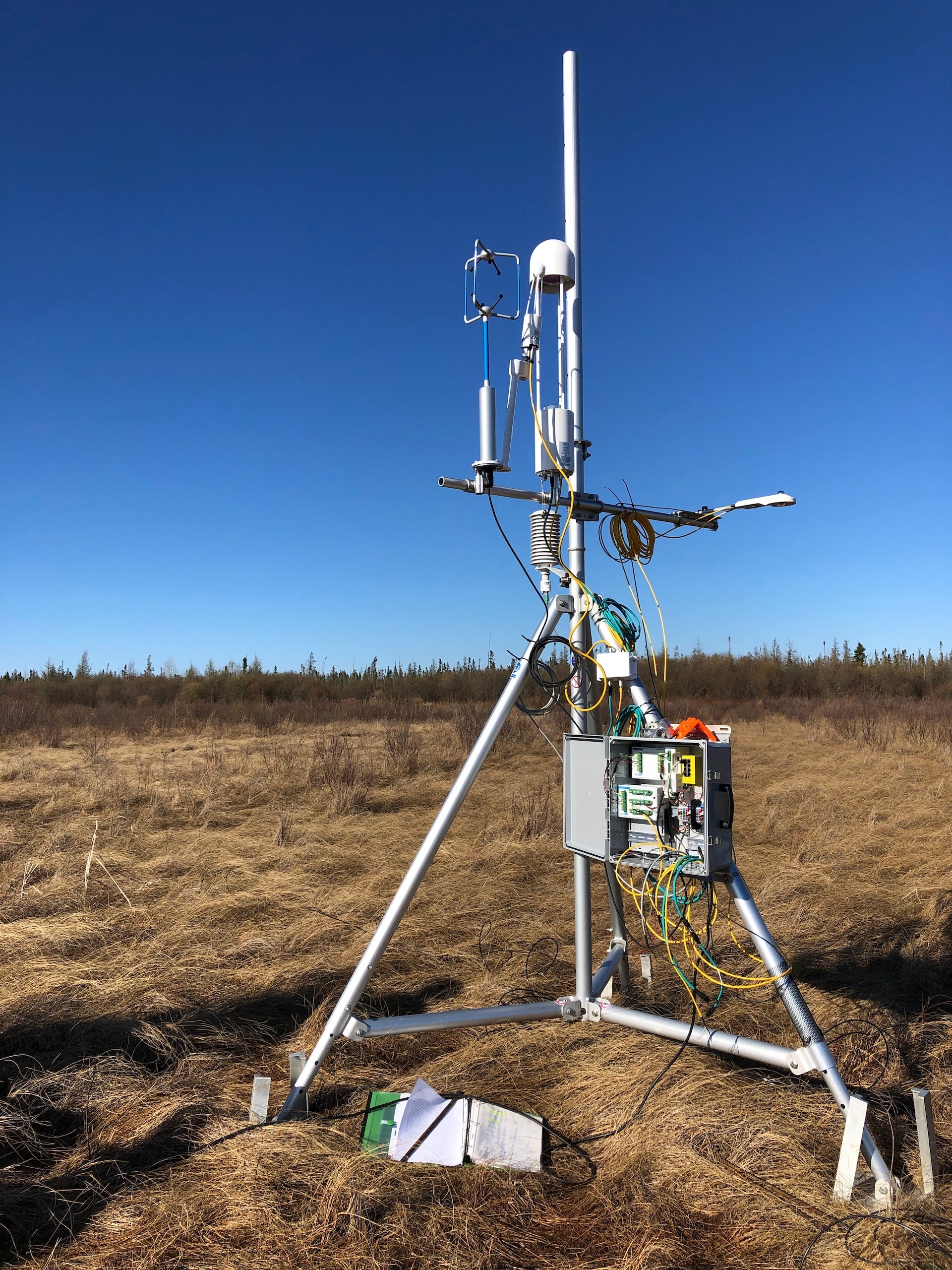
An eddy covariance tower in South Julius, Manitoba, records high frequency measurements of greenhouse gas fluxes, enabling scientists to quantify carbon exchange processes in surrounding peatland ecosystems. Image source: Maria Strack
To launch the portal, Dr. Maria Strack, principal investigator of Can‑Peat and professor and Canada Research Chair in Wetland Climate Solutions in the Faculty of Environment at Waterloo, hosted the national launch webinar with more than 80 attendees from across the country.
"This is the first time Canadians have a national window into the breadth and depth of our peatland carbon data," Strack says. "It changes what's possible for research, climate policy and collaborative stewardship."
Developed through an extensive partnership across the Can‑Peat research network, the portal provides standardized descriptions of datasets and links users to the organizations that host them. Instead of collecting or owning data, the portal serves as a national guide, helping users find existing datasets and understand the conditions for access. Strack underscores the purpose of the portal is to direct people to data, not to take ownership of it. Contributors maintain full control over licensing, permissions and sharing.
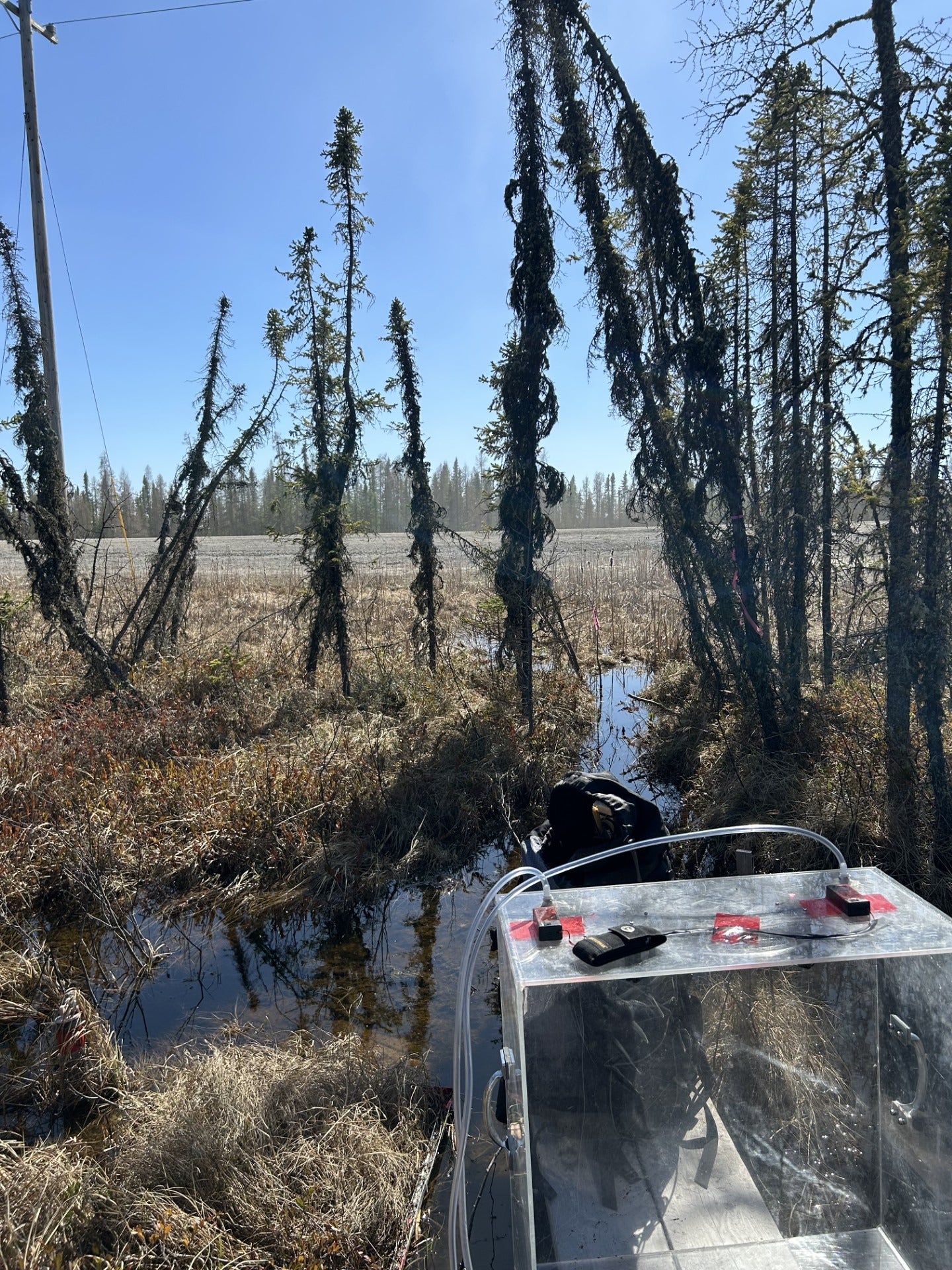
A greenhouse gas flux chamber in Aspen, Alberta, collects measurements that enable researchers to quantify carbon storage in various peatland types across Canada. Image source: Carissa Mackenzie.
Strack also notes how the portal was intentionally designed around both the FAIR (Findable, Accessible, Interoperable, Reusable) and CARE (Collective Benefit, Authority to Control, Responsibility, Ethics) principles. "Embedding CARE principles was essential," she explains. "Peatland data intersects with Indigenous territories and rights, and our design needed to respect and support Indigenous data sovereignty from the ground up."
The launch brought together research partners from across the country, highlighting how the portal will shape Canadian climate work.
Stéphanie Boudreau, vice-president of Science and Partnerships with the Canadian Sphagnum Peat Moss Association, attended the unveiling and shares the importance of the portal. "For restoration planning and sustainability reporting, knowing what data already exists is crucial," Boudreau says. "This portal will help us avoid duplication and make evidence-based decisions more efficiently."
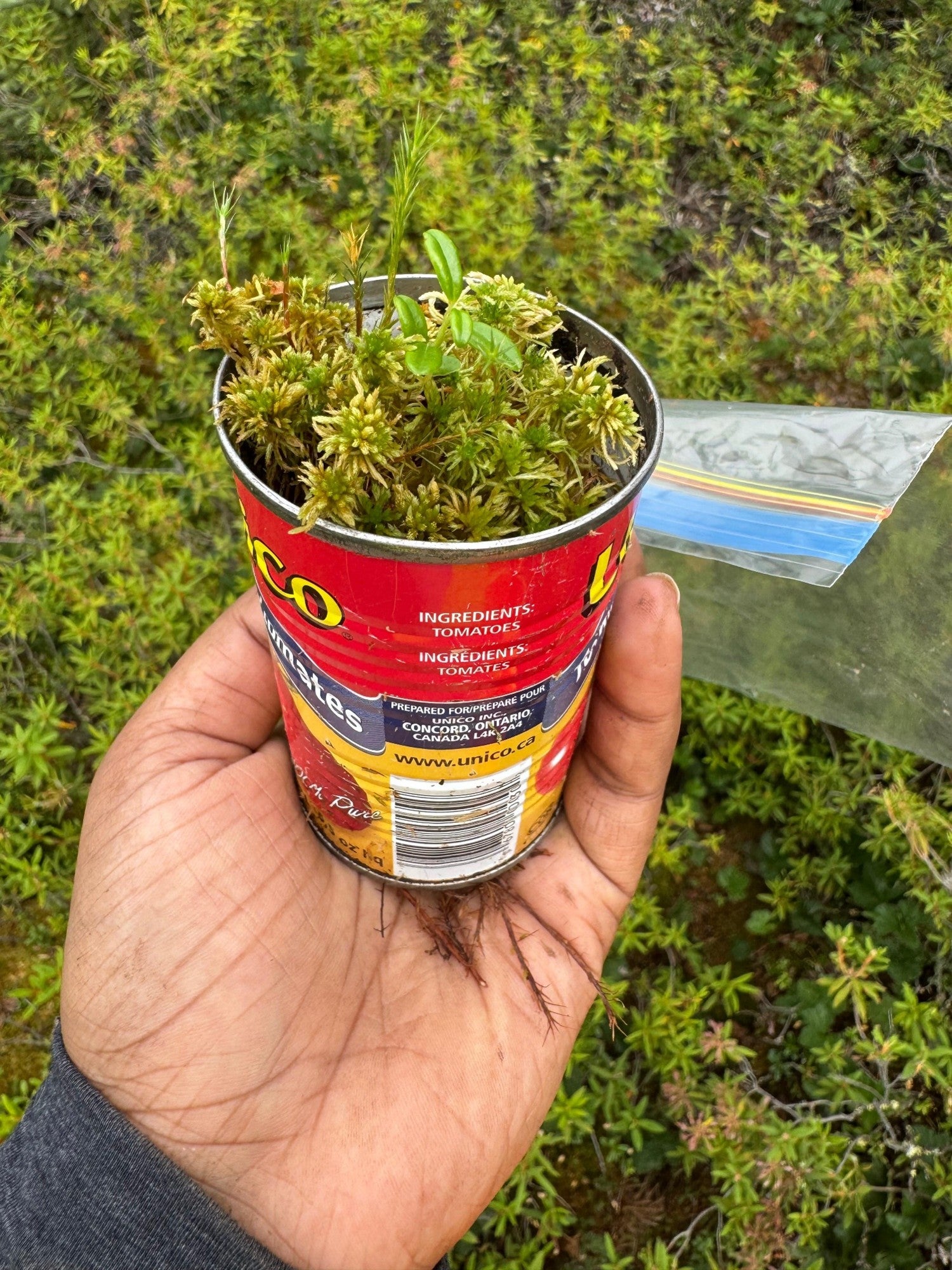
A peat core collected in a small container allows researchers to weigh plant material and assess species composition. These measurements help classify peatland types and improve Canada's peatland maps, many of which remain incomplete. Image source: Akshara Withanage
Collaborators also include Kylie McLeod, head of Boreal Conservation Programs at Ducks Unlimited Canada, and Kara Webster, research scientist with the Canadian Forest Service. Together, they highlight how the portal supports both land management and carbon modelling by giving practitioners and scientists a clear view of what data exists before they can build or refine models. The portal provides the landscape view we've been missing.
From the policy side, Kelly Bona, a research scientist at Environment and Climate Change Canada, reinforces the tool's relevance for national reporting and climate policy. "Transparent, discoverable data is essential for meaningful climate action," Bona says. "This portal moves Canada toward more robust, coordinated wetland carbon accounting."
Strack invites participants to help shape the portal's future by contributing metadata and suggesting enhancements. "This is a living resource," Strack says. "Its strength will come from community input and collaboration."
The portal is the latest initiative in the University's role as a leader in sustainability research and education, strengthening Canada's ability to protect one of its most powerful natural climate solutions by making critical carbon information easier to find and use. By improving collaboration, transparency and evidence‑based decision‑making, the portal helps communities and researchers work together to safeguard peatlands and advance Canada's climate goals.
Can-Peat: Peatlands as nature-based climate solutions is a five-year project funded in part by the Government of Canada's Environmental Damages Fund administered by Environment and Climate Change Canada.


