
Across Indonesia's vast archipelago, more than 5,000 lakes hold 72% of the country's freshwater. For Indonesia, lakes are vital to water and food security, biodiversity and local livelihoods. Many are closely connected to local traditions and customary rules.
The Indonesian Government has identified priority lakes for management and restoration, as many are under growing pressure, with communities facing declining water quality, flooding and reduced fish stocks.
Bringing science, policy and communities together
A recently concluded small research activity supported by ACIAR has laid the groundwork for a more coordinated approach to lake management in Indonesia.
The research was led by CSIRO, in partnership with the National Research and Innovation Agency (BRIN) and the Center for Regulation, Policy and Governance (CRPG), and involving the Ministry of National Development Planning (Bappenas) and other Indonesian partners.
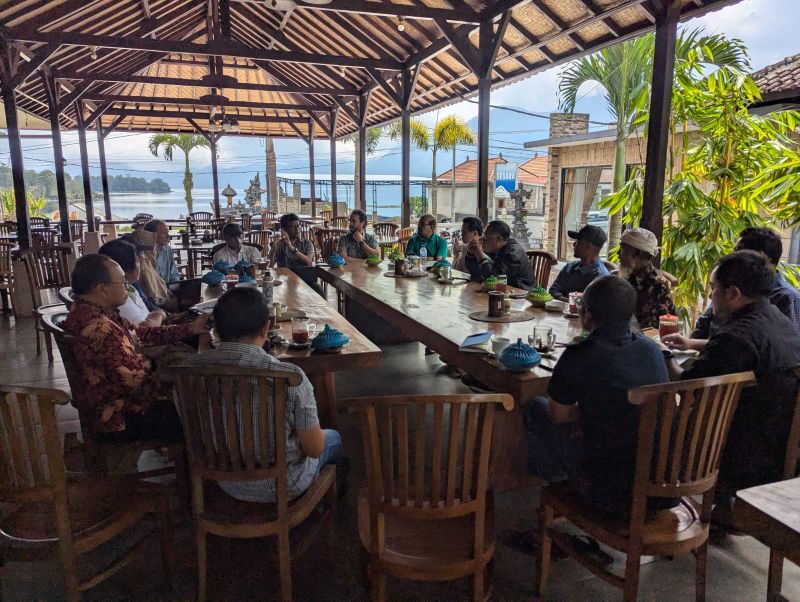
Through field visits, workshops and discussions, the team engaged several hundred people from research organisations, government agencies, non-government organisations and local communities to identify the challenges and priorities for Indonesia's lake management. Participants highlighted the need for accessible information to support decisions on issues such as water quality, flooding and fisheries.
'Healthy lakes are essential to water security, food systems and livelihoods in Indonesia, and many of the challenges faced are shared with Australia and countries across the region,' said Dr Neil Lazarow, ACIAR Research Program Manager for Water.
'By bringing together science, policy and community knowledge, a research partnership like this helps support better decisions while creating opportunities for Indonesian and Australian researchers to learn from one another and address shared challenges.'
Lessons from four priority lakes
The research focused on four lakes representing different types of pressures. These included deep volcanic lakes, Danau Toba and Danau Batur, and shallow floodplain lakes, Rawa Pening and Danau Tempe. (Note: Danau means 'lake' in Indonesian.)
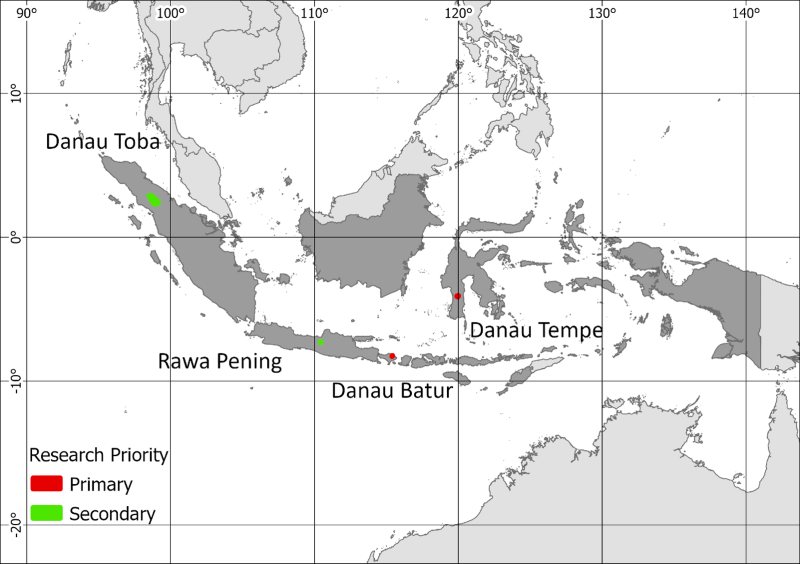
These case studies highlighted the varying pressures faced by Indonesia's lakes. These included intensive fish farming in Danau Toba and invasive water hyacinth in Rawa Pening. Danau Batur faced water-quality and fish mortality risks. Flooding, sedimentation and fisheries pressures were issues found with Danau Tempe. Together, the four lakes showed how environmental, governance and community priorities can shape lake management decisions.
'One of the key lessons from this research is that lake management is not only a technical challenge, it's also about relationships, governance and ensuring evidence supports decisions that matter to communities, said project leader Mr Dave Penton from CSIRO.
'Lake information is most valuable when it can be understood, trusted, shared and used by the people responsible for caring for these ecosystems.'
Indonesian project lead Dr Arianto Budi Santoso from BRIN said the collaboration provided a clearer understanding of the challenges facing Indonesia's priority lakes and the options for addressing them.
'This collaboration highlighted opportunities to better connect science, information and decision-making, so that lake management is guided by reliable evidence and reflects the perspectives of both government and communities.'
Bringing in the community perspective, Dr Mova Al'Afghani from CRPG said the research activity showcased the importance of ensuring customary water tenure, local knowledge and experience to lake management decisions.
'When communities can see how information relates to their daily lives, whether through water-quality information, flood warnings or fisheries management, it becomes a practical tool for better decisions, not just a collection of technical data.'
Strengthening cooperation for the future
The project built on existing Indonesia-Australia cooperation on water resources management, including the Water Memorandum of Understanding. It provided a foundation for future collaboration on shared water and environmental challenges.
Beyond the research findings, the project also built relationships that can support future cooperation on lake management. As part of the project, four Indonesian researchers travelled to Australia to exchange knowledge and learn from international experience in lake restoration.
'The project has strengthened relationships and established a shared foundation for future research and investment between Indonesian and Australian institutions,' said Dr Lazarow.
'These partnerships will be important as our countries continue to address water security, climate resilience and the sustainable management of natural resources.'


