
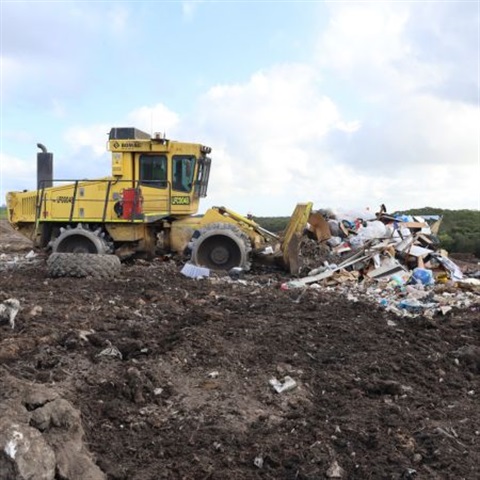
Councils across South East Queensland (SEQ) are joining forces to address the region's growing landfill challenge as existing sites approach capacity and disposal costs continue to rise.
Council of Mayors (SEQ) has applied to the Australian Competition and Consumer Commission (ACCC) on behalf of 11 SEQ councils. The application seeks authorisation to jointly procure regional solutions to treat residual waste instead of sending it to landfill.
By working together, councils can help reduce reliance on landfill, minimise long-term waste costs for households and meet the Queensland Government's waste targets.
Residual waste is general waste from red top household bins that cannot be recycled, composted or reused and is currently sent to landfill.
The Queensland Waste Strategy sets a long-term goal to reduce waste and divert 90 per cent from landfill by 2050. Households are already paying more for waste disposal due to the landfill levy introduced by the former State Government.
"Noosa is leading the way when it comes to recycling rates in SEQ - but there is still a significant amount of household waste that cannot be recycled and must be sent to landfill," Noosa Mayor Frank Wilkie said.
"The waste levy means landfill is becoming more expensive and less viable, and smaller councils have limited options to attract competitive alternates. But by collaborating with SEQ Councils we can achieve this and better overall outcomes for our ratepayers."
Councils must pay the waste levy on every tonne of waste sent to landfill, which flows on to households. Under current arrangements, the landfill levy is expected to cost South East Queensland households almost $1 billion over the next decade or around $588 per household.
The SEQ Waste Management Plan and detailed analysis show councils can achieve better results by working together. This includes reducing long-term cost pressures for ratepayers and renters, while planning for the region's future waste needs.
The proposal focuses on alternatives to landfill for residual waste but will not replace ongoing efforts to improve recycling and waste reduction efforts. Instead, it will provide an alternative for more than one million tonnes of household waste that is currently sent to landfill each year.
Similar projects have been delivered or are underway across Australia, including Western Australia, Victoria and New South Wales.
The proposal will explore a range of options, including emerging technologies that create sustainable biofuels. It will also assess proven solutions that generate power for industry and households while reducing landfill use.
Many solutions are already commonly used as alternatives to landfill, with more than 2,800 facilities operating globally, including in Australia, Singapore, Denmark, Germany, Canada, Japan, the UK, Austria, France and Switzerland.
By working together, SEQ councils can give industry the certainty needed to invest in new infrastructure. This will help deliver better value for households and meet the State's waste targets.
Any solutions would need approval from the Queensland Government and would meet global best practice requirements such as the European Union's Industrial Emissions Directive.
This application has been supported with funding from the Crisafulli Government as part of its commitment to deliver the outcomes of the Queensland Waste Strategy.
The 11 local governments collaborating in the application include Brisbane City Council, City of Moreton Bay, Ipswich City Council, Logan City Council, Sunshine Coast Council, Noosa Council, Redland City Council, Somerset Regional Council, Toowoomba Regional Council, Lockyer Valley Regional Council and Scenic Rim Regional Council.


