
From Sri Lanka's central highlands to Indonesia's flood-swollen river basins, a wave of climate-fuelled cyclones and monsoon rains has unleashed one of the deadliest weather patterns south and southeast Asia has seen in years, killing more than 1,600 people, displacing hundreds of thousands and affecting millions.
Since mid-November, overlapping tropical storms and intensified monsoon systems have triggered catastrophic flooding and landslides across Sri Lanka, Indonesia, Thailand, Malaysia and Viet Nam.
UN teams across the region are supporting government-led emergency operations with food, health, water and sanitation aid, medical deployments and early recovery assessments, as heavy rains continue and fears grow that the crisis could deepen.
"We continue to closely monitor the situation and remain in close contact with national authorities," UN Spokesperson Stéphane Dujarric told reporters in New York on Thursday.
"The UN stands ready to support any ongoing efforts."
Overlapping storms
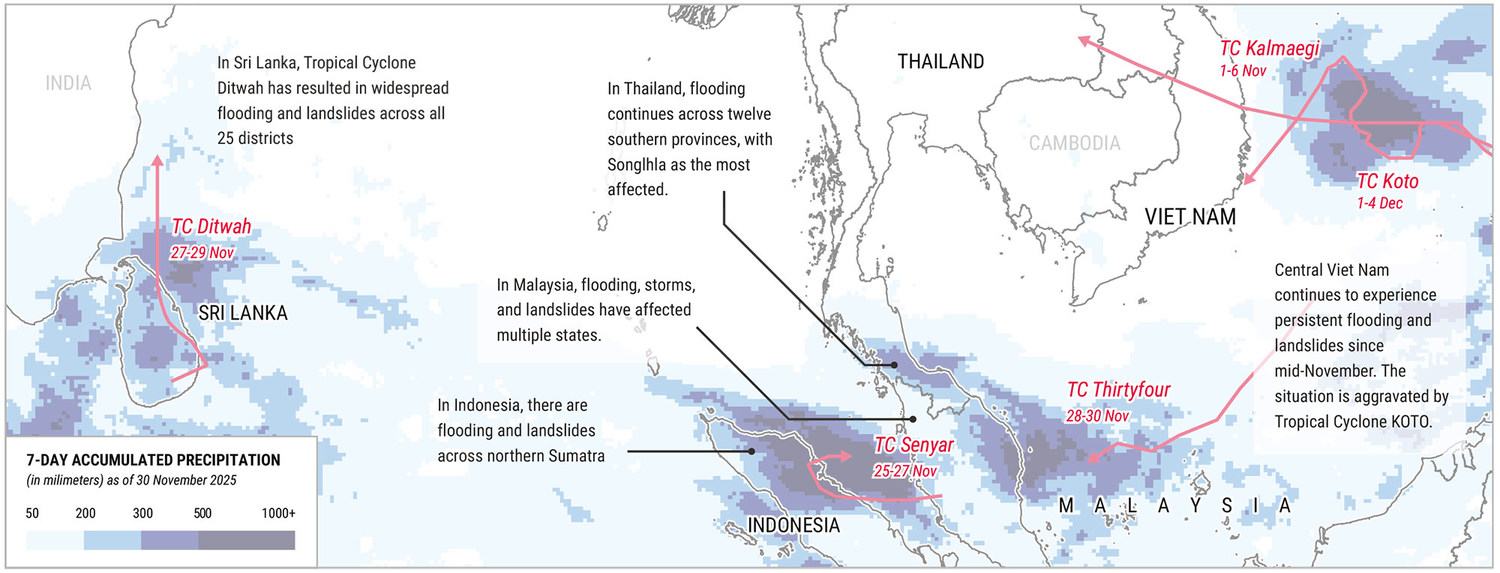
Experts say the disasters were driven by an unusual convergence of powerful weather systems, including Cyclones Ditwah and Senyar, alongside a strengthened northeast monsoon.
Warm ocean temperatures and shifting storm tracks have produced extreme rainfall in areas that historically faced lower cyclone risk.
Across the region, nearly 11 million people have been affected, including about 1.2 million forced from their homes into shelters, while roads, utilities and farmlands have been washed away.
Sri Lanka: Nationwide devastation
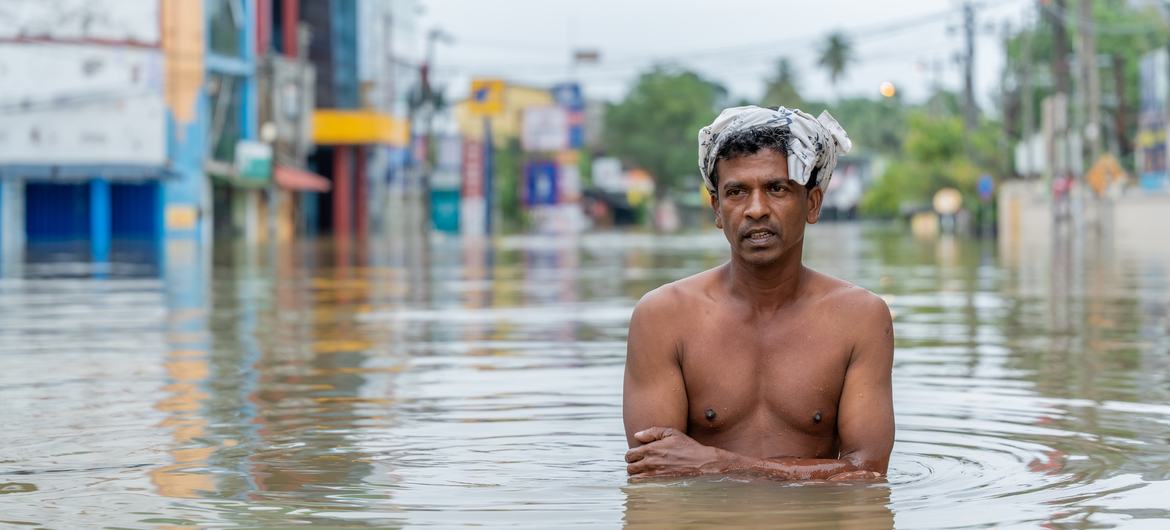
Sri Lanka bore some of the worst impacts after Cyclone Ditwah made landfall on 28 November, triggering floods and landslides across nearly the entire island.
The highest death tolls were reported in the hill districts of Kandy, Nuwara Eliya and Badulla, where landslides swept through plantation communities. Severe flooding also inundated western and north-western districts - including Colombo's outer suburbs - disrupting markets, transport and water supplies.
Children have been especially hard hit, with more than 275,000 estimated to be affected.
Indonesia: Flash floods and landslides
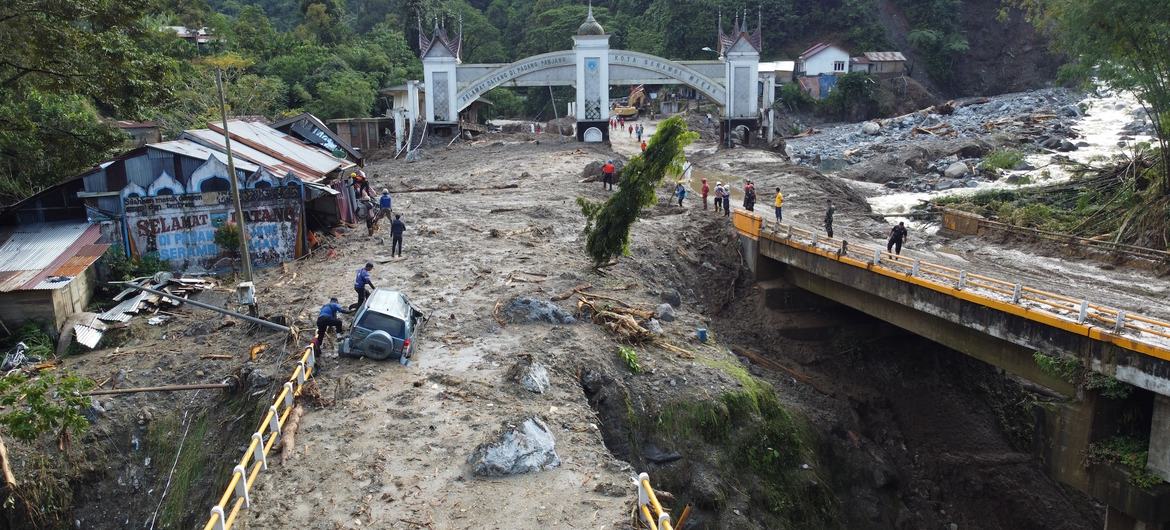
In Indonesia, relentless downpours between 22 and 25 November triggered deadly floods and landslides across Aceh, West Sumatra and North Sumatra, devastating dozens of districts.
Official figures indicate more than 830 deaths, with at least 500 people still missing, and more than 880,000 displaced. In total, over three million people have been affected by floodwaters, collapsed hillsides and destroyed infrastructure.
Entire villages have been submerged, bridges washed away and roads cut off, isolating communities and slowing rescue efforts. Emergency teams are relying on helicopters and boats to deliver aid to areas unreachable by land.
"We are working closely with the government on water, sanitation and hygiene (WASH), logistics, and coordination with local partners," UN Spokesperson Dujarric said.
Thailand and Malaysia: Mass evacuations
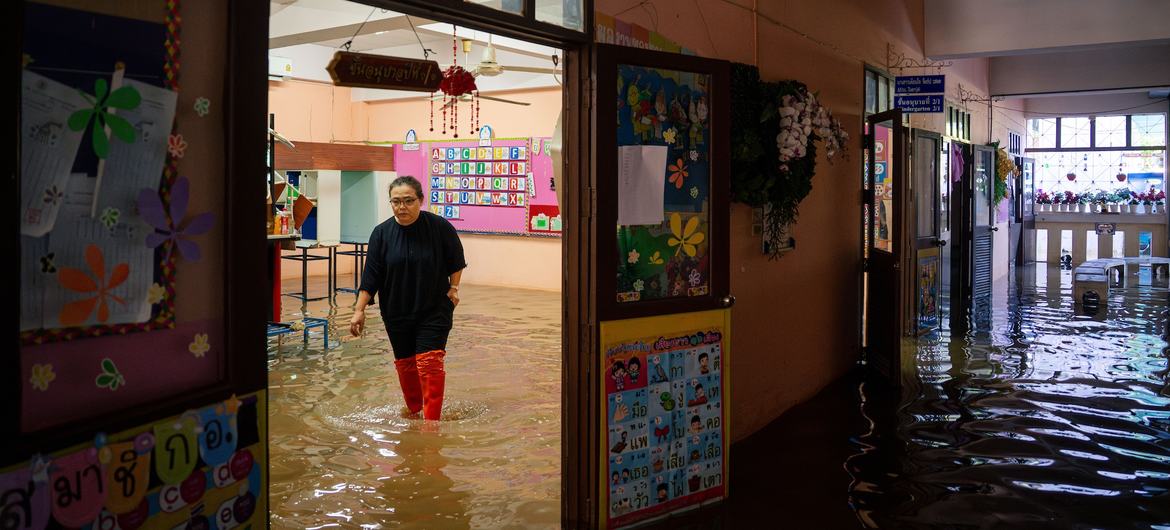
Moving east, intensified monsoon rains have battered southern Thailand, where 12 provinces have been affected.
At least 185 people have died, with 367 missing and over four million people impacted. More than 219,000 residents have been displaced as rivers burst their banks and low-lying coastal areas flooded.
In neighbouring Malaysia, flooding across eight northern and central states has displaced around 37,000 people. Authorities continue to issue evacuation orders and weather warnings as rain persists.
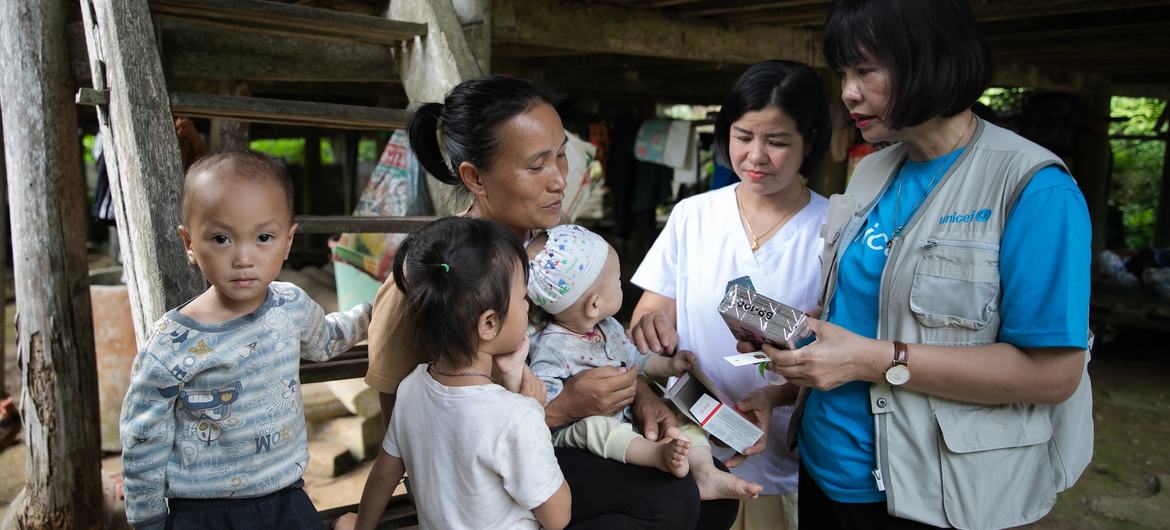
Viet Nam: A relentless typhoon season
Viet Nam is confronting the cumulative toll of one of its harshest typhoon seasons in years. Since October, a succession of storms has flooded and damaged large swathes of the country, particularly in northern and central provinces.
Persistent downpours since mid-November, compounded by Tropical Cyclone Koto, have triggered new landslides and prolonged displacement. A national joint response plan is under way to address food insecurity, health risks and damaged infrastructure.
To support the response, $2.6 million has been allocated from the UN Central Emergency Response Fund ( CERF ).
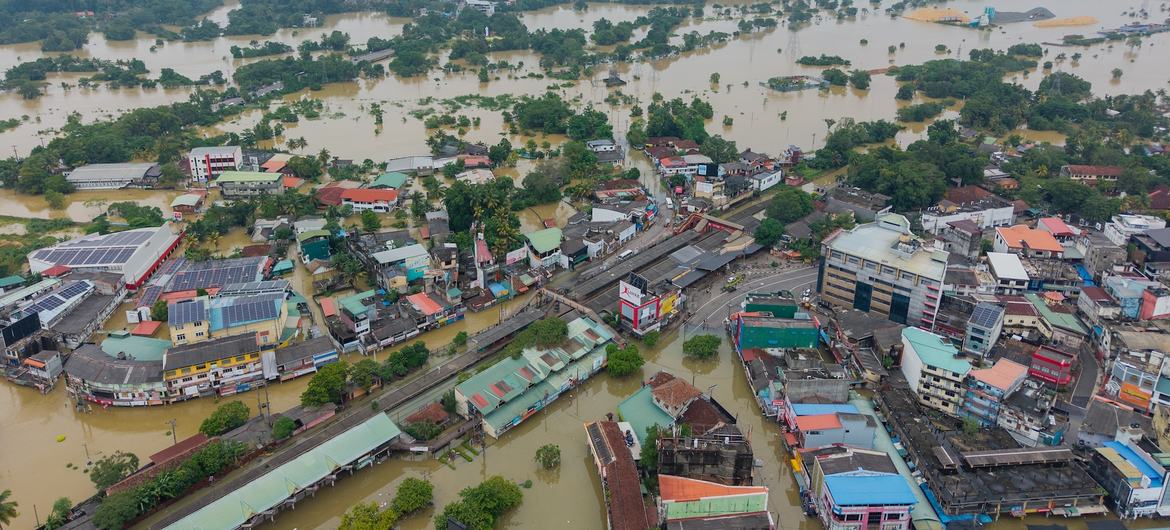
Disasters supercharged by climate change
UN agencies say the storms reflect a broader shift toward more intense and unpredictable weather across the Asia-Pacific. Cyclone Ditwah tracked unusually far south along Sri Lanka's coast, while Cyclone Senyar formed near the equator in the Strait of Malacca - a rare occurrence.
The UN Economic and Social Commission for Asia and the Pacific ( ESCAP ), in its latest report issued last week, warned that rising temperatures are fundamentally reshaping the region's risk landscape.
Warmer ocean waters are increasing the potential for extreme rainfall, while rapid urban growth, deforestation and wetland loss are magnifying flood impacts. Even where early warnings were issued, fast-rising waters overwhelmed evacuation routes in some locations.


