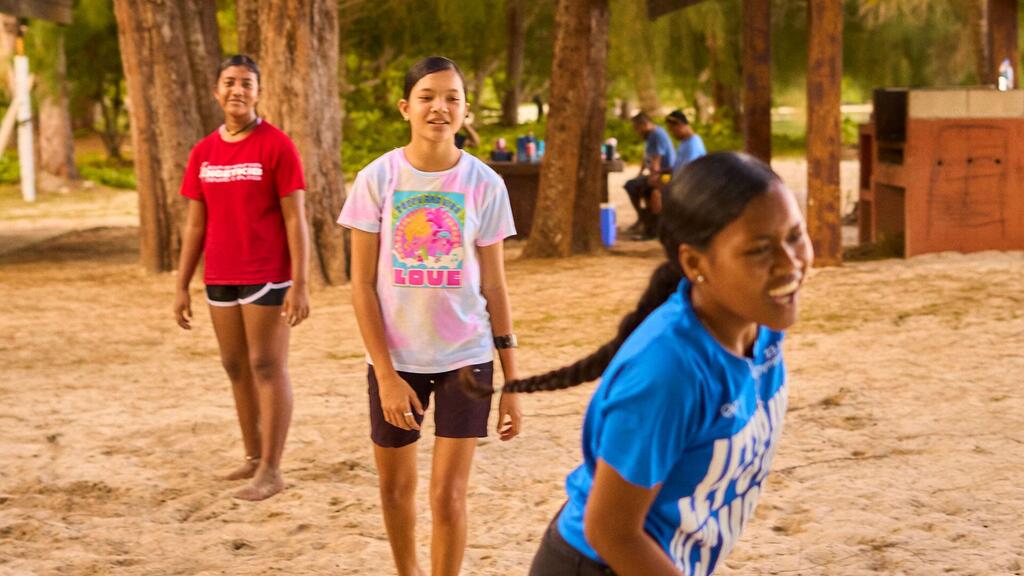
The small Pacific Ocean island of Palau is helping communities build resilience against the dangers of climate change-driven extreme weather with the establishment of a network of emergency refuges - thanks to support from the United Nations.
As a boy growing up in Palau, an archipelago of over 500 islands in the western Pacific Ocean, Seth Techitong spent most of his days in the sea.
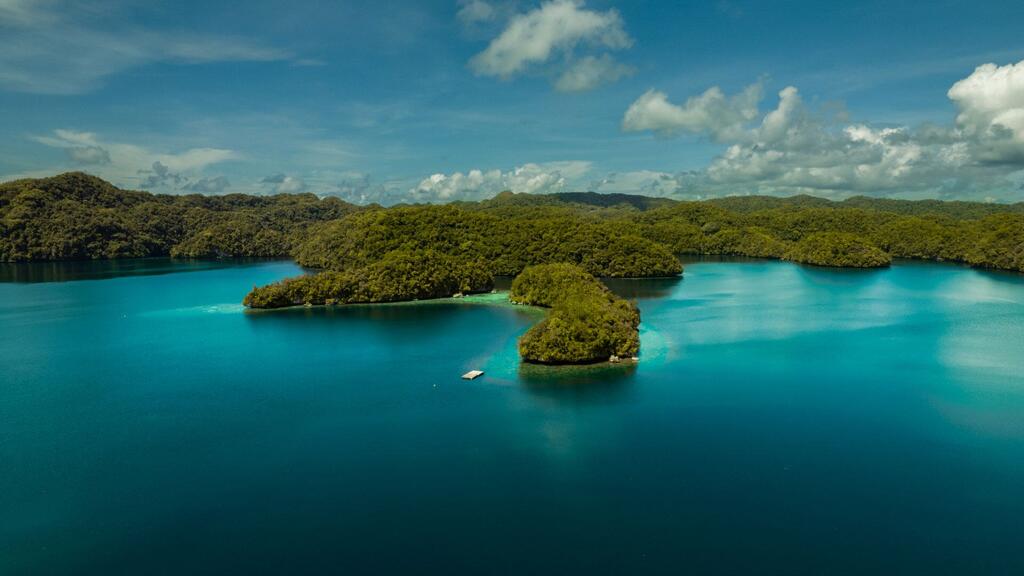
After school, he would dive into the clear blue water, swimming above centuries-old coral reefs, framed by dense green forests and tranquil villages.
Life on the island felt simple and safe, shaped by the rhythms of tides and seasons. Back then, the ocean meant freedom.
Today, that same ocean tells a different story.
"When I was a kid, the ocean was where we learned how to swim, how to fish, how to live," Techitong recalled. "I never imagined that one day the sea itself could threaten the places we call home."
For many, Palau is one of the last untouched paradises on earth. It is also among the countries least responsible for changing weather patterns, and yet one of the most exposed to the risks of natural hazards.
Rising sea levels, stronger typhoons, storm surges and flooding are no longer distant projections. They are reshaping national planning and daily life, threatening homes, livelihoods and the cultural identity of these Pacific islanders.

Climate change, a personal issue
For Techitong, these climate related hazards are deeply personal.
"I fear the places I grew up in might be underwater in the next decades," he said. "I don't want future generations to only hear stories about what Palau used to be. That's what drives me."
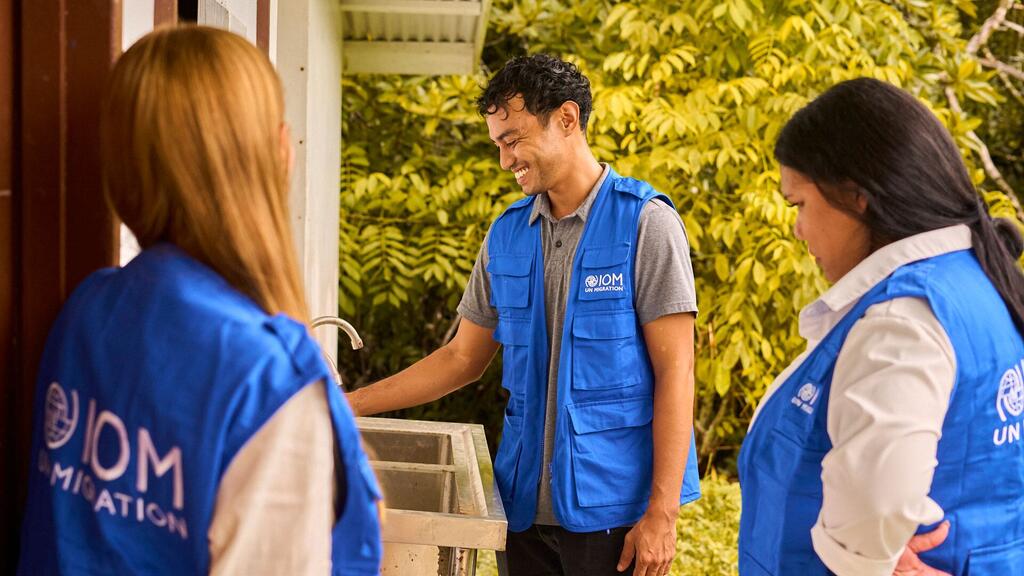
Today, he works with the International Organization for Migration ( IOM ) in Palau alongside the National Emergency Management Office (NEMO), overseeing the strengthening of climate-resilient disaster shelters across the country.
Strengthening national resilience
Techitong's work is part of a broader effort by the United Nations to support Palau's resilience to the adverse effects of extreme weather events through an integrated, long-term approach.
The UN works alongside the Government of Palau and civil society across four interconnected pillars: People, planet, prosperity, and peace.
Building community resilience to extreme weather events and strengthening disaster risk reduction cuts across all four of these pillars, as resilience is not only environmental, but also social, economic and institutional.
The shelters Techitong oversees put this vision into practice.
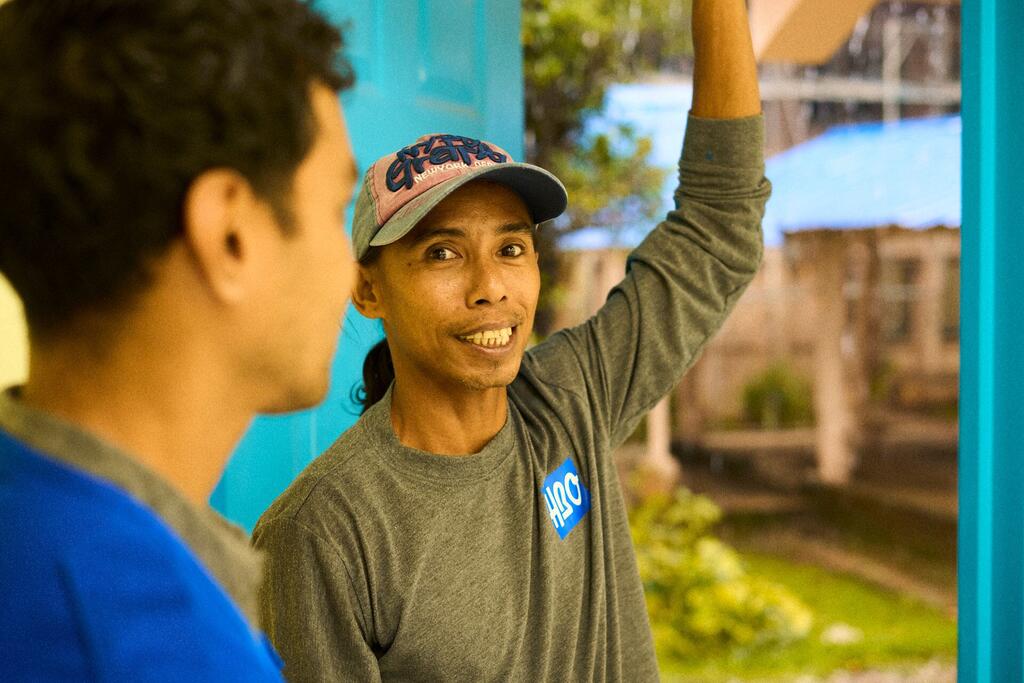
The shelters are designed to function as a connected national network of safe spaces accessible to all people during emergencies.
Built to withstand high winds, heavy rainfall and flooding, they will be equipped with typhoon shutters, rainwater catchment systems, solar lighting, generators, and water filtration systems.
Four out of the eight shelters have already been strengthened and handed over to the community in Palau.
"The strengthened shelters consider the needs of persons with disabilities and other vulnerable people, so no one is left behind during emergencies," said Alex Iyar, a community member involved in the consultations that led to the development of this project.
Beyond infrastructure, the project is strengthening local capacity. Community-based Red Cross Disaster Action Teams are being trained to manage shelters before, during and after emergencies, reinforcing local leadership and ownership.
It gives me hope that my children still be able to enjoy the best parts of Palau that I grew up with.
Addressing displacement risk and protecting social cohesion
Across the Pacific, climate displacement is increasingly common. According to IOM data on global displacement trends, weather-related disasters have triggered hundreds of millions of internal displacements over the past decade.
Disaster events are fundamentally reshaping patterns of mobility worldwide, disproportionately affecting small island States like Palau.
While disaster shelters cannot stop the sea from rising, they can buy time, protect lives and help communities remain rooted for as long as possible.
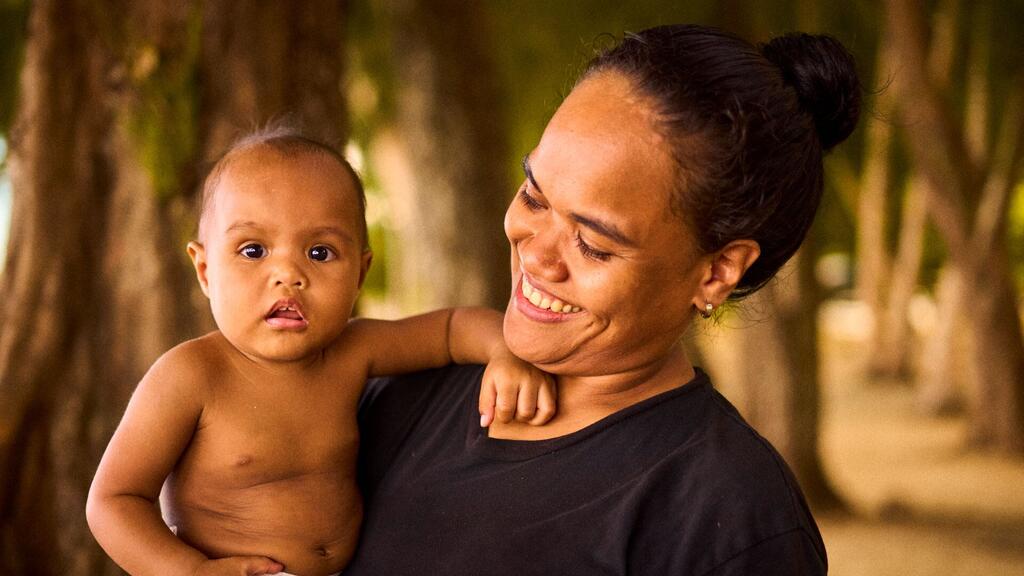
For Di Maech, a local Palauan conservation worker, this matters deeply. "In Palau, our communities are learning, growing, and finding ways to be resilient in the face of disasters thanks to UN-supported projects.
"It gives me hope that my children still be able to enjoy the best parts of Palau that I grew up with."
Investing in youth leadership
IOM's Techitong believes the shelters are central to national resilience. "These shelters are not just emergency refuges, they are community hubs that support preparedness, connection and adaptation," he said.
Techitong still swims in the ocean when he can. The water remains beautiful, powerful and deeply familiar, even as it carries new uncertainty.
"I grew up learning how to move with the waves," he says. "Now my work is about making sure our communities can do the same. Adapt, protect each other, and keep Palau standing."