
One month after the Bundibugyo Ebola outbreak was declared in the Democratic Republic of the Congo (DRC) and Uganda, case numbers continue to rise.
The DRC now has more than 780 confirmed cases and 180 deaths, while Uganda has recorded 19 confirmed cases, including two deaths.
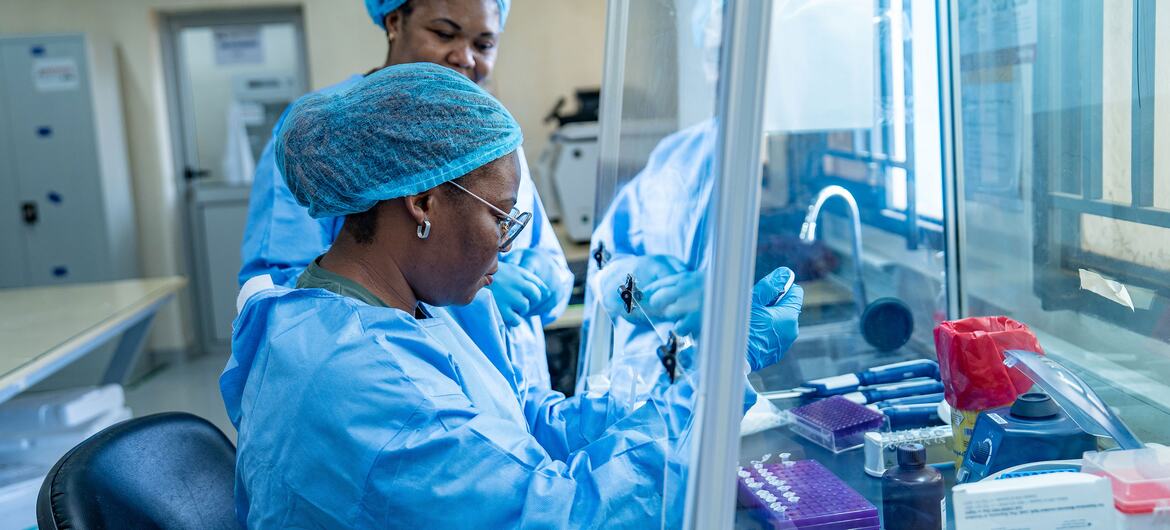
On the ground, the response has expanded considerably. Some 400 beds are now available and four laboratories are operational.
Two of them alone can process nearly 1,000 samples a day. Yet despite this scale-up, the World Health Organization ( WHO ) believes efforts remain far below what is needed to bring the outbreak under control.
"On a scale of zero to ten, compared with where this response needs to be, I would say we are at about three or four," said Dr. Rose Belizaire, Emergency Response Lead at WHO Africa, in an interview with UN News. "The outbreak is evolving rapidly, and all partners (...) need to step up their efforts on the ground in order to keep pace with the evolution of this epidemic."
Eleven pillars
Today, when a person is reported as a suspected case in a community, an investigation team is immediately dispatched. If the alert is confirmed, the patient is referred to a transit centre, where they await laboratory results before being transferred, if necessary, to a treatment centre.
But the Ebola response goes far beyond medical care.
"The response is organized around 11 pillars in the field," Dr. Belizaire explained.
Community surveillance, investigation teams, transit centres for people awaiting diagnosis, laboratories, treatment centres, infection prevention and control, and data management are among the many components mobilized under the leadership of Congolese health authorities.
The response also includes extensive support for patients, their families and people exposed to the virus.
"We now have psychosocial support and nutritional support that provide assistance to confirmed patients, their families and the contacts we are monitoring, so that we can take a holistic approach to this outbreak," said the WHO official.
On the ground, this approach takes very concrete forms.
"Contacts receive food rations," the epidemiologist noted. As for hospitalized patients, "they receive three hot meals a day."
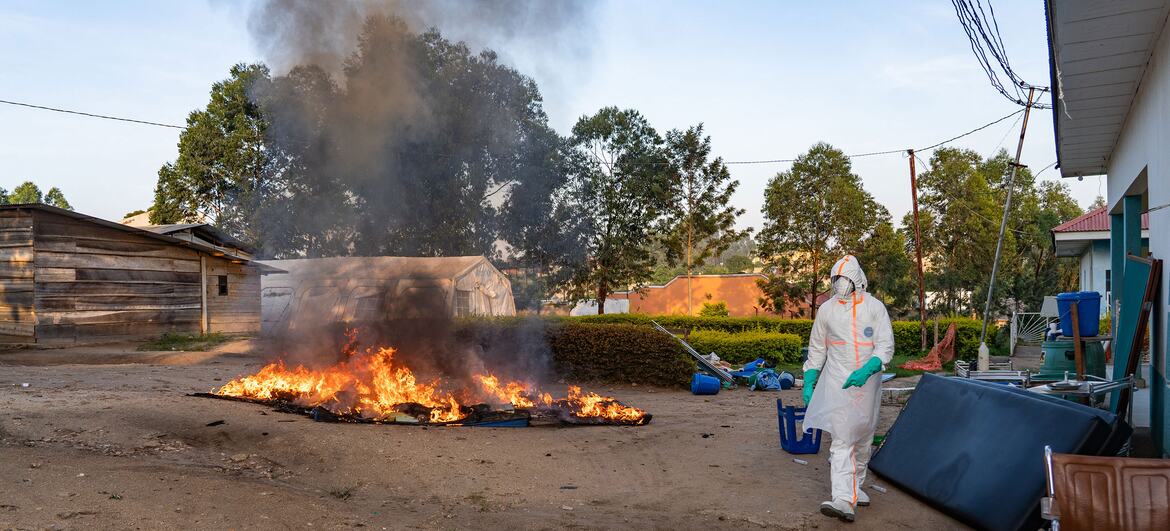
The response also includes infection prevention and control measures aimed at limiting transmission.
"This includes disinfection and the destruction of items contaminated by the virus," Dr. Belizaire said. "It is an entire machinery that has to be put in place."
We have the expertise, resources must follow
During a recent visit to Beni, one of the areas hardest hit by the outbreak, Dr. Belizaire said she was struck by the level of preparedness among local teams.
"I was very satisfied with their technical capacity to implement the response. They know what needs to be done. They also have the technical expertise," she said.
What they lack, however, are the resources needed to match their capabilities.
"What they were really missing were the means. They lacked human resources, and they also lacked the logistical support required to put in place a robust response."
Women on the frontline
The outbreak is also evolving demographically.
At the start of the outbreak, men aged 20 to 49 were the group most affected. Today, women represent the most affected category, while cases among children are increasing.
For Dr. Belizaire, this shift is not surprising.
"In outbreaks of infectious diseases, women are generally the most affected. They are the ones who care for family members, their husbands, their parents and their children."
A listening response
For WHO, adapting the response to realities on the ground has become an essential part of the fight against Ebola.
"We are trying to meet with all segments of the population in order to understand their needs and adapt the response to their reality," Dr. Belizaire explained.
During her travels, the WHO official said she has met with a wide range of groups, including women, local entrepreneurs, motorcycle taxi drivers and community leaders.
Concerns vary from one group to another. Entrepreneurs worry about the impact of the outbreak on their ability to make a living, while motorcycle taxi drivers, who provide much of the transportation in affected areas, are among those most exposed.
"An outbreak always occurs in a specific context. We therefore have to adapt the response to the real needs of communities and to the realities of their movements."
A porous border
This reality is particularly evident in the border region between Aru in the DRC and Arua in Uganda, where Dr. Belizaire took part last weekend in meetings that strengthened cooperation between the two countries and helped define a common action plan.
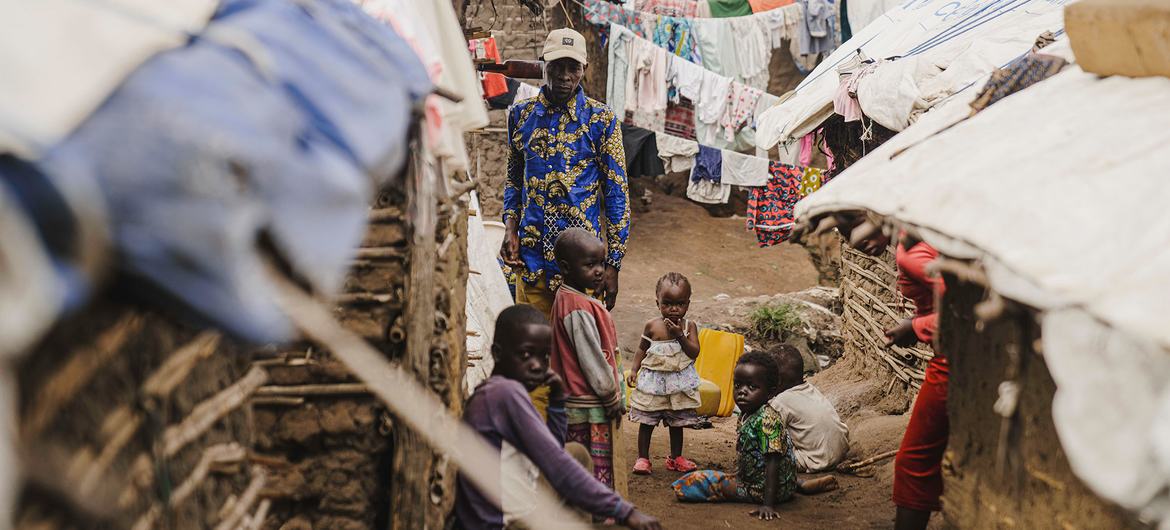
"When you look at the border, you do not really see a dividing line or a difference between the populations," she said. "The names are almost identical - Aru and Arua. That is because they are the same populations living there and they speak the same local language."
"Interactions are extremely intense, whether commercial exchanges, family exchanges or simply human exchanges," she added.
The two countries have therefore agreed to deploy joint teams along the border, strengthen laboratory capacity and establish a treatment centre jointly managed by Congolese and Ugandan teams.
The goal is also to bring care closer to populations living on the Congolese side in order to reduce the need to travel to Uganda to seek treatment.
'I wanted to thank you'
For the past month, Dr. Belizaire's long days have been filled with coordination meetings, field visits and discussions with affected communities. They have also been punctuated by memorable encounters, and this week was no exception.
"While I was in a meeting, there was someone who was determined to see me at all costs," she recalled.
When she finally went to meet him, she discovered that he was a WHO colleague. After exchanging a few greetings, he asked her:
"But Doctor, don't you recognize me?"
She did not. He then explained why he had been so eager to meet her.
"I wanted to thank you. Thank you for saving my life. You are one of the people whose actions made it possible for me to still be alive today."
The man is a survivor of a previous Ebola outbreak in the DRC. Today, he works as an epidemiologist for WHO.
He also reminded her that he had been among the first people to raise the alarm during the current outbreak after a pastor informed him that a body had been bleeding from the nose and mouth during a funeral in Aru.
For Dr. Belizaire, the encounter illustrates how experience gained over successive outbreaks continues to strengthen the response today.
"This may be my best paycheck this week," she said. "To see people whose lives we helped save becoming my colleagues and working in the same organization as me."


