
Raising a family and working as a lawyer would keep most people busy enough, but not for one amateur cyclist who at the age of 41 is making a big name for himself in the sport – with support from experts at the University of Exeter through a service which is now open to all.
Andrew Feather, from Bath, made international headlines in October when he beat four-time Tour de France winner and current World Champion, Tadej Pogačar, in the Slovenian's own Pogi Challenge event in his home country. Andrew was the only one of 1,189 cyclists who took on the challenge that Pogačar couldn't catch in the gruelling 15km climb.
Not that success is new to Andrew – who has won the National Hill Climb Championship four times – but he has taken a new approach this season to get the very most out of his performance. He's partnered with the Sports Physiology and Exercise Training teams at the University of Exeter, who have been analysing his performance in their state-of-the-art labs to finetune his training and nutrition. This newly launched service from Exeter's world-leading sports physiology experts is now available to all athletes who want to unlock their potential.
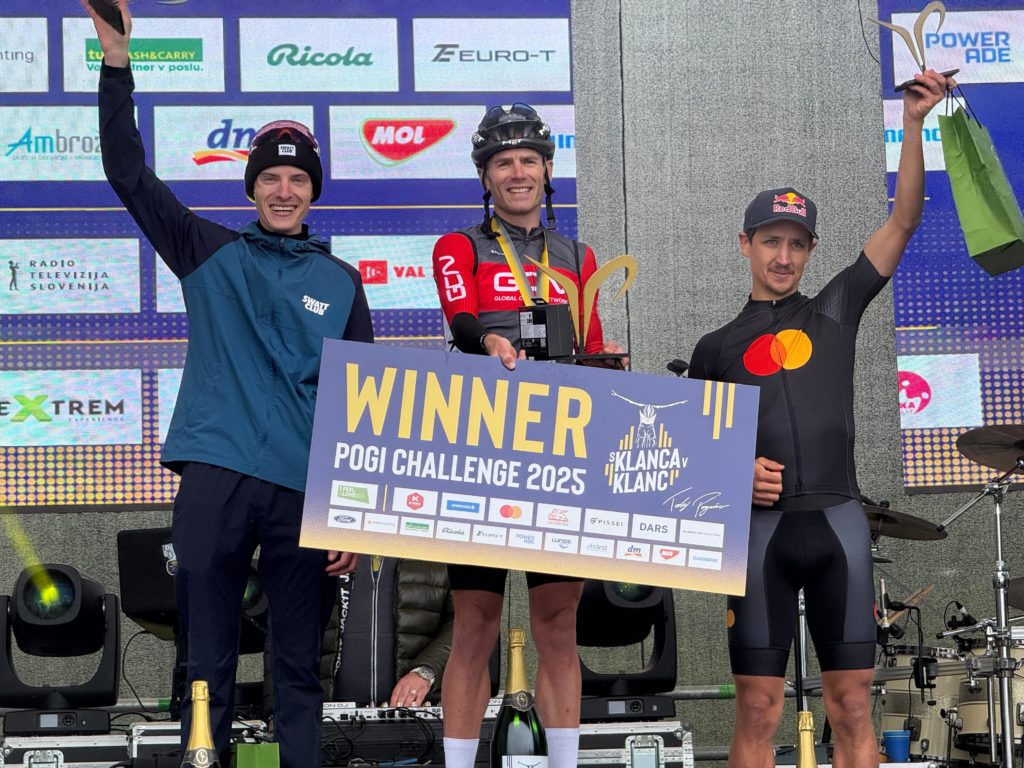
"They've given me lots of techniques," Andrew said. "Doing a really good warm up to prime the muscles, particularly for the short explosive effort in hill climbs. Also, my diet – but those real key parts. I didn't realise on the day of the event you shouldn't be eating eggs, for example. They said to try bicarbonate of soda as well to reduce the lactic acid in the muscles for short bursts.
"All of these things I haven't done in the past and I've been putting it into practice. It's about those fine margins. 'Marginal gains' is a term used a lot in cycling and when you've got some of the world's best experts helping you really understand your physical performance, why you're performing in a certain way, and what you can do better it really helps.
"I've really seen the difference having the team at Exeter on board to guide me through the process and can feel I'm at optimum performance."
Returning to Exeter is like coming home for Andrew, who studied law at the university and lived in the city for ten years after graduating. Although he rode a bike during that time to predominantly stay fit for other sports, it wasn't until his late 20s that he started to take cycling more seriously as a sport itself.
"A few people said I should do some road racing, and I did quite well and managed to get an elite licence," Andrew continued. "I was a good amateur and always seem to do well on the selective hilly courses.
"The hill climbs are really attractive for me because in the road races I was good, but not competitive beyond a certain time. I just didn't have the time to train for longer races, whereas the hill climbs are unique because you can have numbers as good as a professional rider because you don't have to do those long training sessions."
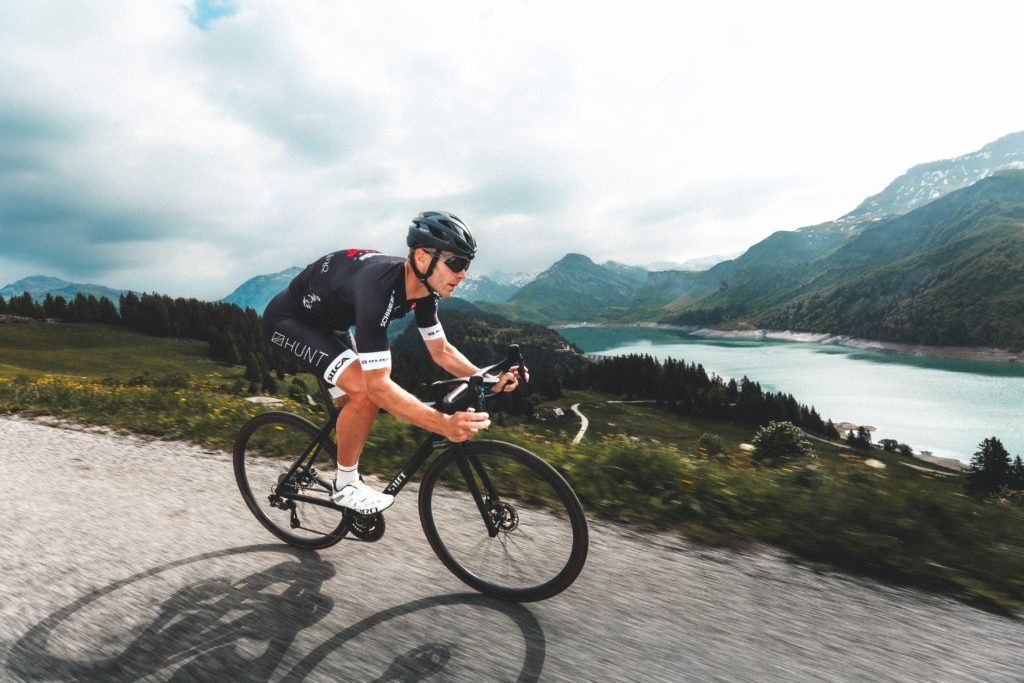
Andrew's time is limited compared to professional cyclists because he's also having to balance his time on the bike with working as a lawyer and also having a family. His wife, Neda, and their two children, Olivia aged 6 and Thomas aged 4, are his biggest supporters following him up and down the country during the busy hill climb season - something he very much appreciates.
"I think it's just being disciplined," Andrew explained. "With the cycling I try and make sure I'm getting out for a couple of hours each day to maintain that fitness. With work it might sometimes mean working late, especially during the hill climb season. And then with the family it's about making sure everyone is happy, doing the school run, all the usual things. I'm no exception really, it's just life is a juggling act! I always look forward to some downtime once I finish the season."
This season has been another successful one for Andrew. Along with his triumph in the Pogi Challenge he has also had some of his best power numbers in the hill climbs, as well as achieving a bronze medal in the British Nationals on a climb which wasn't best suited to his abilities.
His work with the University of Exeter was initiated by PhD student Rebekah Osborne, whose research and knowledge of middle-distance running has been applied to uphill cycling due to its similarity in race duration and physiological demand. Andrew has also utilised the wider team's decades of research and hands-on experience at the highest level to find those marginal gains and boost performance.
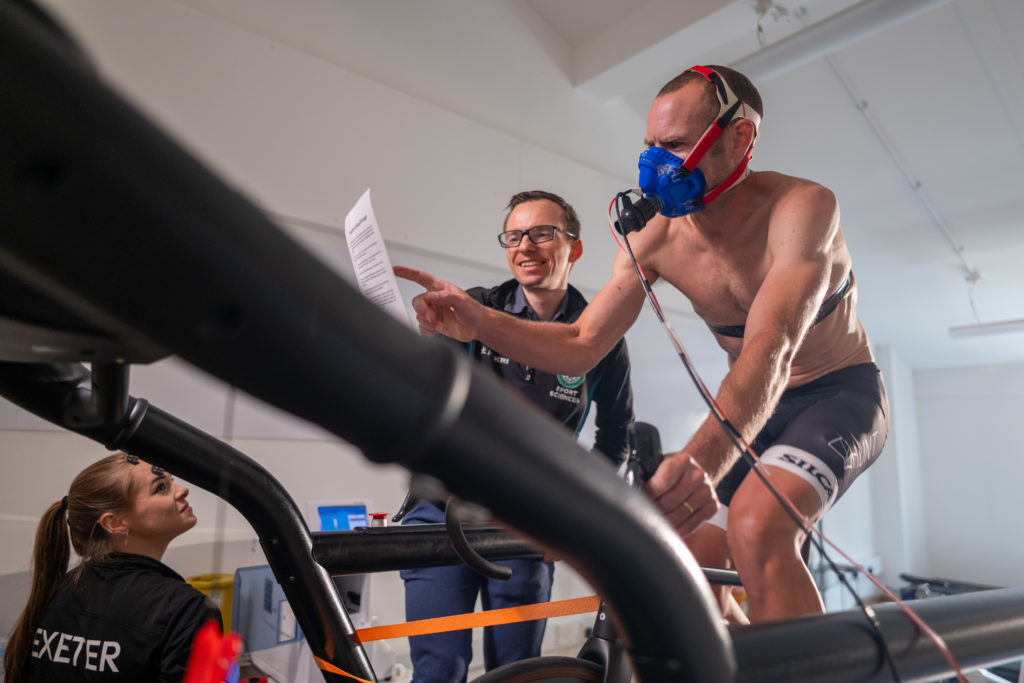
Dr Tim Podlogar is a leading sports scientist specialising in cycling physiology and co-lead of the new Sports Physiology and Endurance Testing service. Tim has worked closely with Andrew during his time at Exeter and said: "Andrew is an amateur cyclist with other commitments, so with limited time to train it's vital that his sessions are as effective as possible. Physiological testing uncovers what limits performance the most and with that provides us with the insights on what to target in training to get performance to the next level.
"Fuelling strategies are also a key part of performance in endurance sports like cycling and we have provided Andrew with individualised guidance on how best fuel for different types of efforts. It is a pretty significant difference in nutrition when Andrew is attempting to beat Tadej Pogačar on a more than a 40-minute climb or he is trying to win the National Hill Climb Championships where the climb is only around two minutes long.
"It's about finding those techniques to help Andrew unlock his potential."


