
Key Points
- An interdisciplinary summit at Florida State University examined Name, Image, and Likeness (NIL) through legal, business, athletics and entrepreneurial perspectives as the regulatory and commercial landscape of college sports continues to evolve.
- Florida State University student-athletes, coaches, professors and other personnel took part in panel discussions that navigate the complex landscape of NIL in collegiate athletics.
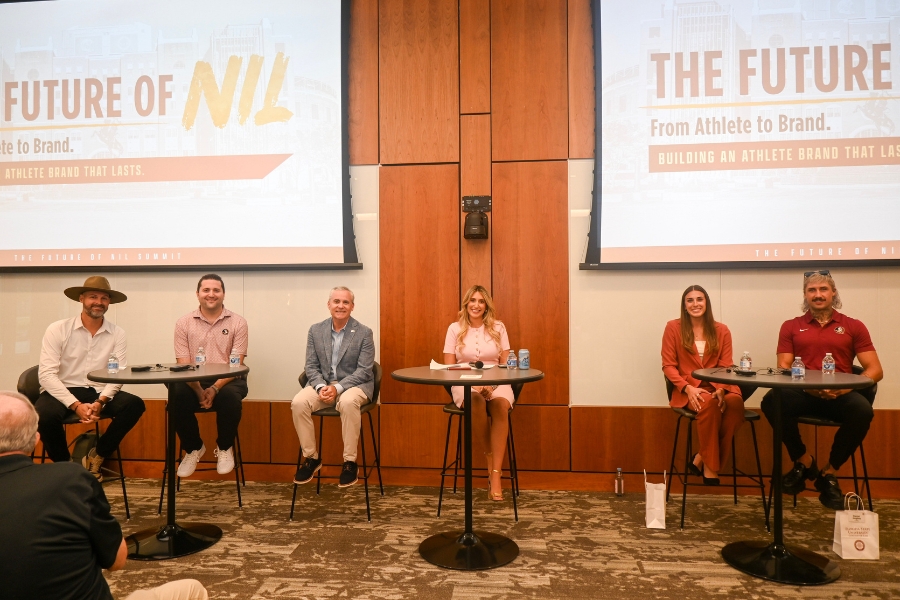
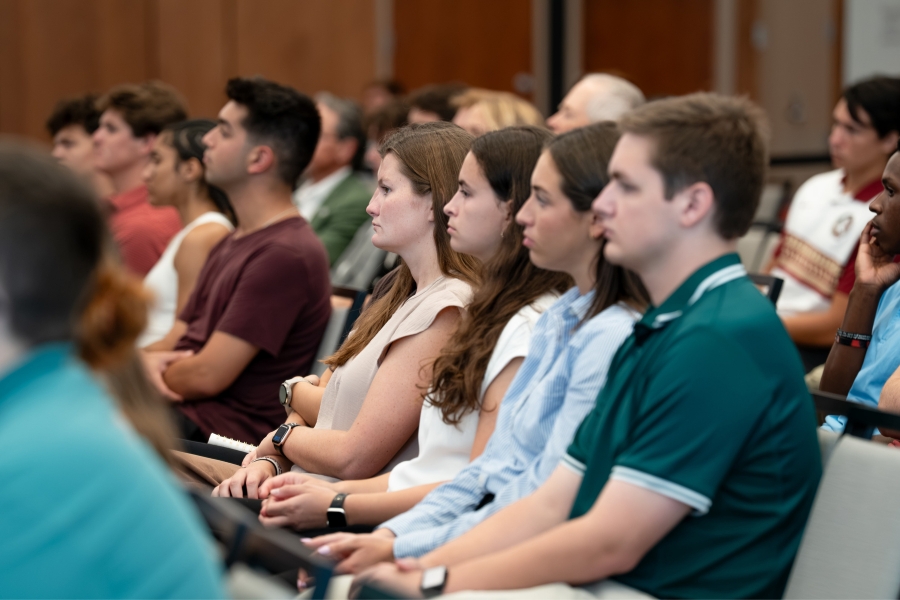
Florida State University brought together campus leaders Friday for a wide-ranging discussion on the future of Name, Image, and Likeness at the second annual FSU Future of NIL Summit held at the Herbert Wertheim College of Business.
Hosted by the FSU College of Law's Stoops Center for Law and Business in collaboration with the Herbert Wertheim College of Business, Jim Moran School of Entrepreneurship and the Sport Management Student Organization, the athletics-focused event featured FSU voices and decision-makers working in the fast-changing NIL landscape. The interdisciplinary summit examined NIL through legal, business, athletics and entrepreneurial perspectives as the regulatory and commercial landscape of college sports continues to evolve.
Adopted by the NCAA in 2021, NIL allows student-athletes to earn compensation from their personal brand and public identity. Panelists, including coaches, business professors, academic advisers, NIL coordinators and others, emphasized that NIL has grown far beyond its original focus on direct athlete compensation through branding. Today, the discussion also includes revenue sharing, roster construction, transfer rules, legal uncertainty and other forces reshaping college athletics.
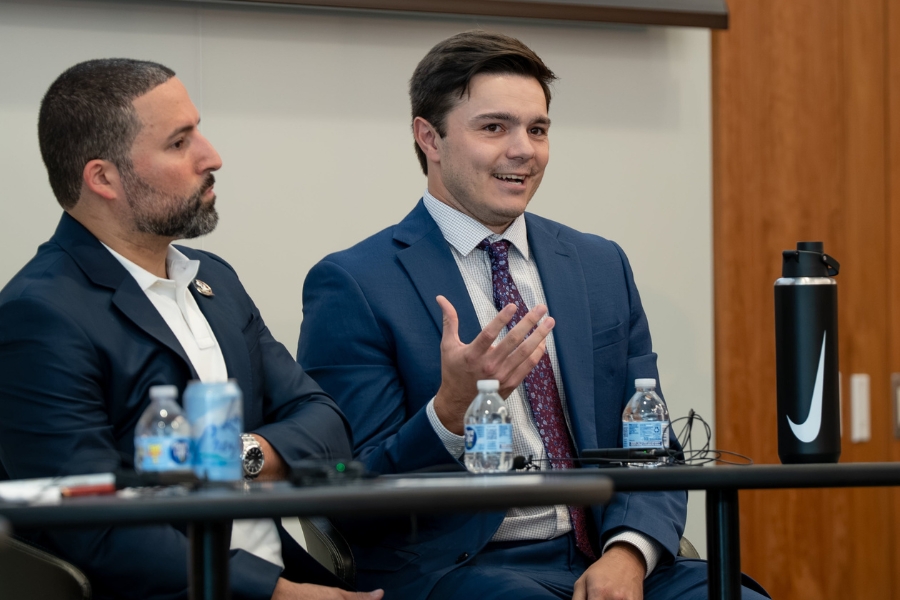
Michael Fly, general manager and assistant coach for FSU men's basketball, said NIL's shifting structure has forced coaching staffs to stay flexible as the industry continues to change.
"Until there's some type of structure, we're all out here trying to do the best that we can in an ever-changing environment," Fly said.
FSU has built resources to help student-athletes navigate this new era of college athletics. Charlie Votey, FSU Athletics' NIL coordinator, was among the participants in the first panel and discussed how his role helps student-athletes understand NIL opportunities, including financial literacy.
"I'm one of those individuals who acts as the resource for the student-athletes to be able to talk over with them and be an educational piece for them to understand," Votey said. "We want to do more with financial literacy and things like that. It's just another education process for them. It's just another opportunity for them to learn."
NIL has also reshaped recruiting. Under the House v. NCAA settlement, Division I schools may distribute up to 22% of athletics revenue directly to student-athletes. The new revenue-sharing model caps payments at $20.5 million per school annually, with that figure expected to rise each year.
But when student-athletes are weighing similar financial offers from competing programs, Fly said the decision often comes back to the traditional pillars of recruiting.
"Once you get into similar ranges financially, it reverts back to what it's always been, which is relationships and how comfortable you feel on visits," Fly said. "It's one of those things, like anything else in life, where you can either sit back and say, 'Oh man, it's not like it used to be,' and 'I can't believe this is what we're doing now.' Or you say, 'OK, let's adapt and let's try to figure out how to get as close to apples to apples as you can.'"
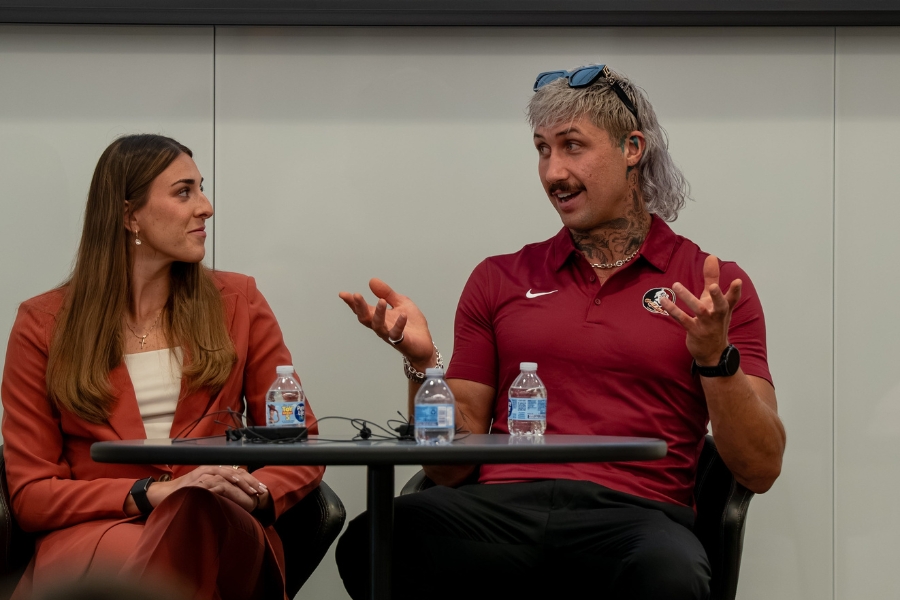
FSU punter Daniel Hughes, an Australian student-athlete who was a Ray Guy Award semifinalist last year at New Mexico, discussed the opportunities NIL can create beyond immediate payments. He said student-athletes should think about how NIL can help them build an identity, network and opportunities that last beyond their playing careers.
"I'm a footballer first," Hughes said. "The social media side is secondary. I want people to remember that first. But the brand side is beyond football. What am I going to do when my career is over and my body kicks out? What am I going to use?"
Hughes has built a sizable following through TikTok and Instagram, with more than 80,000 followers across the two platforms and millions of views on his content. However, because of his international student visa, he cannot monetize brand deals until after his college career ends.
Hughes also encouraged student-athletes to find a brand fit that reflects who they are rather than chasing deals that do not align with their identity.
"You have to be authentic and genuine," Hughes added. "If you're not yourself, then your content doesn't do as well. People can see through it."
"You have to be authentic and genuine. If you're not yourself, then your content doesn't do as well. People can see through it."
– Daniel Hughes, Florida State Football punter
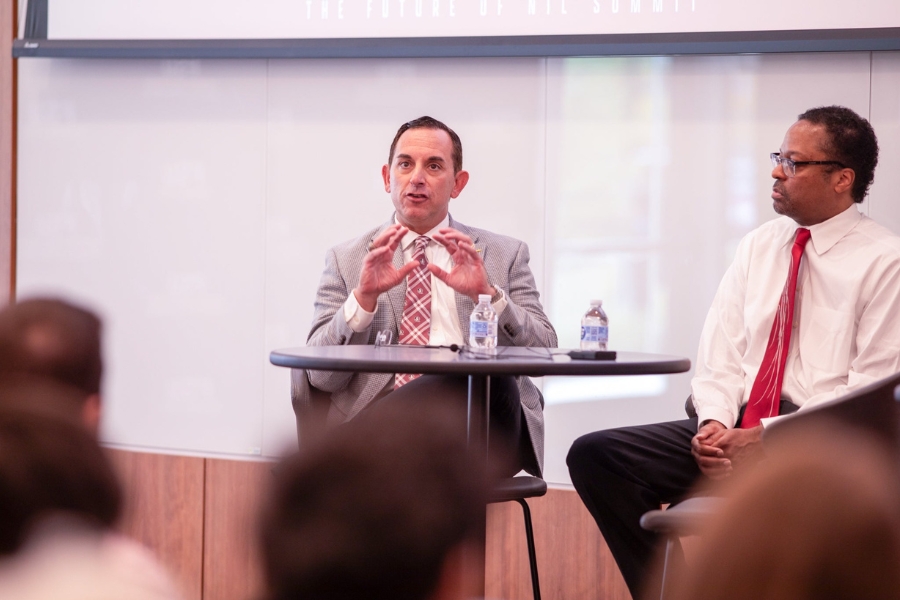
Jason Pappas, a sport management professor in the Anne Spencer Daves College of Education, Health, and Human Sciences, said NIL is also creating opportunities for students interested in careers across sports marketing, law, social media and related fields. Pappas, who coordinates the Sport Management Internship Program, was asked several questions by students during the summit about how to navigate NIL as a potential career path.
Even with uncertainty ahead, from shifting rules and possible congressional action to collective bargaining and other unresolved questions, FSU's NIL leaders emphasized that adapting is more productive than waiting for the perfect system. As NIL evolves, FSU continues positioning student-athletes for success on and off the field with an emphasis on short-term growth and long-term planning.
Photos of the FSU Future of NIL Summit are located on the FSU College of Law website.


