
Two decades ago, I spent my nights working the overnight shift on the support line of the Toronto Rape Crisis Centre/Multi-cultural Women Against Rape. For hours, I'd hold space for survivors of complex harm; violence they'd endured as children, teens and adults. Back then, our work was grounded in a core understanding that gender-based and sexual violence is rarely about "gratification" or even sex. It is about the assertion of power; about entitlement, greed and a demand to take what one wants without consequence.
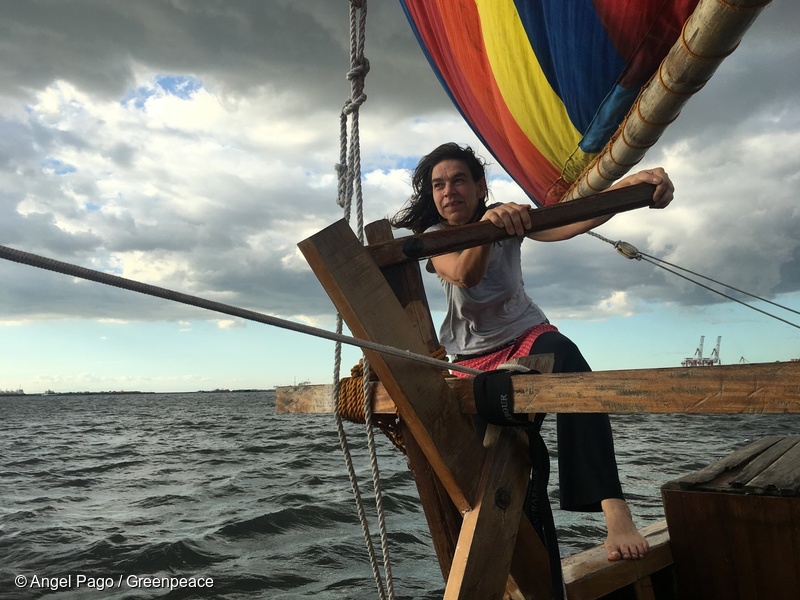
Greenpeace ship Rainbow Warrior arrives in Manila as part of the Balangaw: The Climate Justice tour.
The first few months of 2026 has made that truth inescapable again. The release of the Epstein-related disclosures has been devastating. Girls were simply the currency, the ones hurt most and spoken of the least. Their trauma is treated as public property. What should be a call for justice has become another landscape to mine for scandal.
For most of my career, I worked in or adjacent to the gender-based violence (GBV) movement. Last year, I made a major career shift into environmental justice. The connection between my past and present work feels undeniable. When we speak of the earth, we instinctively gender it as "she" - a mother, a body, a giver of life. I can't help but wonder whether that very feminisation makes it easier for people to justify the idea that she is ours for the taking.
The culture of extraction normalises taking, using and discarding, whether the target is a person or a place. Not only does this mirror the political structures that sustain settler colonialism in places like Canada and Palestine, but it also drives the resource-driven reach of United States imperial power. It is all part of the same system of domination that we see in gender-based violence: the belief that some lives, some lands and some ecosystems exist to be extracted from without accountability.
Right now is a critical moment to challenge this culture. On the environmental front, we can join campaigns to stop deep-sea mining, center Indigenous voices, pressure governments and corporations to halt extractive projects, and support grassroots conservation and access initiatives; but on a deeper level, we can start drawing clearer connections between violence in all its forms. We can stop privileging domination over care, extraction over reciprocity and exploitation over respect. We can rethink power itself, confront greed, and dismantle the entitlement that makes exploitation seem natural. We can and we must, imagine a global order and daily practice grounded in care for all life. We don't need to wait to practice this in our daily choices and we don't need to wait to demand better. We can start today.
Sheila Sampath is a Head of Nature and Biodiversity at Greenpeace Canada.


