
Four deep-tech startups selected for the OIST Innovation Accelerator Program will be based at OIST for about 10 months. Working across a range of fields, including agriculture, antibody therapeutics, environmental technology, and orthopedics, the four startups will collaborate with OIST and local partners to test their technologies in real-world settings and advance their social implementation.
Okinawa faces unique challenges and offers opportunities across a wide range of fields, including agriculture, healthcare, the environment, tourism, and the ocean. For startups from around the world, Okinawa can serve as a "testbed" where they can test new technologies in real-world settings and create new value through collaboration with local partners. On August 24, representatives from all four startups gathered at OIST to introduce their businesses and share the initiatives they plan to pursue in Okinawa. Here, we introduce the four startups and the challenges they are taking on from Okinawa.
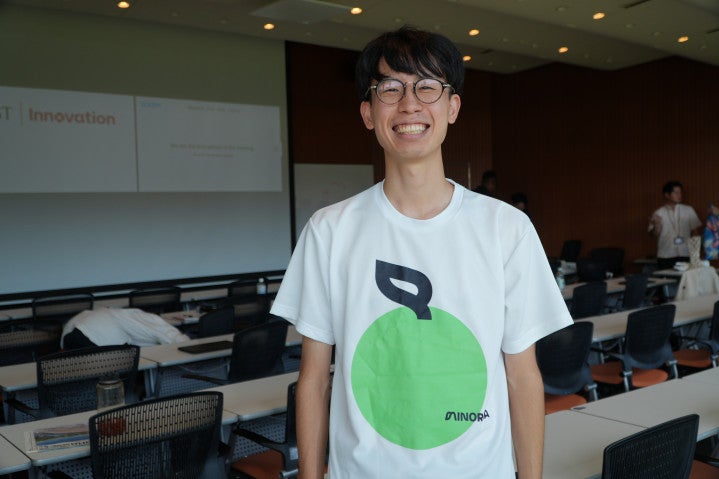
MINORICA
Harnessing the Power of Plants to Build a More Profitable Agriculture Industry in Okinawa
MINORICA is developing "plant enhancement technology" designed to boost photosynthesis and improve plant growth and yields. Its technology has already been adopted commercially by more than 100 companies, growers, and research institutions across Japan, and is being tested on a wide range of crops, including rice, strawberries, grapes, tomatoes, and sweet potatoes. In Okinawa, MINORICA will work with local companies and growers to test its technology in the region's agricultural settings and develop new use cases. With the vision of "building a more profitable agriculture industry from Okinawa," the company aims to contribute to sustainable and economically viable agriculture.
KeKatu
Regenerating Soil by Putting Industrial Waste to Use Environmental technology company
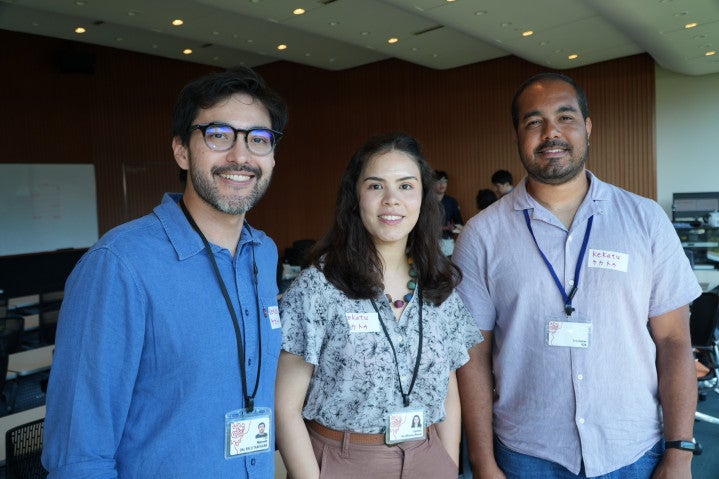
KeKatu is developing a technology that combines industrial byproducts from factories and other sources with beneficial microorganisms to regenerate soil. By using waste materials as soil amendments, the company aims to simultaneously address waste reduction, red soil runoff, and soil regeneration. In Okinawa, KeKatu will conduct tests using ash and other materials derived from locally available biomass, with field trials planned for 2027.
Castomize
Next-Generation Casts through 4D Printing
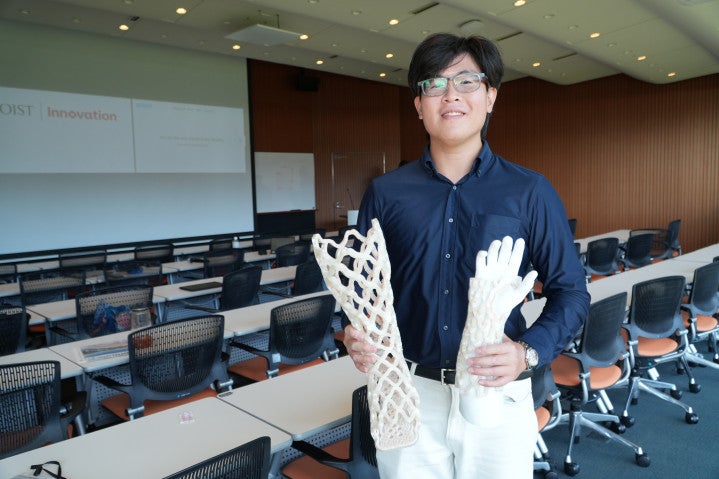
Singapore-based medtech company Castomize is developing 4D-printed orthopedic casts that can be shaped to fit individual patients. The technology is designed not only to improve patient comfort, but also to simplify the fitting process for healthcare professionals. The casts can also be readjusted and reused, helping reduce the burden and costs associated with medical care. In Okinawa, Castomize aims to develop new products for animals, older adults, and emergency medical care, conduct clinical research, and collaborate with local medical and veterinary institutions.
MyImmune
Accelerating Human Antibody Discovery by Skipping Animal Antibodies with AI
MyImmune is developing "AbSapien," a platform that uses AI to identify promising candidates for antibody therapeutics. Starting from existing antibodies and other inputs, the technology searches through vast numbers of animal antibodies to identify promising human candidates, significantly reducing the time required for antibody discovery. In Okinawa, MyImmune aims to optimize its technology to account for the genetic characteristics of the Japanese population and collaborate with research institutions and medical organizations in the prefecture.
In Okinawa Via the OIST Innovation Accelerator
The OIST Innovation Accelerator Program brings promising deep-tech startups from Japan and abroad to Okinawa and supports their growth and expansion into the Japanese and global markets, using OIST as their base.
The program was launched in FY2018 with support from Okinawa Prefecture. Since 2024, it has expanded with additional support from the Japan Science and Technology Agency (JST) through its COI-NEXT program, officially known as the "Program for Creating Innovation Platforms."
Selected teams receive a range of support to help turn their technologies into viable businesses, including grants of up to 10 million yen, individual mentoring, investor matching, and access to OIST's advanced research facilities and equipment.
As these four startups begin their journey in Okinawa, we look forward to seeing what new ideas, partnerships, and innovations emerge-and how they will grow from Okinawa to the world.


