
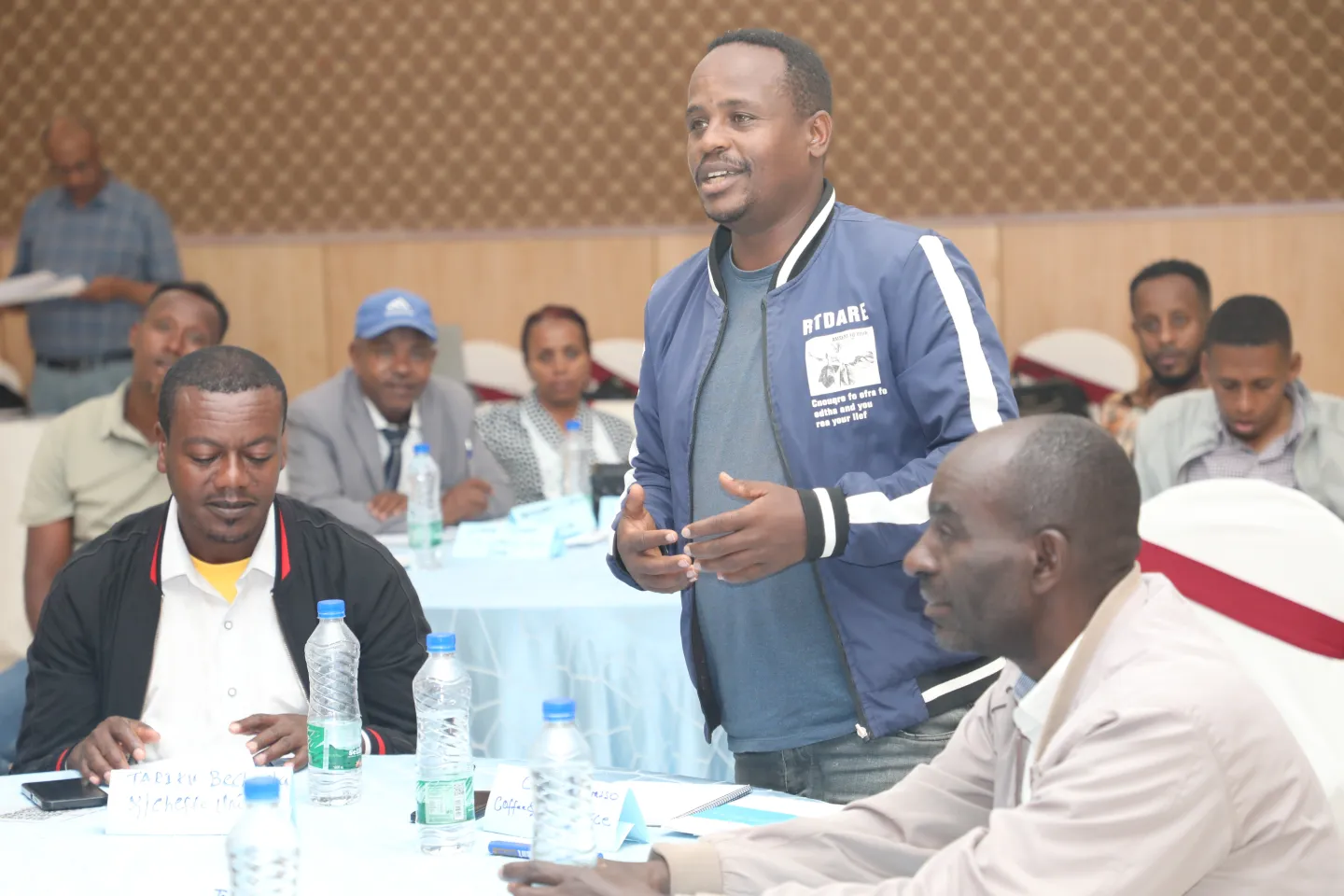
Coffee sector stakeholders in Sidama and South Ethiopia Regional States have completed two ILO capacity-building trainings designed to strengthen labour compliance, improve working conditions, support more informed wage dialogue and boost workplace productivity. Held in Hawassa and Arba Minch, the trainings are part of a broader effort to advance decent work alongside stronger, more sustainable enterprises across Ethiopia's coffee value chain, with the rollout set to continue in Oromia.
© ILO/Homa M. Ejeta
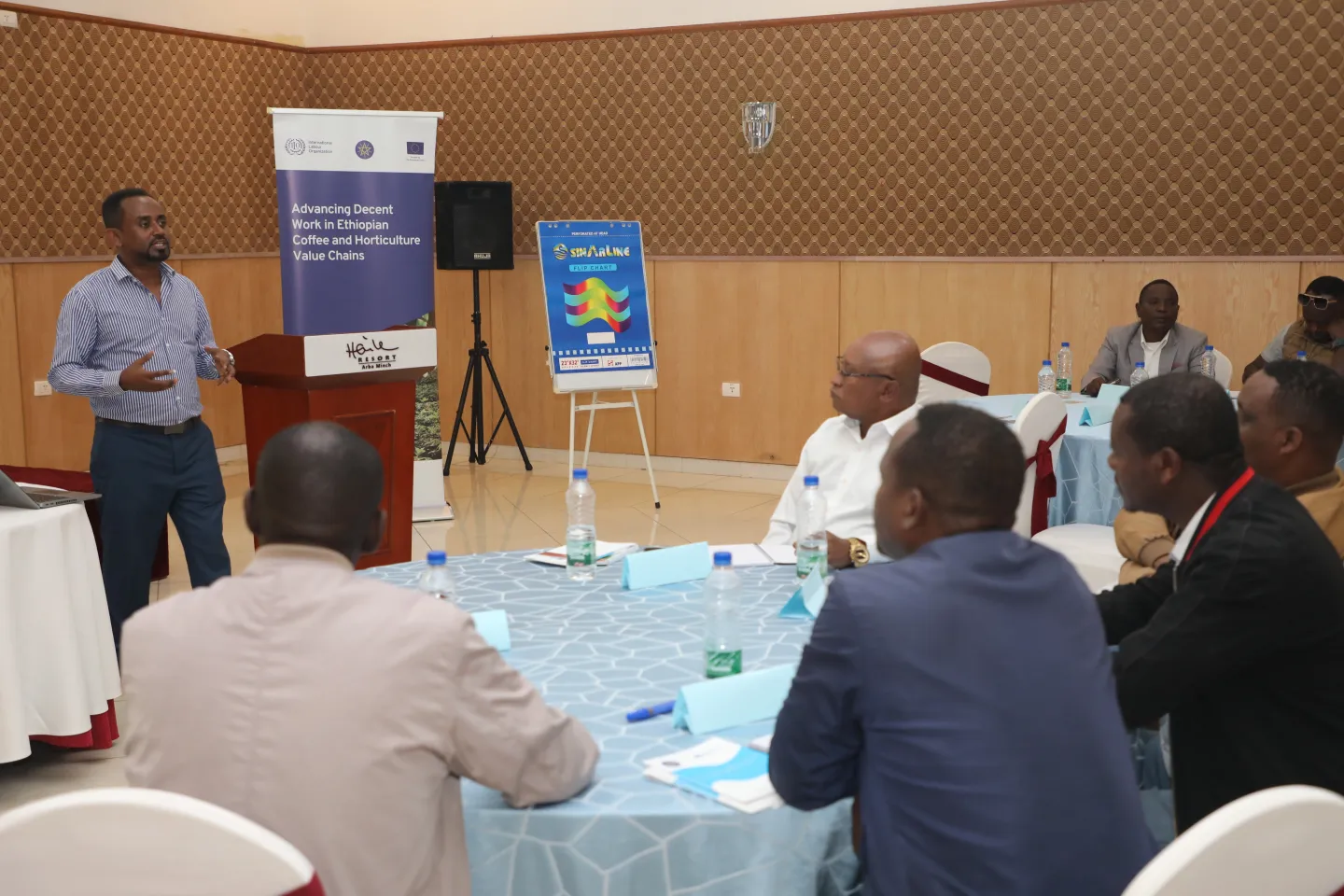
The trainings brought together representatives of government institutions, employers, workers' organizations and other actors from across the coffee supply chain. The aim was to strengthen their ability to understand and apply labour law requirements while connecting better workplace practices with productivity, wage-setting, social dialogue and enterprise sustainability.
The first training was held in Hawassa for stakeholders from Sidama Region, one of Ethiopia's key coffee-producing areas. The initiative then moved to Arba Minch, extending the same integrated capacity-building approach to stakeholders from South Ethiopia Region.
Together, the two sessions mark an important step in taking practical decent work support closer to the institutions, enterprises, workers and organizations that shape conditions across the coffee value chain.
© ILO/Homa M. Ejeta
Linking decent work with a stronger coffee sector
Coffee remains one of Ethiopia's most important export sectors and an important source of income for rural households. Yet the sector continues to face labour-related challenges, including low wages, informal and seasonal employment, limited labour standards enforcement, gaps in labour inspection capacity, gender wage disparities and limited data on wages and working conditions.
These challenges increasingly intersect with questions of competitiveness and market access.
International buyers and markets are placing greater emphasis on sustainability, traceability, responsible business conduct and human rights due diligence. For coffee enterprises and institutions, stronger labour compliance and better workplace practices are therefore not only questions of worker protection. They are also increasingly relevant to productivity, enterprise sustainability and preparedness for evolving supply-chain expectations.
© ILO/Homa M. Ejeta
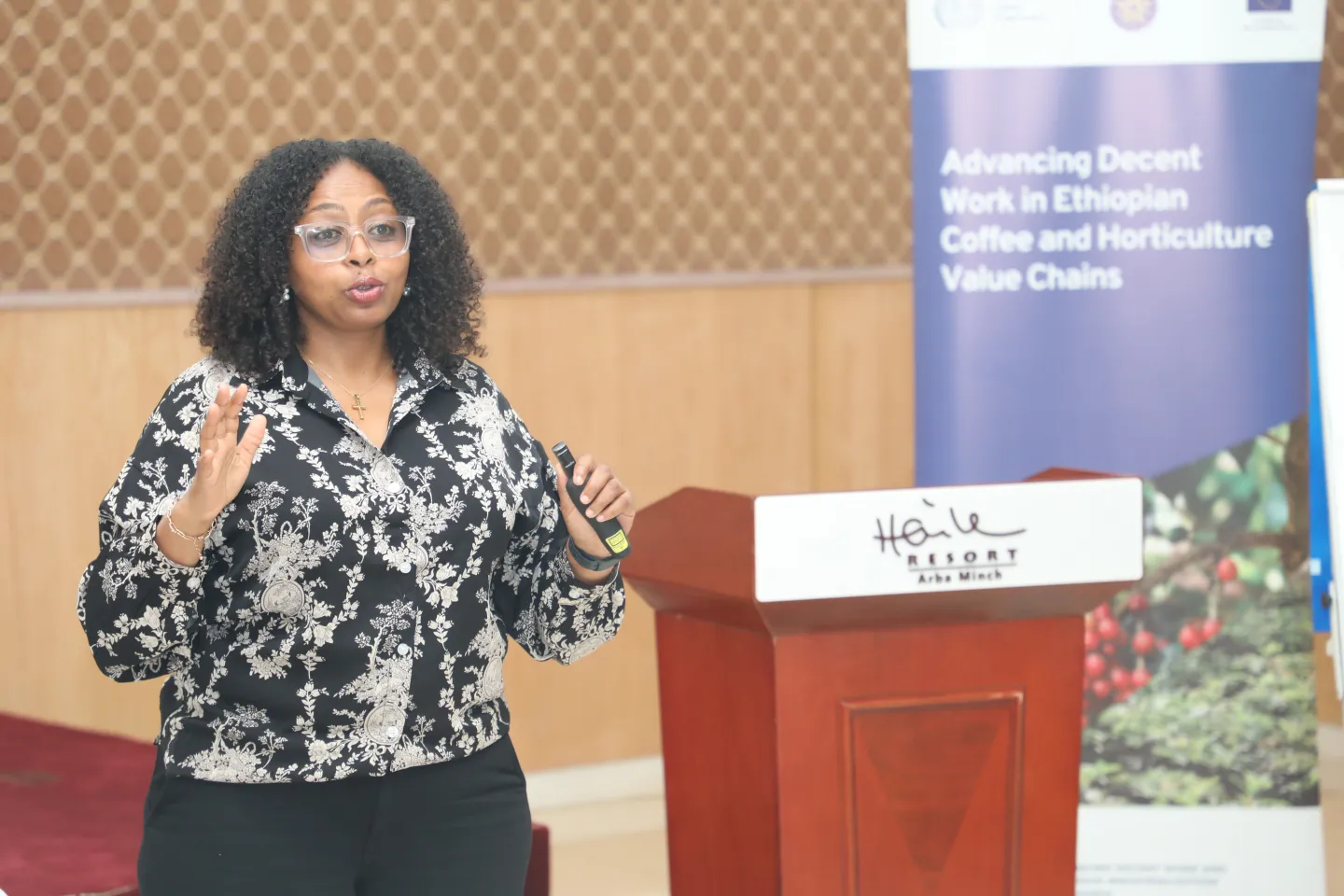
The trainings were designed around that connection. Rather than treating labour law, wages and productivity as separate issues, participants explored how they interact within enterprises and throughout the coffee value chain.
Sessions covered International Labour Standards and fundamental labour rights, including child labour, forced labour, discrimination, occupational safety and health, and freedom of association and collective bargaining. Participants also examined key provisions of Ethiopian labour law, including employment contracts, termination, working hours, overtime, leave entitlements and protections for young and women workers.
Productivity and quality formed another important part of the programme. Discussions introduced practical approaches to productivity improvement, workplace organization through 5S, quality concepts, standard operating procedures, problem-solving and waste reduction across the coffee value chain.
Bringing wages into the conversation
The trainings also created space for a deeper discussion on wages, an issue closely linked to decent living standards, enterprise performance and social dialogue.
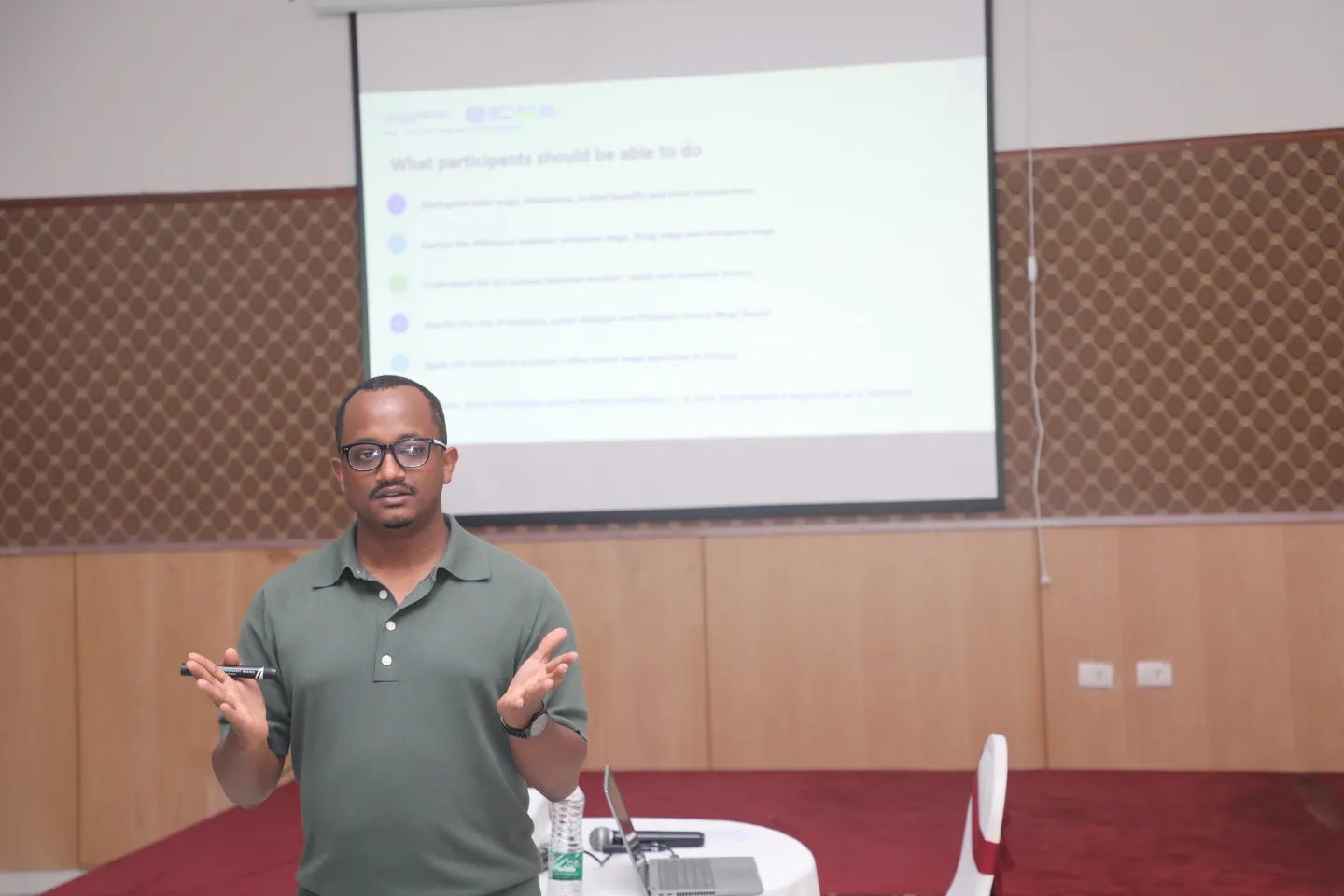
Participants explored basic wage concepts and the differences between minimum wages, living wages and adequate wages. The sessions also looked at wage adequacy, cost of living, purchasing power and the economic factors that can inform wage discussions, including productivity, employment conditions and enterprise sustainability.
© ILO/Homa M. Ejeta
The programme further examined the role of collective bargaining and social dialogue in wage-setting, as well as institutional approaches to evidence-based wage determination. This integrated approach was intended to help government representatives, employers, workers' organizations and coffee value chain actors engage more effectively in discussions on wages, working conditions and productivity, while taking account of both workers' needs and relevant economic factors.
From technical learning to practical action
The trainings were structured as more than a series of technical presentations.
Participants worked through practical coffee-sector examples, case studies and group exercises, exchanged experiences and discussed challenges they encounter in their own institutions and workplaces. The methodology also included question-and-answer sessions and action planning, helping participants translate technical knowledge into practical next steps.
Alongside technical presentations, participants worked through coffee-sector examples and case studies, shared experiences, discussed practical challenges and developed follow-up actions that can be taken beyond the training room.
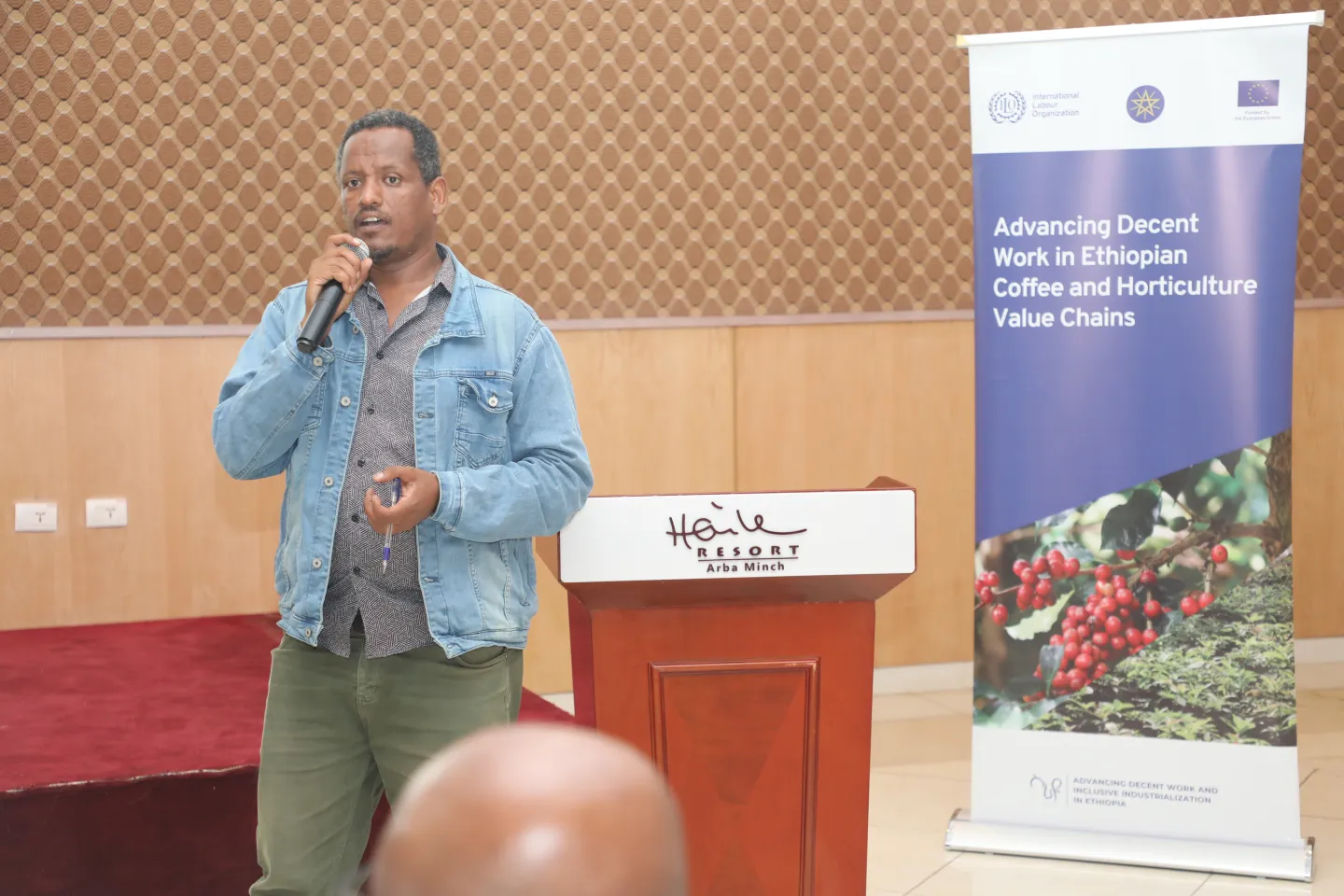
"Capacity-building is a critical component of the ILO-supported intervention because the achievement of decent work and sustainable value chains depends on the knowledge, skills and coordination of all actors involved in the value chain," said Behailu Zebdios, Acting Director of Harmonious Industrial Relations at the Bureau of Labour and Skills, South Ethiopia Regional State.
© ILO/Homa M. Ejeta
His remarks highlighted the importance of equipping government institutions, workers' and employers' organizations, cooperatives, producers, processors and other stakeholders with the practical knowledge needed to address labour and decent work challenges across the value chain. Capacity building also helps create a common understanding among these actors and supports more coordinated action.
A key expected result is that participants take forward concrete actions to improve labour conditions, productivity, wage practices and compliance in the coffee sector.
The approach also recognizes that lasting improvements in working conditions cannot be achieved by one actor alone. Government institutions, labour inspectors, employers, workers and their organizations all have roles to play in strengthening compliance, improving workplace practices and creating space for effective social dialogue.
One ILO in practice
The Hawassa and Arba Minch trainings demonstrate the One ILO approach by combining complementary technical expertise within a single capacity-building initiative.
The collaboration provides participants with an integrated package covering the legal, workplace, productivity and wage dimensions of decent work. It also reinforces the connection between labour compliance and competitiveness, while promoting discussions grounded in law, evidence, productivity considerations and social dialogue.
The approach also helps coffee sector actors better understand responsible business conduct and human rights due diligence, including how identifying, preventing and addressing labour-related risks can contribute to stronger enterprise readiness for responsible international markets.
Following the trainings in Sidama and South Ethiopia, the rollout will continue in Oromia, reaching additional coffee sector stakeholders and extending the initiative across another major coffee-producing region.
The continued rollout is expected to broaden access to practical knowledge on labour standards, working conditions, wages and productivity, while strengthening dialogue among the institutions and organizations that have a direct role in shaping decent work outcomes across Ethiopia's coffee value chain.
About the One ILO Siraye Programme and participating projects
The trainings are delivered under the One ILO Siraye Programme, which brings together different ILO projects and partnerships under a common results framework. The programme focuses on productivity, decent working conditions, effective social dialogue, labour market governance and stronger labour market data systems, enabling different ILO interventions to combine expertise and work towards shared decent work outcomes.
The initiative draws on the complementary expertise of two projects. The European Union-funded "Advancing Decent Work in Ethiopian Coffee and Horticulture Value Chains" project applies a systems-based and area-focused approach to address structural risks and adverse labour impacts in the two export value chains. It works at enterprise, farm, sectoral and institutional levels to improve working conditions, strengthen compliance with national labour law and International Labour Standards, enhance productivity and quality performance, and reinforce capacities for labour inspection, social dialogue and evidence-based policymaking.
The BMZ-funded "Setting Adequate Wages: A Focus on Agriculture (SAW-A)" project supports evidence-based wage-setting in agriculture through statutory minimum wages and/or collective bargaining. It seeks to contribute to decent living standards for workers and their families while supporting sustainable enterprises and employment. The project also strengthens wage-setting institutions, informed social dialogue and collective bargaining, while building the capacity of governments, employers' and workers' organizations to participate effectively in wage-related decision-making.


