
Some two decades after a shaky political transition, Iraq today is a country "at peace, with increased security and a clear determination to win the battle of development," says the UN resident coordinator for Iraq on Wednesday.
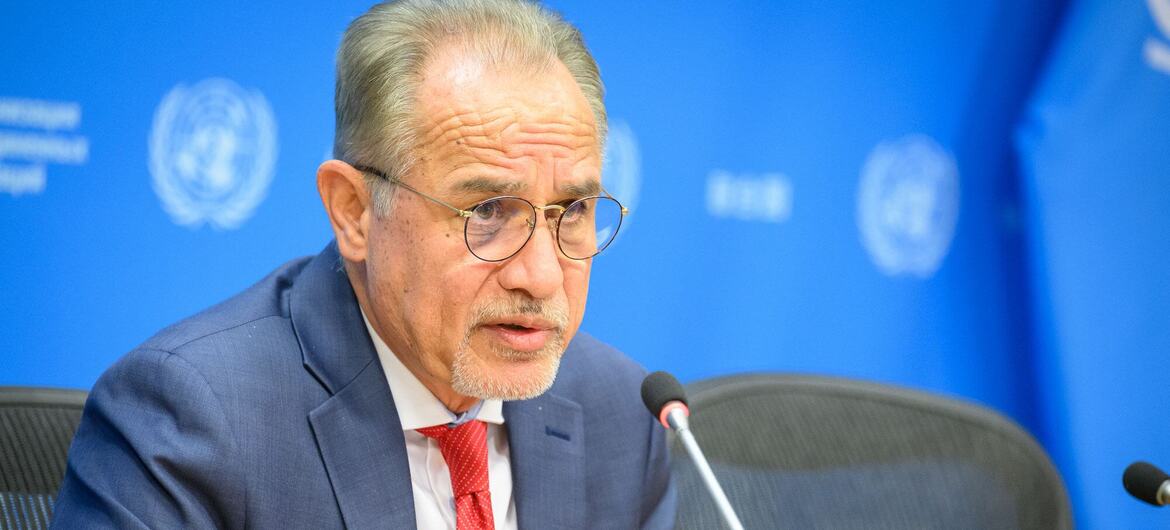
Briefing journalists in New York, Ghulam Isaczai spoke about the transition from the long-running UN Assistance Mission for Iraq ( UNAMI ), which ended its mandate in December, to a partnership with national authorities anchored to development.
"For those who lived through the troubled early years of the transition, today Iraq is unrecognisable and remarkable," he said.
Poverty reduced
Mr. Isaczai highlighted that the country which was devastated by war following the invasion of 2003 now has increased confidence in its institutions and is moving towards greater stability.
He said Iraq has seen a reduction in poverty from 20 per cent in 2018 to 17.5 per cent in 2024-2025 and that preliminary reports suggest the country now ranks high on the Human Development Index , which measures life expectancy, education and standard of living.
Additionally, an improved security environment has enabled five million internally displaced people (IDPs) to return home, while those remaining in camps do so mostly because of housing or civil identification issues.
Finally, he noted an "important milestone" when the country held parliamentary elections last year with a 56 per cent voter turnout - a 12 per cent increase from the previous national vote - with around a third of the candidates being women.
Cooperation focused on development
UNAMI was created in 2003 to assist Iraq through its political transition after the fall of Saddam Hussein and the turmoil that followed, culminating in the occupation of swathes of the country by the ISIL terrorist group which was eventually defeated in December 2017.
The mission ended its mandate on 31 December 2025, but the UN will continue its engagement in the country under the leadership of Mr. Isaczai.
This new phase of cooperation will be guided by a five-year agreement for development signed with the Government of Iraq on 25 December.
The agreement provides a roadmap for supporting Iraq's national priorities including education, health, economic growth, environmental protection and good governance.
Mr. Isaczai said the UN's goal now is to "support Iraq's socio-economic needs but also to reinforce a lot of the work that was done in the past two decades".
From recipient to donor
To support the new cooperation agreement, Mr. Isaczai noted that there is indication Iraq will assist in financing its implementation.
"That shows increasing partnership and ownership by the Government of Iraq to become a donor after being a recipient for many years of humanitarian and development aid," he said.
The UN Country Team in Iraq currently comprises 26 UN agencies, funds and programmes.


