
UN Human Rights Chief Volker Türk expressed concern about ongoing displacement and destruction caused by Israeli strikes against Lebanon as he concluded a two-day visit to the country on Monday.
Lebanon faces crises including delayed elections, economic collapse and conflict. More than 4,300 people have been killed and 12,200 more have been injured in Lebanon since Iran-backed Hezbollah militants joined the regional war triggered by US-Israeli attacks on 2 March, according to national authorities.
"I am concerned that the overall conduct resulting in large scale displacement and denial of returns could amount to international crimes," Mr. Türk said at a press conference in the capital Beirut on Monday.
Seeing displacement up close
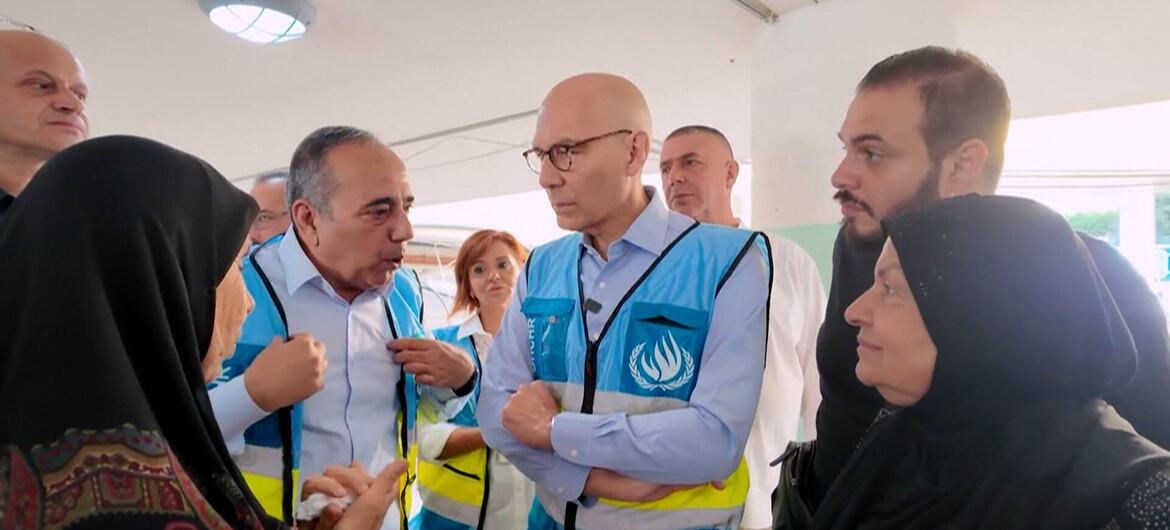
While in Lebanon, Mr. Türk met representatives from the Lebanese Government, civil society groups, national human rights mechanisms and people who were forced to flee their homes because of the conflict.
Despite a 17 April conditional ceasefire agreed by Israel and the Lebanese Government reached via US-led talks, Israel has continued to conduct airstrikes and use explosive weapons in densely populated areas while Hezbollah has likewise continued fighting, leading to mass displacement, according to the UN's human rights office ( OHCHR ).
At a school repurposed as a shelter for around 1,000 people fleeing violence, civilians told Mr. Türk how their homes, schools, healthcare facilities, water distribution networks, electricity infrastructure, places of worship and agricultural land had been destroyed by Israeli strikes.
A man who lost both his mother and brother in Israeli attacks that destroyed their Beirut home said he is now working to document rights violations and is seeking accountability, Mr. Türk recounted.
"I am struck by the widespread damage and compounded suffering that I have seen," Mr. Türk said. "The trauma, frustration and despair are palpable - but so too is the demand for justice which I heard resoundingly."
With the consent of Lebanon's government, the UN human rights office recently deployed a mission to Lebanon to collect information and evidence on alleged human rights and humanitarian violations committed by all parties to the conflict.
The UN Interim Force in Lebanon ( UNIFIL )'s mandate will expire at the end of this year. The peacekeepers' absence could pose new risks for civilians in southern Lebanon, Mr. Türk warned.
Progress is possible
In meetings with civil society organisations, Mr. Türk said local leaders highlighted the need for stronger protections for marginalised groups including refugees, migrants, LGBTQ+ people and people with disabilities.
Mr. Türk said he heard "heartbreaking" stories from these leaders about people with disabilities who struggled to evacuate to safety or access emergency shelters.
However, he recognised Lebanon's progress on several issues, including ratifying the Convention on the Rights of Persons with Disabilities and proposing measures that would abolish the death penalty and strengthen judicial independence and the rule of law.
He further called for improvements to prison conditions and the decriminalisation of same-sex relationships.
Recovering from the current conflict will be complex, Mr. Türk said, as it will take time for communities to trust the government to protect their rights and provide the services, safety and security they need.
"My office and my colleagues here on the ground remain ready to support Lebanon in the promotion and protection of human rights for all," he said.


