
A large team of research led by Monash University and the Lions Eye Institute used the Australian Synchrotron in their investigation of a key mechanism that controls how immune cells coordinate their responses, and how a common virus can sabotage it.
They reported in a paper published in Nature that a tissue protein acts as a central 'traffic controller' for immune cells and can be hijacked by a virus to weaken immune responses.
In a statement on the Monash University website, lead researcher Professor Mariapia Degli-Esposti, Head of Experimental and Viral Immunology at Monash Biomedicine Discovery Institute and Head of Experimental Immunology at the Lions Eye Institute, said the findings fundamentally change how scientists understand the signals that shape immune function.
The regulation of immune responses is remarkably precise, especially within the adaptive T cell system that is essential to antiviral defence.
The results of the research point to new ways to control CD44 activity, which is important because CD44 is a therapeutic target in cancer and autoimmune diseases.
Read the full report.
The macromolecular crystallography (MX2) beamline was used to determine the structure by which an important viral protein m11 in cytomegalovirus cells targets the the fibroblastic reticular cell (FRC) network and interferes with a critical function of the cellular transmembrane glycoprotein CD44.
"Our beamline provides a critical analytical technique for protein mapping, identifying and verifying a protein's primary structure and elucidating its interactions," said Senior beamline scientist Dr Alan Riboldi-Tunnicliffe.
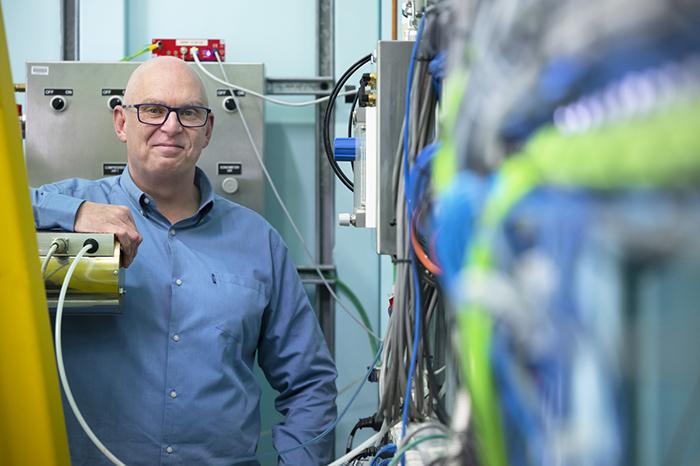
"It is combined with data from multiple other methods in investigations such as this research to full understand very complex molecular processes."
In 2026 ANSTO will undertake a major upgrade of the MX2 beamline's sample robot and angle measurement system. To complete the upgrade, the beamline will be offline for up to 6 months, limiting the commercial beamtime available on MX2 from December 2025 through to June 2026.
Both MX1 and MX3 are fully operational.
Some content in this article sourced from Monash University website.


