
The report was commissioned by Health Secretary Wes Streeting to investigate NHS maternity and neonatal services in England.
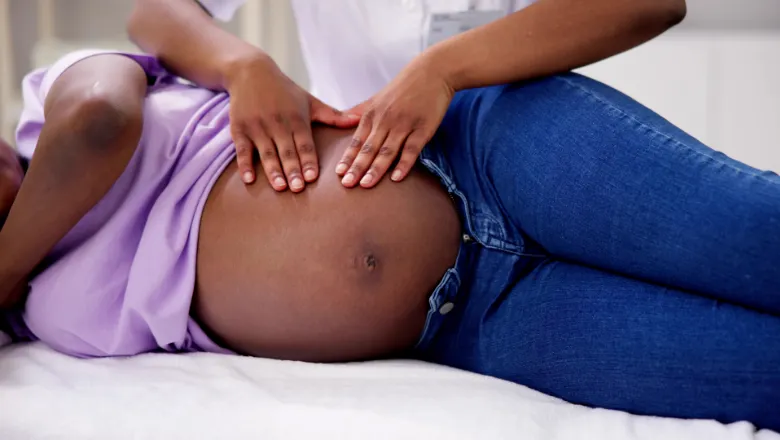
Experts from across King's provided comment on Baroness Amos' interim report on maternity and neonatal services in England.
With final findings projected to arrive in June, the report was commissioned by Health Secretary Wes Streeting to address several failings in maternity and neonatal services provided by the NHS in England. Streeting has promised to act on Baroness Amos' final recommendations.
The interim report includes evidence from over 8,000 people, including over 400 families.
While Baroness Amos has emphasised that there is safe care, access to this is "patchy and inconsistent" across England.

Dr Rebecca Whybrow, Lecturer in Midwifery, Florence Nightingale Faculty of Nursing, Midwifery and Palliative Care
"Safe, humanised maternity care is essential to the welfare of society, serving as the foundation for the health of future generations, families, and communities. It is clear from Baroness Amos's report that England's maternity services lack the capacity, staffing levels and infrastructure required to achieve universally safe care and that these factors further compound structural racism within services. It is also clear there is unacceptable variation in multi-professional team working and unacceptable variation in professional behaviours.
"Tackling capacity, staffing and infrastructure issues within maternity must be a key government priority. Whilst efforts are ongoing the Ten-Year Workforce plan which will examine maternity leadership and staffing in the NHS, it cannot come soon enough. Last week the Royal College of Midwives (RCM) published a survey of newly qualified midwives finding 31% were unable to secure posts once qualified. This review must consider the impact of population changes and the maternity requirements of women living in England.
"Whilst the government's plans to roll out mandatory, ongoing cultural competency training for all midwives, implement schemes such as reciprocal mentoring and leadership training for ethnic minority midwives and neonatal nurses and managers are welcomed. These must be implemented within a developed framework that tackles structural racism in its entirety.
We must learn from maternity units that do provide safe humanised care in areas with diverse populations and apply these learnings across England. Further training and improvement interventions must be delivered within a multi-professional team structure that reflects service provision women receive.
"It is shocking to hear professionals are still not working effectively together respectfully and that women are not receiving compassionate care. It is often the case that the two are inextricably linked. This must be addressed through improved leadership and regulation of healthcare professionals.
"Broadly speaking women across England are receiving good care, however for those at greatest risk of adverse outcomes including global majority women, this is less often the case. Prioritising the health of women and neonates across England must be an urgent priority of the Government."

Dr Claire Feeley, Senior Lecturer in Midwifery, Florence Nightingale Faculty of Nursing, Midwifery and Palliative Care
"While this report doesn't reveal any new findings and is still collecting evidence, it has taken a wider structural lens which situates the day to day failings of maternity services in both the hands of government - ringfenced funding is urgently needed and Trust leadership, demanding a culture change towards transparency, openness and candour when events do go wrong. This mirrors one of the key recommendations in the 2016 Better Births report which identified a no-blame compensation strategy for harmed families would not only benefit those families and much more quickly, there is evidence that it would create a more open and honest culture, where mistakes are identified and lessons are learned. This drives a greater safety culture, one that is predicated on psychological safety for staff and benefits service users in the short and longer term.
"I welcomed the report's recognition that to meet the needs of all service users, equitably and fairly, working conditions for staff must also be addressed. This aligns with our research, the Beacon project, which is exploring how high-quality maternity can be delivered at the organisational level- units which centre their services on local need while providing psychologically safe work environments attend to these 'knotty' issues simultaneously."

Professor Jane Sandall CBE, Faculty of Life Sciences & Medicine, King's College London, said:
"The report highlights a lack of consistency in the provision of care. It paints a picture of a fragmented service where some women at the highest risk of poor outcomes, impacted by structural inequities and many social risk factors receive fragmented care, do not trust the system and where there is no safety net. Furthermore when harm happens, way they are treated compounds the trauma.
Its key findings were that:
- Women need care prior to pregnancy; while they are pregnant (antenatal care); during labour and birth; immediately after birth, and in the six weeks after that (postnatal care).
- The maternity pathway should connect seamlessly with other services including public health, mental health, GPs and social care - when it works well, this pathway can positively influence the future life course of a mother, baby and their wider family.
- Women, midwives and obstetricians said that antenatal appointments were often not long enough to discuss a woman's pregnancy meaningfully - particularly for women with complex health needs.
- Babies of Black ethnicity are more than twice as likely to be stillborn, are at increased risk of preterm birth neonatal admission at term when compared with White babies.
- Black women described feeling that they had to advocate for themselves more forcefully due to their ethnicity, and ethnic minority families feeling that the system is "not for them", resulting in eroded confidence and trust in maternity service.
"None of these findings are news to anyone familiar with maternity services, and I welcome the focus on the whole system, responding to women and families with a focus on a smooth pathway for women and their babies.
"Our research at King's College London provides evidence of a solution that can contribute to improvement. The key challenge is how to implement and scale up a feasible model (which is being piloted already in the NHS) and how to ensure women who need it most receive it."
"Our research provides additional evidence on the impact of community-based continuity of midwife care in the UK. It provides a safety net for women throughout their pregnancy, birth and postnatal journey. Women who receive continuous care from community-based midwives who are part of the wider maternity team have a significantly reduced risk of preterm birth in comparison to those who receive standard care, and women also report a better experience. This has also been found in the Care Quality Commission Care (CQC) annual survey. In addition, our research with national data found a reduction in stillbirth in Black women compared to Black women who were in standard fragmented care models."
Dr Abigail Easter, Reader in Perinatal Mental Health, Department of Women & Children's Health, School of Life Course & Population Sciences
"This report provides an important and timely assessment of maternity and neonatal services in England, highlighting persistent fragmentation, workforce pressures, and inequities that undermine safe, compassionate, and consistent care. While concerning, these findings reflect longstanding structural challenges and reinforce the need for system-level change rather than isolated service improvements."

Dr Kaat De Baacker, Midwife Research Fellow, Department of Women & Children's Health, School of Life Course & Population Sciences
"The health inequalities that are addressed in the interim Barones Amos' report echo findings from recent work at King's College London, called the MUMS@RISC study. This study looked at women with involvement from Children's Social Care during pregnancy and early motherhood. We know that the majority of women with CSC involvement are from the most deprived parts in the country. Women living in deprivation are known to have a two-fold risk of dying than women who live in more affluent areas. Our research has found that those with CSC involvement make up a third of all women who died in the UK since 2014.
"These women also face high levels of stigma and professional judgement, similar to the concerns raised in the Amos report. And while this was not due to racism in this group, it exposes similar judgemental attitudes in the workforce that are impacting outcomes for women and their babies.
"The capacity pressures that are highlighted in the Amos report echo findings from the MUMS@RISC study, but it goes beyond this. Women with CSc involvement often had frequent antenatal appointments, across a wide range of professionals and services. Yet these appointments are often not coordinated or streamlined. If we want to offer all women personalised care, coordination of care between different professionals involved during pregnancy, as well as continuity of care can alleviate some of the existing capacity pressures, while also providing the time and attention all pregnant women need and deserve."

Dr Hannah Rayment-Jones, a midwife and Advanced NIHR Research Fellow, Department of Women & Children's Health, School of Life Course & Population Sciences
"The interim Amos report reinforces concerns that maternity services in England are struggling to provide safe, equitable and compassionate care. It highlights systemic problems, including lack of transparency, workforce pressures and structural racism, which disproportionately affect ethnic minority and socially disadvantaged women.
"While deeply concerning, the findings are not unexpected. Repeated reviews have identified similar issues, yet progress has been limited. The report's focus on inequalities is important, as it confirms that poorer outcomes for some groups reflect structural challenges within maternity services and the wider context in which women access and engage with care, rather than individual factors alone.
"Our research on migration and ethnicity aligns closely with these findings. We have found that Black, Asian and other minoritised ethnic groups, as well as migrant women affected by restrictive immigration policies, experience delayed access to antenatal care, more fragmented care pathways and poorer maternal and infant outcomes. This suggests that wider policy environments, including immigration and welfare restrictions, contribute to poverty and social exclusion and act as important social determinants of maternal and infant health.
"The continued evidence of defensiveness, lack of transparency and families feeling excluded after harm is striking and reflects a persistent cultural challenge. The explicit acknowledgement of racism and discrimination as contributing factors is also significant. This resonates with our research, which highlights how trust, communication and experiences of discrimination can shape women's willingness and ability to engage with maternity services, particularly for migrant and minoritised groups.
"The report depicts a system under strain, with committed staff working in challenging conditions but structural weaknesses affecting safety and equity. For migrant women and those facing social exclusion, these pressures can be compounded by barriers to accessing and effectively engaging with services. While the report highlights the scale of inequalities, wider evidence, including our research, suggests that approaches such as continuity of care, improved communication support and addressing challenges around access and safe engagement with services may help reduce disparities in maternity experiences and outcomes."


