
OJSC Eldik Bank, the first bank in Kyrgyzstan to adopt a comprehensive Gender Equality Policy, has taken another important step toward advancing workplace equality by initiating technical consultations with the International Labour Organization (ILO) on the implementation of ILO Convention No. 190. The consultations were held as part of the Bank's ongoing implementation of its Gender Equality Action Plan and the Action Plan on Convention No. 190 of the Ministry of Labour, Social Security and Migration.
© ILO
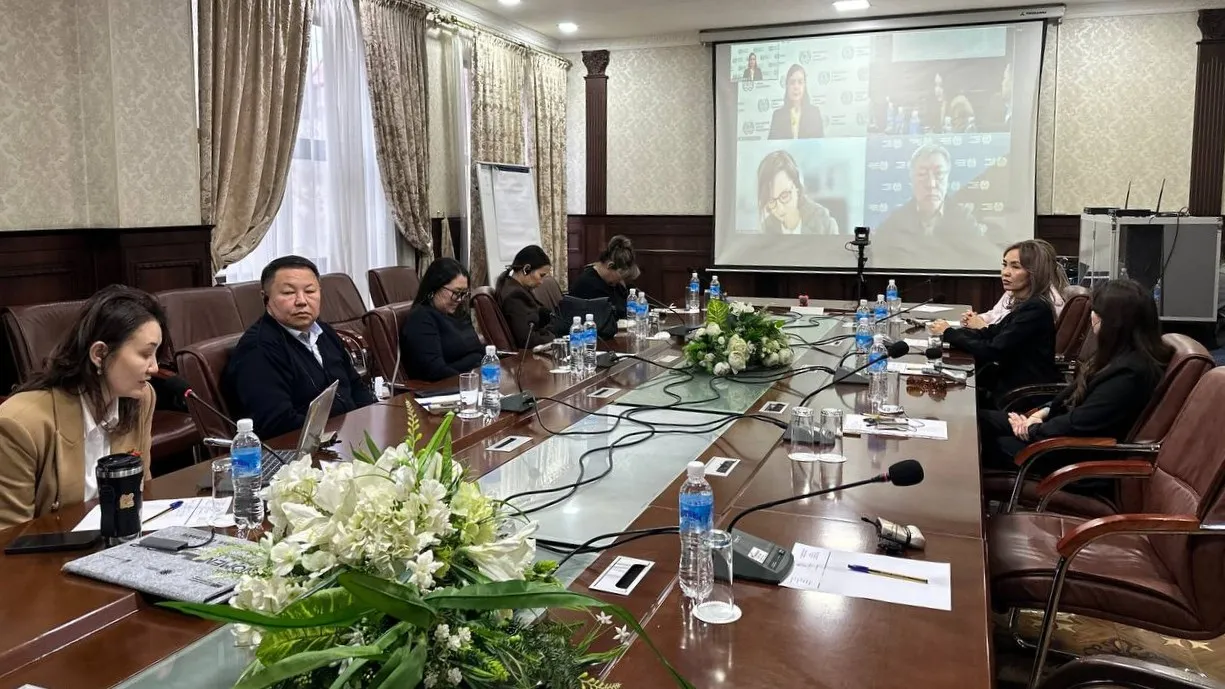
A half-day meeting was held 9 on December 2025 as part of the UN 16 Days of Activism against Gender-Based Violence, aimed at strengthening understanding of the ILO Discrimination (Employment and Occupation) Convention, 1958 (No. 111) and Convention No. 190, and at building institutional capacity to prevent and address workplace discrimination, violence and harassment.
The discussion on violence and harassment in the world of work was led by Özge Berber Agtaş, Gender Equality and Non-Discrimination Specialist at the ILO DWT/CO for Eastern Europe and Central Asia. She presented the key aspects of Convention No. 190, international experiences and good practices, highlighting the role and responsibilities of employers in preventing and addressing violence and harassment through practical workplace solutions, including occupational safety and health (OSH) measures. The consultations outlined practical ways to integrate ILO standards into the Bank's internal policies and procedures to reinforce a safe and inclusive working environment.
Cristina Martinez, Senior Specialist on Enterprise Development and Green Jobs at the ILO DWT/CO for Eastern Europe and Central Asia, highlighted the links between climate change and increased risks of violence and harassment in the workplace. The intervention emphasized that climate change and how extreme heat, adverse weather and socio-economic stress exacerbate existing vulnerabilities and inequalities, particularly for women. As climate impacts intensify, workplace face immense stress which can reduce productivity and increase work pressure, leading to harsher labour practices. Economic insecurity rises, workloads become unpredictable, and competition for resources can grow fierce. In such pressurized environments, the risks of psychological harassment, bullying, and discriminatory practices can escalate. The specialist underscored the need for integrated climate and OSH responses to address these challenges and the need for action by financial institutions is fundamental to mitigate these risks.
We believe that strengthening our capacity to prevent and address violence and harassment at work not only protects our employees but also sets a benchmark for responsible business conduct in the financial sector.
Jyldyz Abdyldaeva, Gender Equality and Social Inclusion Manager, Sustainable Development Department (ESG), OJSC Eldik Bank
"Eldik Bank is thankful for the ILO for engaging and insightful consultations on provisions of Convention No. 190. Ensuring a safe and inclusive working environment is a core priority for us, and we are committed to integrating international standards into our policies and practices. We believe that strengthening our capacity to prevent and address violence and harassment at work not only protects our employees but also sets a benchmark for responsible business conduct in the financial sector," - said Jyldyz Abdyldaeva, Gender Equality and Social Inclusion Manager, Sustainable Development Department (ESG), OJSC Eldik Bank.
The Bank will continue close consultations with the Ministry of Labour, Social Security and Migration and the ILO to ensure that international labour standards are effectively integrated, fostering safe, inclusive working environment free from violence and harassment for all.


