Civilian deaths and injuries from landmines and explosive remnants of war have risen to their highest level in four years, according to the Landmine Monitor 2025 report launched in Geneva on Monday.
It documents 6,279 casualties in 2024. Children remain especially vulnerable, particularly in conflict-affected countries where displaced families are returning to heavily contaminated areas.
"Civilians made up 90 per cent of casualties in 2024," said Loren Persi, Impact Team Lead for the report. "And children remained a significant portion of all casualties, almost half…In Afghanistan, 77 per cent, so over three-quarters of all casualties, were children, which is horrific."
The launch was led by the International Campaign to Ban Landmines (ICBL) and hosted by the United Nations Institute for Disarmament Research ( UNIDIR ).
States withdrawing from treaty
The report warns that the 1997 Mine Ban Treaty faces its most serious challenge in decades, with several States Parties taking steps that "concretely threaten the continued health of the convention", said Ban Policy Editor Yeshua Moser-Puangsuwan.
Five European States Parties - Estonia, Finland, Latvia, Lithuania and Poland - are moving to legally withdraw, citing dramatically altered security conditions after Russia's full-scale 2022 invasion of Ukraine.
On Ukraine itself, Mr. Moser-Puangsuwan noted that the government argues it can "suspend" certain treaty obligations while fighting an international armed conflict - a position the Monitor disputes based on the treaty's legal framework.
The report also cites indications of new Ukrainian mine use in 2024-2025, including devices apparently deployed by drones, although the extent remains unclear.
The Monitor confirms extensive mine use by Myanmar and the Russian Federation, and reports allegations of use by Cambodian forces along the Thai border. Thailand has presented evidence of newly laid mines injuring its soldiers.
Contamination spreading
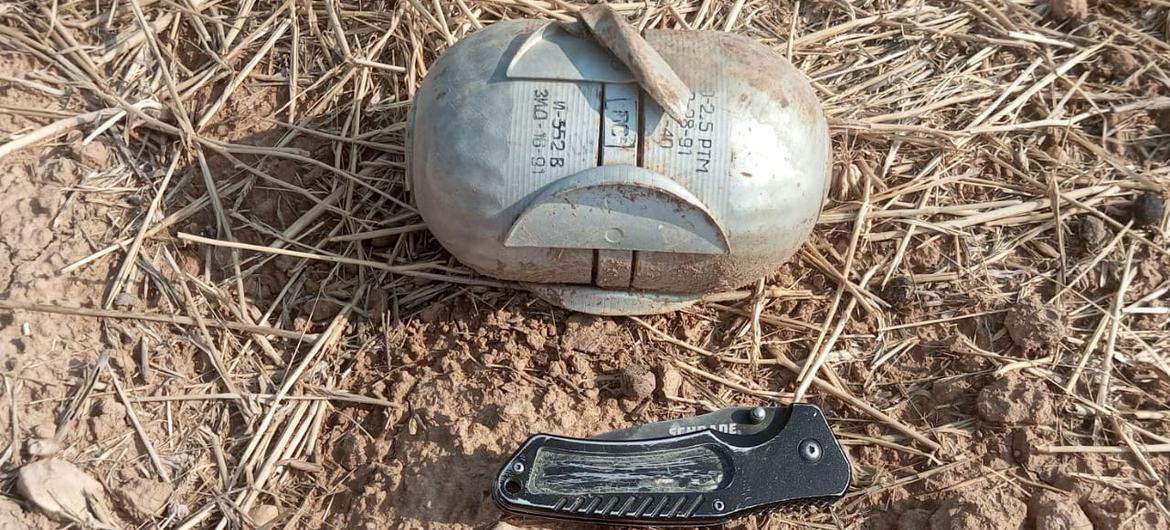
Anti-personnel mine contamination affects at least 57 states and other areas, including 32 States Parties. Seven remain "massively" contaminated: Afghanistan, Bosnia and Herzegovina, Cambodia, Ethiopia, Iraq, Türkiye and Ukraine.
There was some progress. Oman completed clearance in 2025, the first State Party to do so since 2020, and more than half of affected States Parties reduced contamination through survey and clearance efforts last year.
But the broader picture is troubling.
"Despite overall positive progress, the aspirational goal of completing clearance by 2025 remains far from being achieved," said Senior Researcher Katrin Atkins.
"The vision of a mine-free world has not been matched by adequate resources and efforts on the ground. 2030 seems to be the new 2025."