
A research consortium led by a University of Liverpool researcher has received substantial funding to tackle noma, a severe gangrenous disease of the mouth and face.
Noma is a rapidly progressing, devastating disease which primarily affects malnourished young children in regions of extreme poverty, with cases mostly reported in Africa. It starts as an inflammation of the gums which, if not treated early, spreads quickly to destroy facial tissues and bones. It frequently leads to death, with survivors suffering severe disfigurement and lifelong complications. In recognition of its impact on marginalised communities, the World Health Organization added noma to its official list of neglected tropical diseases (NTDs) at the end of last year.
The consortium, led by the University's Dr Stuart Ainsworth has been awarded this funding by Hilfsaktion Noma e.V.
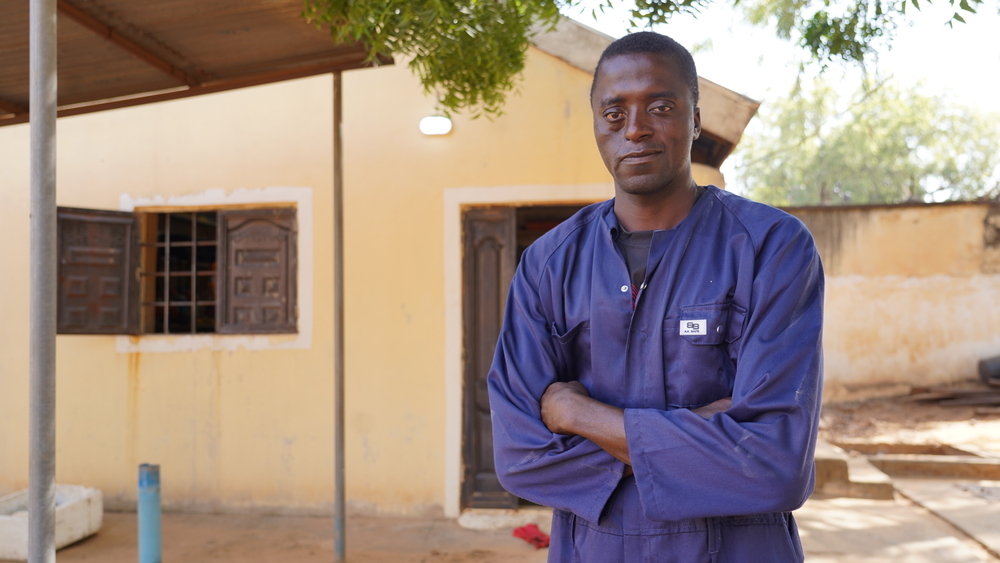
Noma in Sokoto (November 2025) Hussaini Usman, a noma survivor and MSF hygiene agent at the Noma Children's Hospital (NCH) in Sokoto, Nigeria. Médecins Sans Frontières.
Hilfsaktion Noma e.V is a nonprofit organisation that offers medical care to noma survivors via treatment centres in Niger, Guinea Bissau and Nigeria and supports prevention, and awareness programmes in affected regions to give survivors a greater chance at recovery.
The funding will enable the team to investigate the microbiology and immunopathology of noma, helping to better understand the basic fundamentals of the disease.
Mathis Winkler, Head of Projects at Hilfsaktion Noma e.V., whose mother, Ute Winkler-Stumpf, founded the charity and sadly passed away in August 2025, said: "My mother was a strong believer in research and always hoped to solve the riddle of this deadly disease. We're excited to be a part of this crucial project to demystify noma as we look to continue her legacy."
Dr Stuart Ainsworth, Senior Lecturer and Future Leader Fellow from the Department of Infection Biology and Microbiomes at the University of Liverpool, said: "Noma is a truly devastating disease that has afflicted humankind for millennia. Yet, despite its severity, it remains largely unknown and poorly understood. We already know that chronic malnourishment and poverty are major risk factors, but this significant funding will allow us to pinpoint which bacteria drive the disease, whether it's caused by a single species or several acting together, and to understand its interaction with the immune response and why some children develop noma while others do not. With this knowledge, we can begin developing early screening tools."
The PathNoma alliance brings together researchers from the University of Liverpool, Liverpool School of Tropical Medicine's (LSTM) Centre for Neglected Tropical Diseases, ISGlobal, the CaixaResearch Institute, and Médecins Sans Frontières (MSF). By combining world-leading microbiological research with frontline humanitarian expertise, the partnership hopes to generate the evidence needed to change how noma is understood, prevented, and treated.
Professor Adam Roberts, Professor of Microbiology in the Centre for Neglected Tropical Diseases at LSTM, added: "The microbiology of noma has been neglected for far too long. Understanding the bacteria involved and how the body's immune system responds is essential to finding ways to prevent and stop this disease in its earliest stages. This collaboration will help fill critical gaps in knowledge and create a foundation for effective interventions that will save lives and prevent suffering."
MSF has been supporting the Noma Children Hospital in Sokoto for more than 10 years, conducting specialised surgical camps, as well as providing mental health and psychosocial care. MSF will be focussing on prevention of noma, increasing screening activities, and being part of the PathNoma study. MSF are hoping the findings of this study will increase early detection and improve prevention.
Building on years of humanitarian experience and renewed scientific focus, the PathNoma consortium will hopefully be able to unravel the mystery of noma and generate the evidence needed to drive effective prevention and protect children and communities at risk.
This works forms part of the University of Liverpool's Infection Resilience frontier. The frontier addresses urgent global and national challenges in infection resilience, delivering scientific breakthroughs and practical solutions. From shaping UK government policy to advising global health organisations, experts help steer the world towards better preparedness, faster response, and stronger defences.
Image courtesy of Hilfsaktion Noma e.V.


