
Mr Tran Kim Sol, a Khmer farmer in Can Tho, Vietnam, usually grew three crops of rice a year. But in 2020, he left his field empty for the whole summer.
The Mekong Delta was experiencing one of its worst salinity intrusion events, with salt water reaching more than 100 km inland. High rice prices meant nearby farmers risked planting a third crop. But when seawater reached their fields, the losses far outweighed the cost of leaving the land fallow.
That's when Mr Sol met the researchers from Can Tho University, who were leading the 6-year, A$2.3 million ACIAR-funded FOCUS project in partnership with Charles Sturt University. They were looking for pioneering farmers to test crops that could help Mekong Delta farmers adapt to salinity.
'When the researchers first asked me to grow beetroot, I had doubts because we had never grown it here,' said Mr Sol . 'I had grown maize and mung beans, but never beetroot.'
However, his curiosity overcame his doubts. With guidance from the researchers, he began testing beetroot. The salt-tolerant crop matured quickly and grew successfully in paddy fields between rice seasons.
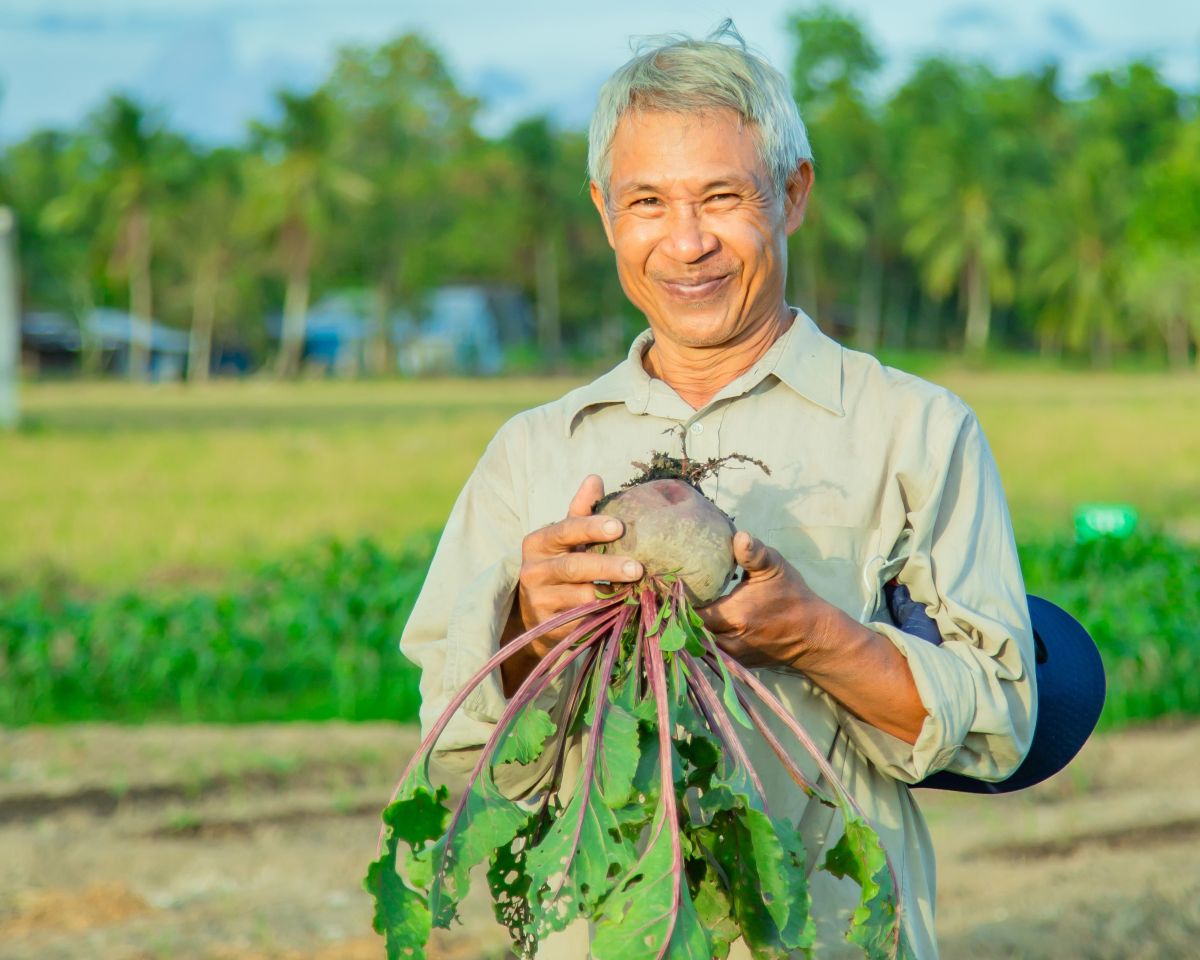
Local traders were surprised too. When Mr Sol first offered them beetroot, some asked whether it had been grown elsewhere.
'It was exciting to see how surprised they were,' said Mr Sol.
The crop also earned Mr Sol an encouraging price, 5 times the local price for rice at the time.
'We selected crops that had performed well in climate-adaptation programs elsewhere,' said Can Tho University senior researcher Dr Dang Duy Minh. 'We combined unfamiliar crops, such as beetroot, with crops farmers already knew, including maize and watermelon.'
The project also tested simple soil-management practices, including mulching with rice straw and using CSIRO-developed, ACIAR-supported Chameleon sensors. In the trials, mulching helped retain moisture, reduce watering needs and limit salt movement towards the soil surface. The sensor showed farmers when crops needed water. Together, these practices help farmers halve water use during the dry season, reduce labour while supporting soil health.
Building skills for an uncertain climate
But the value of trying something new went beyond one crop, or one farmer.
'We are proud that the project strengthened the skills of researchers, local agricultural extension officers and farmers. The challenges will change, but the people with the skills to respond will remain. That is very encouraging,' said project leader Dr Jason Condon from Charles Sturt University.
Ms Thanh Thuy, a local agricultural officer involved in the project, said its close collaboration with farmers and agricultural officers was one of its greatest strengths. Annual reviews gave farmers opportunities to assess the trials and learn about new crops and practices.
'We used repeated training and field evidence to build farmers' confidence in the new practices,' she said.
Still, Dr Condon warned, 'We should not expect beetroot to be a permanent answer. As the climate changes, farmers will need to keep adapting,'
Adaptation is an ongoing process
'More work is needed before these adaptation options can become economically and environmentally viable at scale,' said project coordinator Dr Chau Minh Khoi from Can Tho University.
'Farmers need reliable markets,' he explained. 'Without buyers and sustained demand, they are unlikely to see these crops as practical alternatives to rice.'
The options must also be tailored to local conditions because salinity levels vary across the delta. Farmers therefore need crop calendars that match the timing and severity of salinity in each area.
'At ACIAR, we see adaptation as an ongoing process rather than a one-size-fits-all solution,' said Dr Johnvie Goloran, ACIAR Research Program Manager for Soil and Land Management. 'What works for one farming community may not work in another, so local knowledge, strong partnerships and continued experimentation will be critical.'
'The crop calendar will be key to unlocking the potential of alternative crops,' said Dr Khoi. 'But changing practices is a major shift for families who have followed the same rice calendar for generations. Strong partnerships will be essential.'
Researchers and local agricultural officers will also investigate whether adding upland crops to rice-based farming systems can store more carbon in the soil.
'Early results suggest that adding legumes to farming systems could increase soil carbon,' said Dr Khoi. 'We plan to investigate this further.'
Extending impact across the Mekong
After 6 years of project implementation, from 2020 to 2026, the team is now working with an international development partner to extend one of its proven approaches across the Mekong Delta. With support from the Australian Government's Aus4Adapation program, 500 Chameleon sensors are being sent to Vietnam. Together with the project's established network of trained extension officers and farmers, these additional sensors will help more farmers use limited water supplies more efficiently during the dry season and strengthen opportunities to generate income from upland crops.
'Beyond deploying sensors, the Aus4Adaptation initiative is working closely with Can Tho University and other partners to connect farmers with markets for alternative crops. We aim to develop market-based solutions that deliver economic benefits for farmers and support long-term adaptation,' said Mr Phan Vinh Quang, Deputy Director of the Aus4Adaptation program.
Local farmers are also taking a more active role in field research. Farmer Mr Le Thanh Ky in Can Tho offers another example of local adaptation. After more than 2 decades as a civil engineer, he returned to farming and began looking for alternative practices as salinity worsened. Through project training and collaboration with researchers, Mr Ky learned to monitor soil and water salinity, improve soil health and test beetroot.
'You don't have to wait for perfect conditions. Start with what you have,' Mr Ky said.
Learn more about the ACIAR-supported FOCUS project and its work with farming communities in the Mekong Delta.


