
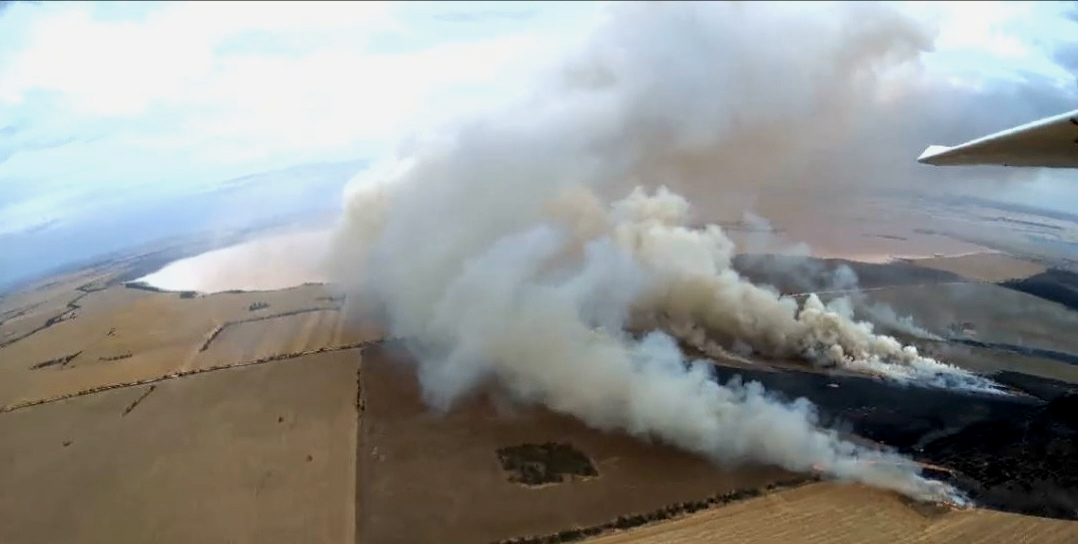
CFA is urging farmers to prepare for heightened fire danger after a fast-moving fire spread through standing crop in Nandaly over the weekend.
Crews were called to a header fire shortly after 3pm on Sunday, 22 November. The fire quickly spread, prompting the first Emergency Warning this fire season for Bimbourie, Daytrap Corner, Lake Tyrrell and Nandaly, advising residents to shelter indoors.
More than 30 CFA tankers responded alongside six water-bombing aircraft.
During the incident, a CFA firefighter sustained burns and was transported to a Melbourne hospital for treatment.
The fire burnt approximately 2000 hectares of standing crop and destroyed five outbuildings before being declared under control at 7.04pm.
CFA District 18 Assistant Chief Fire Officer Gavin Wright said the incident highlighted the dangers posed by heavy crop loads across north-west and western Victoria, with much of the cereal harvest still to come.
"We've already seen a concerning number of fires linked to lentil harvesting operations, including the loss of harvesting machinery," Gavin said.
"When these fires spread into standing cereal crops, the heavy fuel loads can create intense, fast-moving fires that are extremely difficult to control.
What's particularly concerning is that much of the cereal harvest is still ahead of us, meaning the greatest risk may be yet to come."
CFA is urging farmers to familiarise themselves with the Voluntary Grain Harvesting Guide, which provides guidance on assessing fire risk and identifying when conditions make harvesting unsafe.
Gavin said following the guidelines and regularly reassessing conditions throughout the day were critical to reducing the risk of harvest fires.
"One of the most effective ways to prevent a harvest fire is knowing when to stop," Gavin said.
"Delaying harvest can be frustrating, but protecting lives, livelihoods, machinery and crops must always come first.
"The guidelines are there to help farmers make informed decisions about when it's safe to harvest and when conditions are simply too dangerous."
Farmers are encouraged to monitor changing weather conditions, including wind speed, temperature and humidity, and be prepared to cease harvesting when conditions become unsafe.
CFA also recommends establishing firebreaks, positioning firefighting equipment and water carts close to harvesting operations, and ensuring everyone working on the property understands their fire plan.
"Conditions can change quickly, and farmers need to be prepared to make the call to stop harvesting before a fire starts," Gavin said.


