
As part of its "Ignition" event on Tuesday, NASA announced a series of transformative agencywide initiatives designed to achieve President Donald J. Trump's National Space Policy and advance American leadership in space. These actions reflect the urgency of the moment, but also the tremendous opportunity ahead for world-changing science and discovery.
"NASA is committed to achieving the near‑impossible once again, to return to the Moon before the end of President Trump's term, build a Moon base, establish an enduring presence, and do the other things needed to ensure American leadership in space. This is why it is essential we leave an event like Ignition with complete alignment on the national imperative that is our collective mission. The clock is running in this great‑power competition, and success or failure will be measured in months, not years," said NASA Administrator Jared Isaacman. "If we concentrate NASA's extraordinary resources on the objectives of the National Space Policy, clear away needless obstacles that impede progress, and unleash the workforce and industrial might of our nation and partners, then returning to the Moon and building a base will seem pale in comparison to what we will be capable of accomplishing in the years ahead."
NASA Associate Administrator Amit Kshatriya said, "Today we are aligning NASA around the mission. On the Moon, we are shifting to a focused, phased architecture that builds capability landing by landing, incrementally, and in alignment with our industrial and international partners. In low Earth orbit (LEO), we are recognizing where the market is and where it isn't, recognizing the incredible value of the International Space Station, and building a transition that builds a competitive commercial ecosystem rather than forcing a single outcome the market cannot support. In our science missions, we are opening the lunar surface to researchers and students nationwide, and with Space Reactor‑1 Freedom, we are finally putting nuclear propulsion on a trajectory out of the laboratory and into deep space. And this is all possible by investing in our people, bringing critical skills back into the agency, putting our teams where the machines are being built, and creating real pathways for the next generation of NASA leaders. Our workforce is the jewel of NASA, and from their leaders, they need clear mission goals, the tools to execute, and to get out of their way. This is what Ignition is about."
Going back to the Moon
The announcements build on recent updates to the Artemis program, including standardizing the SLS (Space Launch System) rocket configuration, adding an additional mission in 2027, and undertaking at least one surface landing every year thereafter. Under this previously updated architecture, Artemis III - scheduled for 2027 - will focus on testing integrated systems and operational capabilities in Earth orbit in advance of the Artemis IV lunar landing.
Looking beyond Artemis V, NASA announced March 24 it will begin to incorporate more commercially procured and reusable hardware to undertake frequent and affordable crewed missions to the lunar surface, initially targeting landings every six months, with the potential to increase cadence as capabilities mature.
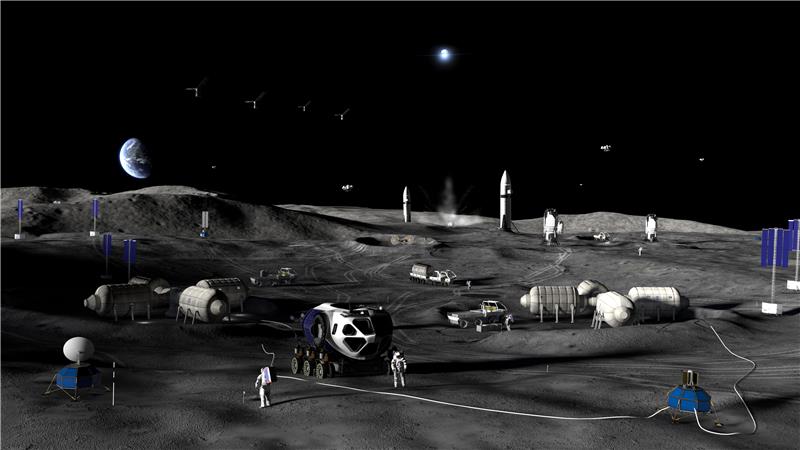
To achieve an enduring human presence on the Moon, NASA also announced a phased approach to building a lunar base. As part of this strategy, the agency intends to pause Gateway in its current form and shift focus to infrastructure that enables sustained surface operations. Despite challenges with some existing hardware, the agency will repurpose applicable equipment and leverage international partner commitments to support these objectives.


