
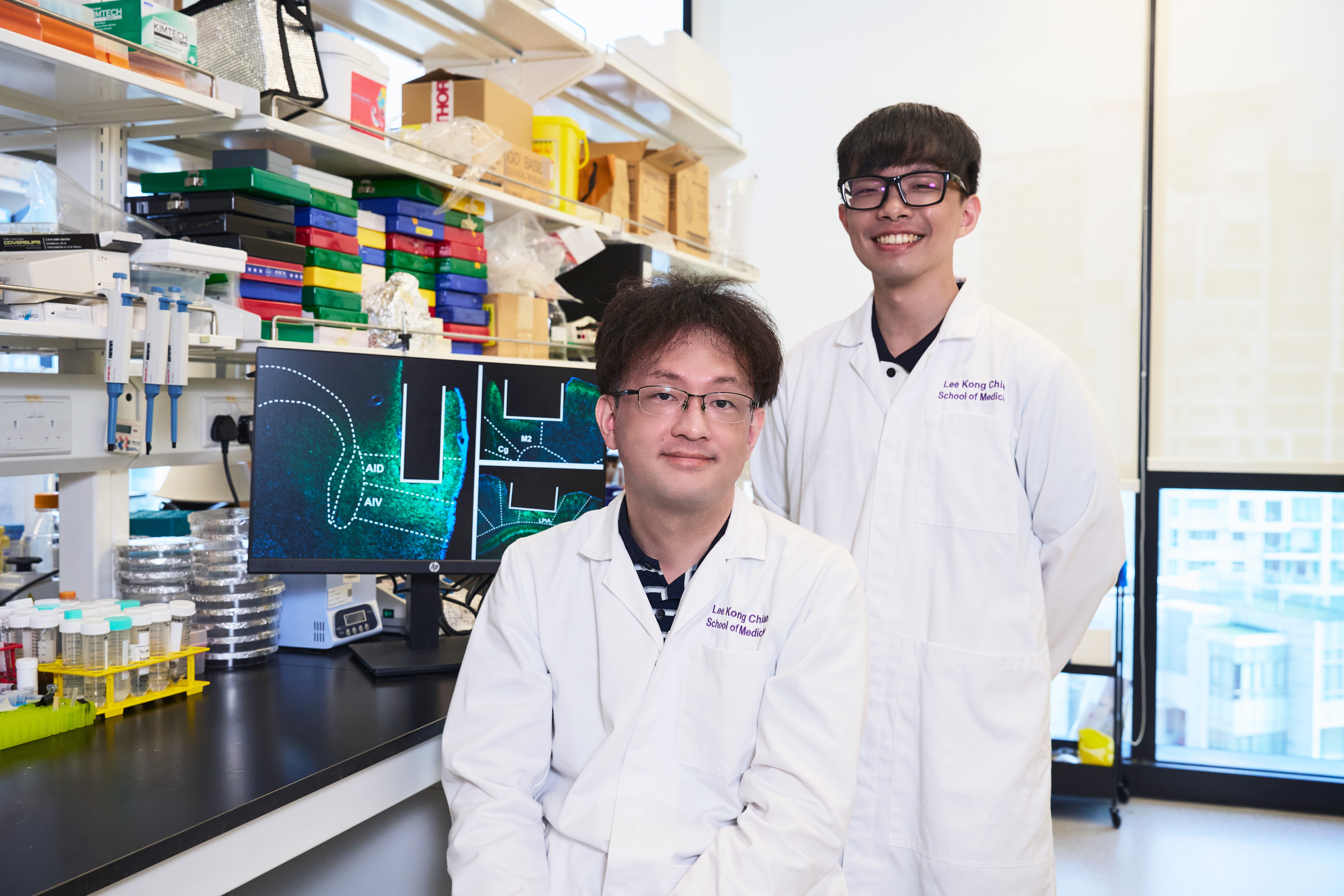
 Scientists from the Lee Kong Chian School of Medicine at Nanyang Technological University, Singapore have uncovered how different brain regions work together to enable self-control.
Their findings advance the understanding of conditions such as attention-deficit hyperactivity disorder and addiction, and could lead to more effective management of these disorders.
Using mice, the researchers found that three brain regions contribute to impulse control in distinct ways. The dorsomedial frontal cortex (dmFC) and anterior insular cortex (AIC) engage in a "push-pull" mechanism, where the dmFC functions like a brake to promote patience and the AIC as an accelerator driving impulsivity.
Meanwhile, the posterior parietal cortex acts like a clock and regulates how the brain tracks the passage of time.
In the next step of the research, the researchers aim to investigate how these mechanisms are disrupted in various self-control related disorders, and to test treatments that target each of them.


