
The OSCE launched the third edition of the mentoring programme for Central Asian Women in Renewable Energy on 17 February 2026, in partnership with the Global Women's Network for the Energy Transition (GWNET). The programme continues to support women's leadership, professional development, and participation in the energy sector across the region.
A total of 32 mid-career women were selected through a competitive process and matched with experienced mentors from the energy field. Through tailored mentoring, the programme aims to strengthen participants' leadership skills, expand their professional networks, and support their career advancement in one of the least gender-diverse sectors in the OSCE region. This persistent gap limits the sector's ability to fully benefit from available talent to respond effectively to evolving energy needs and deliver inclusive and forward-looking energy solutions.
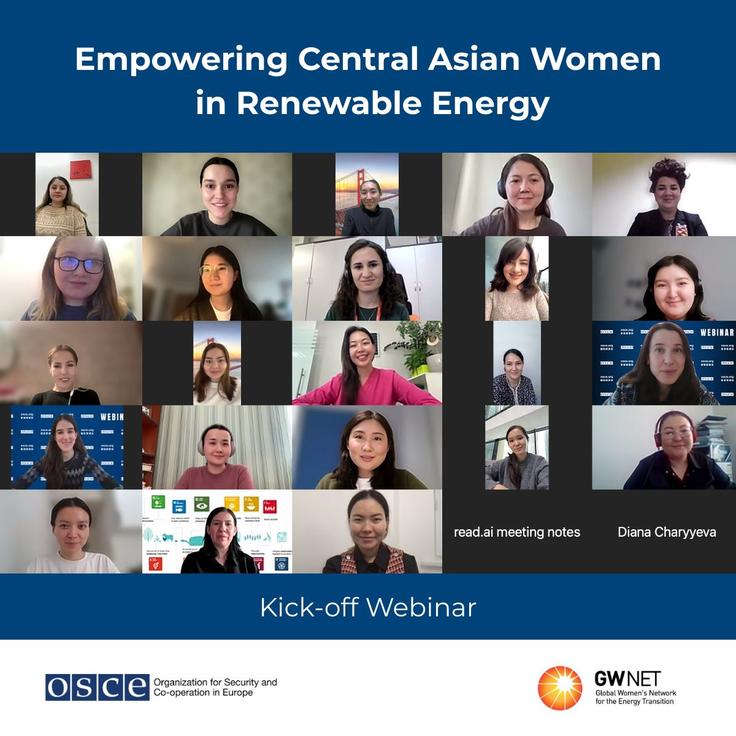
Participants of the OSCE mentoring programme for Central Asian Women in Renewable Energy
By supporting the leadership and professional growth of mid-career women, the programme contributes to addressing the gender gap in the energy transition. Since its launch, more than 60 women energy professionals from Central Asia have benefited from the first two editions. The third edition will further expand a growing regional network of women professionals contributing to a more inclusive and resilient energy future.
The mentoring programme is a key component of the OSCE project on " Promoting Women's Economic Empowerment in the Energy Sector in Central Asia " which supports participating States in advancing their energy security and sustainability goals by strengthening women's role in the sector. The project is funded by Austria, Canada, France, Germany, Italy, Norway, Poland, and the United Kingdom.


