
The prospects for establishing Aarhus Centres in Uzbekistan were the focus of a seminar on 26 October in Tashkent, organized by the OSCE Project Co-ordinator in Uzbekistan, the State Environmental Expertise Center and the Central Asian Green University.
The event brought together 40 participants. They included representatives of state bodies, civil society organizations, academia, and students of the University.
Participants learned about the Aarhus Convention's three pillars: access to environmental information, public participation in decision-making, and access to justice. They also heard about the experience of OSCE-supported Aarhus Centres in other Central Asian countries. A panel discussion brought together state, civil society, academic and youth perspectives on the possible organizational models, functions and partnerships of future Aarhus Centres in Uzbekistan.
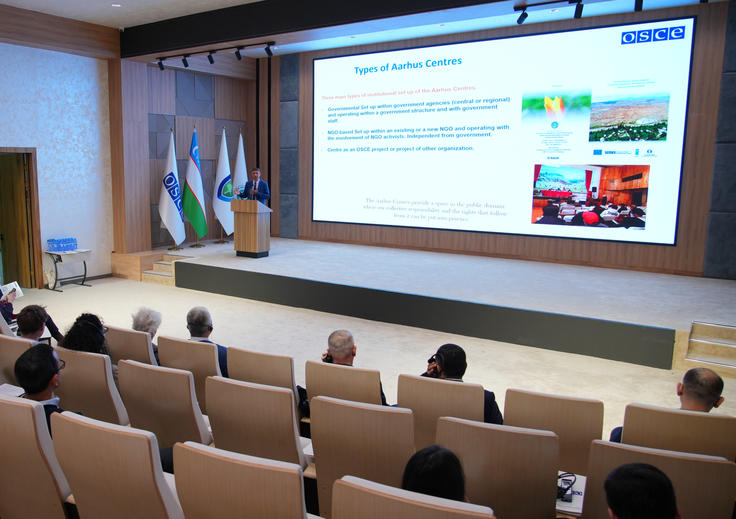
Participants heard about the experience of OSCE-supported Aarhus Centres in other Central Asian countries
Gayrat Mukhamedov, Director of the State Environmental Expertise Center, said open environmental information and active public participation were key conditions for effective environmental governance. He added that Aarhus Centres would strengthen dialogue between the state and society.
The OSCE Project Co-ordinator in Uzbekistan continues to support Uzbekistan in implementing the Aarhus Convention and promoting the involvement of women and youth in environmental decision-making.


