
Five fortunate biosecurity trainees of the Indigenous Ranger Biosecurity Program had the unique opportunity earlier this year, to step behind the scenes at the department's Melbourne-based Post Entry Quarantine (PEQ) facility.
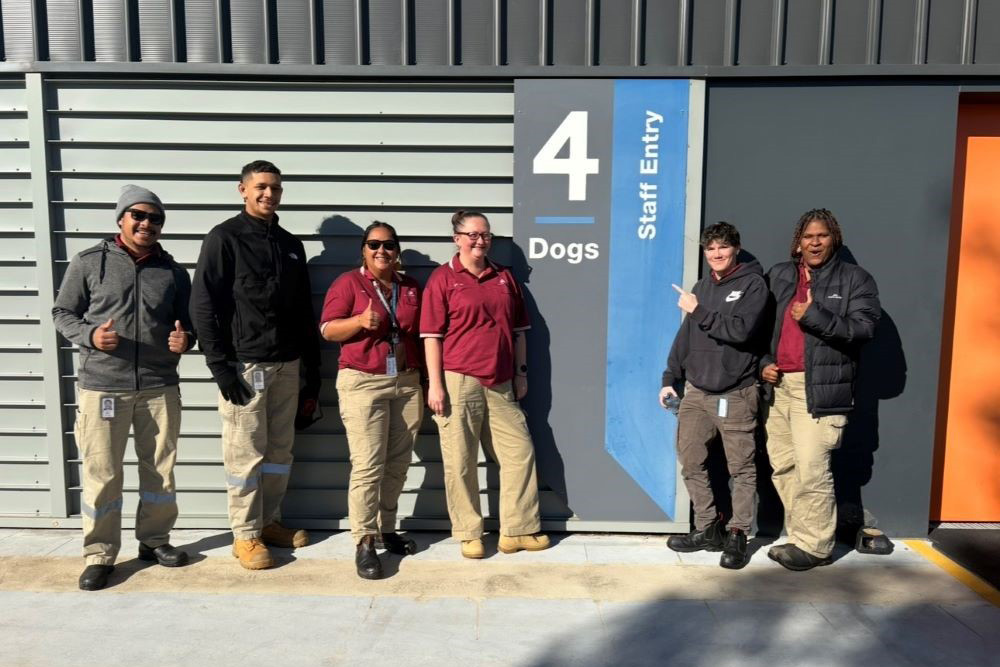
This immersive field trip allowed trainees to experience first-hand the important work carried out at one of the department's most fascinating facilities. Staff at PEQ play a critical role in Australia's biosecurity system by observing and caring for high-risk animals and plants being imported into the country. These include valuable horses competing in international competitions, plants and seeds for nursery propagation and of course, people's treasured pets. Each animal and plant must be quarantined while their health is checked to make sure, they don't carry any pests or diseases.
The trainees toured PEQ's 5 compounds and learned about the processes and rigorous protocols in place to manage the biosecurity risks.
In the cats and dogs' compound, trainees assisted with cleaning and feeding, while in the horses' compound they witnessed the complexity of managing large animals and experienced the importance of grooming. In the avian facility, the trainees observed the incubation processes and monitoring the health of bird eggs. In the bees compound they were introduced to 'flight rooms' where live bees are carefully handled in controlled environments. Finally, in the plants compound the trainees were taught the science behind grafting and greenhouse operations.
The excursion to PEQ highlighted to the trainees, the diverse roles and expertise within the department and the wide-ranging, rewarding experiences a career in biosecurity has to offer.
Each of the trainees also recently completed the Certificate III in Government. This course is a mandatory and substantial component of the traineeship, designed to build core competencies and foundational knowledge relevant to working in the public sector.
Throughout the course the trainees were supported by a dedicated trainer who guided them through a range of learning activities covering key areas of government operations, communication, ethics, and administration. Completing this qualification has been a significant achievement for each person and underscores the success of the Indigenous Biosecurity Traineeship.


