
Women's participation is critical for sustainable agri-food systems.
However, in many countries within the Indo-Pacific region, women are still denied equal access to education, participation, fair wages and mentorship.
This challenge led ACIAR to establish the Meryl Williams Fellowship in 2020. It is a program designed to support women agricultural researchers across the Indo-Pacific to strengthen their leadership and management skills.
Fellows undertake workshops, collaborative projects and tailored placements to build networks and develop their professional leadership skills.
More than 110 fellows from across our region have completed the program since it began. Many have advanced their careers as researchers, professors, deans and supervisors - each working on their own research initiatives, policies or programs to create impact in their respective countries.
Although many work separately, the power of what they can achieve as a group was on full display in the Philippines this year at the 4th annual Women Empowerment and Leadership in Agriculture, Aquatic, and Natural Resources (WELA) Conference.
Conference showcases impact
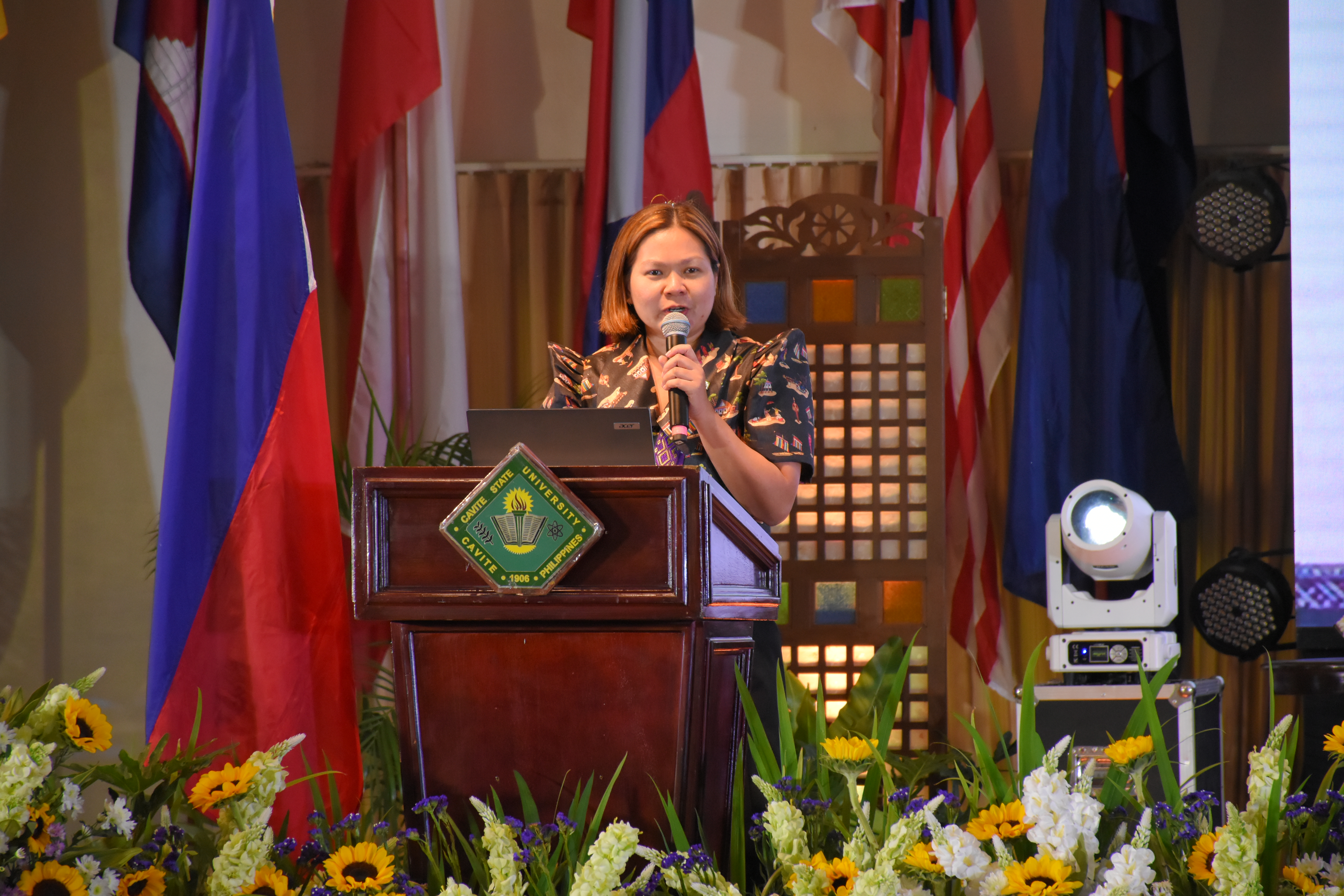
In March, the WELA conference drew researchers, academics and diverse professionals to Cavite State University to advocate for gender-responsive agricultural programs and policies.
Started by Meryl Williams Fellowship alumni 3 years ago, the conference advances programs and research initiatives to achieve sustainability and inclusion in the Agriculture, Aquatic, and Natural Resources (AANR) sectors.
Dr Cynthia Rundina-Dela Cruz, a MWF alumna and one of the lead organisers for this year's event, recognised that the conference has developed into what it is today owing to support from institutions such as ACIAR, Philippine Council for Agriculture, Aquatic and Natural Resources Research and Development of the Department of Science and Technology (DOST-PCAARRD), Southeast Asian Regional Center for Graduate Study and Research in Agriculture (SEARCA) and the respective universities of the fellows.
'Because of our networks with these development partners, WELA was a success. Without their support, none of those activities would be possible,' said Dr Rundina-Dela Cruz.
The first forum in 2023 was a half-day online meeting attended by around 300 participants. Three years later, more than 400 people from across the Philippines and overseas joined the 3-day event focusing on inclusive leadership and foresight in AANR. This involved online participants from the current Meryl Williams Fellowship cohort, which expanded opportunities for international knowledge exchange and networking.
As a result of the most recent conference, there are now new initiatives that aim to further gender equity in AANR in the Philippines, including a plan to establish a community of practice for gender and development in AANR research. The conference also created a supportive network for participants to share experiences, mentor one another and work collectively to address workplace and community challenges. Cavite State University will share best practices in conference production with the 2027 host institution, Mindanao State University-Naawan, to strengthen institutional partnerships and ensure the successful continuation of the project.
Fellows advance sustainability and inclusion in AANR
Recent Meryl William Fellowship graduates, two of whom were also speakers during the WELA Conference, are leading gender-responsive initiatives in AANR in the Philippines.
Dr Mary Grace Sedanza, an Associate Professor at the University of the Philippines, leads several research projects in aquatic science, including drone-assisted mangrove restoration, climate-resilient coastal research and support for shellfish growers.
In her mangrove restoration project, she trains selected participants to use drones for planting mangroves to conduct restoration on their own using an approach she learned in the MWF program.
'The collaborative process of identifying problems and implementing locally owned solutions strengthens community ownership and the sustainability of any project or program,' said Dr Sendanza.
Another speaker, Ms Katrina Kae Principe, Supervising Science Research Specialist and Assistant Director at the Policy Coordination and Monitoring Division of DOST-PCAARRD supports gender inclusiveness by championing inclusive policies and processes with stakeholders and partners, especially in project proposal assessments.
'Gender equity should not be treated as an add-on or an afterthought but a core principle guiding sustainable development,' said Ms Principe.
However, another fellow, Dr Jesselle Solivas, Supervising Science Research Specialist at DOST-PCAARRD, emphasised that women leaders in neighbouring ASEAN countries still have limited access to agricultural opportunities.
'Women have dual roles in their organisations and in society, so they should be given due recognition for their work,' said Dr Solivas, emphasising the importance of creating enabling environments for women.
And so, the work goes on. In future years, WELA hopes to continue to help build gender-responsive institutions through ongoing support from various organisations and the joint efforts of MWF alumni.


