16 Days of Activism to End Gender-Based Violence | 25 November - 10 December 2026
Everyone has the right to live free from violence. However, for many people with disability the ability to access safety, support and justice is not always straightforward.
Gender-based violence takes many forms, including domestic and family violence, sexual violence, coercive control, financial abuse, exploitation and harassment. People with disability can experience this in ways that are not recognised or understood by mainstream services and systems.
Violence can occur in settings where people rely on others for assistance, including disability services, supported accommodation and other care environments.
People with disability can also face additional barriers when seeking help. These include inaccessible services and information, discrimination, communication barriers, financial dependence, social isolation and systems that do not recognise their experiences or respect their autonomy.
During the 16 Days of Activism to End Gender-Based Violence, People with Disability Australia (PWDA) is highlighting the work we do to prevent and respond to violence against people with disability.
Through our individual advocacy, projects, research, partnerships and systemic advocacy, we work to improve access to services, strengthen prevention, support healing and recovery, and challenge the barriers that put people with disability at risk.
In this blog:
- Preventing violence before it happens
- Supporting people experiencing violence, abuse and neglect
- Making domestic and family violence services accessible
- Making healing and recovery services accessible
- Challenging the systems that allow violence to happen
- Recognising coercive control beyond intimate relationships
- Supporting women with disability to participate and lead
- Helping people stay safer online
- Everyone has a role in ending gender-based violence
Preventing violence before it happens
Preventing gender-based violence means ensuring people have adequate information and opportunities they need to recognise unsafe situations and build healthy relationships.
PWDA's Healthy Relationships project focuses on preventing domestic, family and sexual violence against people with disability.
Through accessible resources, education and community engagement, the project aims to make information about healthy relationships, safety and rights available to people with disability.
In September 2026, PWDA delivered a workshop in Charlestown, developed with specialist input from Family Planning NSW (FPNSW). Designed for people with disability who benefit from Easy Read information, alongside support workers, the workshop used accessible resources and interactive activities to explore healthy and unhealthy relationships, consent, personal boundaries and recognising warning signs of abuse.
The next step of this project will include developing accessible eLearning and additional resources to support people with disability to better understand their rights, recognise unsafe situations and make informed decisions about their relationships.
The next Healthy Relationships workshop is being planned for late February 2027 in the Illawarra/Shoalhaven region.
Prevention must include people with disability from the beginning. Everyone should have access to information that helps them understand their rights and make informed decisions about their relationships and lives.
Learn more about Healthy Relationships project.
Supporting people experiencing violence, abuse and neglect
When someone experiences violence, abuse, neglect or exploitation, finding help and navigating the systems designed to provide protection can be difficult.
For people with disability, these barriers can be even greater. Services may be inaccessible, information may not be provided in appropriate formats, or people may not be believed or have their experiences taken seriously.
PWDA's Individual Advocacy service supports people with disability who are experiencing, or are at risk of, violence, abuse, neglect and exploitation.
Our advocates work alongside people to understand their rights, explore their options and navigate the systems and services they need to access.
This can include helping people to:
- Access appropriate services and supports, including domestic and family violence services.
- Understand their rights and the options available to them.
- Raise concerns and make complaints about abuse, neglect or unsafe treatment.
- Communicate their needs and have their voices heard by organisations and service providers.
- Navigate complex systems and processes.
- Seek changes to decisions, services or circumstances that are affecting their safety and wellbeing.
People with disability should not have to navigate complex systems alone when their safety and rights are at risk. Individual advocacy can help people overcome barriers, access services and exercise their rights.
Call us on 1800 422 015 or got to our Get Help page to find out how we can help you.
Case study: Helping a woman with disability navigate the justice system
Some details have been changed to protect the client's privacy.
After leaving a relationship with the father of her child, a woman with psychosocial disability was having difficulty seeing her child after her former partner moved away without formal arrangements in place.
She was worried she would not be taken seriously by police or legal services because of her disability and background. She was also unsure how to navigate the system.
A PWDA advocate helped her document what had happened, build confidence and contact police and other services. They also supported her to connect with community and mental health services to help protect her safety and wellbeing.
The outcome
Although cost barriers meant she could not continue pursuing custody arrangements, her former partner was later charged with breaching domestic and family violence orders.
The client said she felt heard and supported for the first time when dealing with the justice system.
Her experience shows how individual advocacy can help people with disability navigate complex systems and have their voices heard.
Making domestic and family violence services accessible
People with disability have the right to access the same safety, protection and support as everyone else. However, mainstream domestic and family violence services are not always accessible or equipped to respond to their needs.
PWDA's Building Access project has worked to improve the accessibility and inclusion of domestic and family violence services, with a focus on women and children with disability.
The project recognises that accessibility involves more than physical access. It also means making sure information, communication, service processes and support are accessible and responsive to individual needs.
The Building Access project received new funding, allowing PWDA to co-design a blended learning approach, combining accessible, self-paced eLearning with interactive, face-to-face workshops. This approach supports domestic and family violence professionals to strengthen their understanding of disability inclusion and explore practical ways to apply inclusive practices within their own services.
PWDA delivered two workshops in the Newcastle and the Hunter region, in September 2026. Local professionals explored the barriers people with disability can face when seeking domestic and family violence support. Together they identified practical ways to make services more accessible, inclusive and responsive to their needs.
Thanks you it was a fantastic workshop I learned so much from your presentation, am so glad that I had the opportunity to attend.
Hopefully some more in the near future.
Anonymous participant feedback
Women with disability have been leading this work and sharing their experiences with services. This knowledge helps organisations understand what needs to change and why meaningful inclusion matters.
Domestic and family violence services must be designed to include people with disability from the outset. People with disability cannot be expected to navigate services that were not designed with them in mind.
Making healing and recovery services accessible
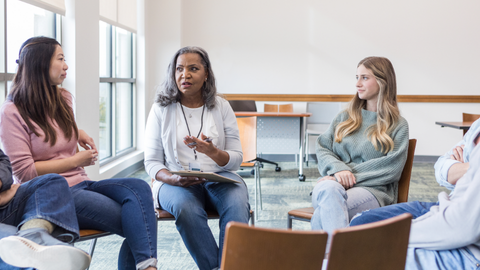
Access to healing and recovery services is essential for women with disability who have experienced violence.
PWDA's recent Access to Healing and Recovery Survey found that many women are unable to access the support they need.
The findings highlight significant barriers:
- 88% of women with disability disagreed or strongly disagreed that there are enough accessible healing and recovery services.
- 68% said they had been unable to access these services when they needed them.
- 76% said the cost had stopped them from accessing support.
- 68% disagreed or strongly disagreed that staff understood their disability and access needs.
The survey also showed what women with disability say is needed for healing and recovery. 80% strongly agreed that feeling safe is a key factor in their recovery journey, while 92% identified psychologically safe spaces as essential.
There was also strong support for women with disability having a say in how services are designed and delivered. 92% agreed or strongly agreed that healing and recovery programs should be co-designed with women with disability.
The survey identified four priorities for improving services:
- More trauma-informed programs and services.
- Better disability awareness and understanding among staff.
- More affordable healing and recovery programs.
- Greater involvement of women with disability in facilitating and delivering programs.
The Access to Healing and Recovery Survey is open until 30 December.
These findings reinforce the need for services that are not only available, but affordable, accessible and safe. Women with disability must be involved in designing and delivering the programs intended to support them.
Through this work, PWDA is advocating for healing and recovery services that recognise the experiences, rights and needs of women with disability.
Learn more about the Access to Healing and Recovery project.
Consultation with healing and recovery services
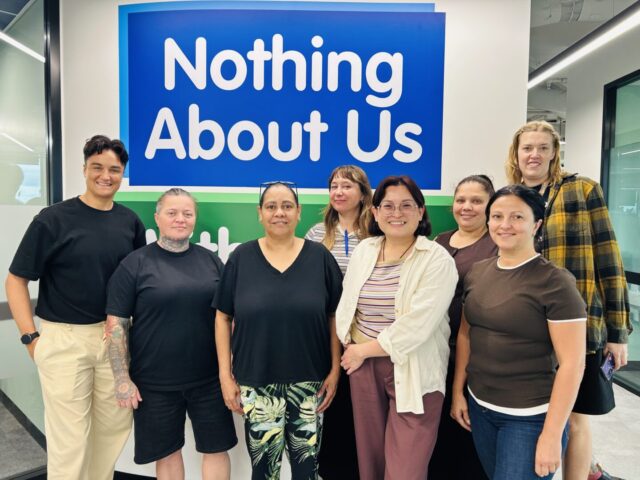
Healing and recovery services and community organisations can also participate in the project.
PWDA held a consultation session with Aboriginal Women and Children's Crisis Service with a mix of training and exploring barriers to accessing DFV services for Aboriginal women and children with disability, and Healing and Recovery supports.
Healing and recovery services can also participate through our survey to learn about the experiences of Domestic, Family and Sexual Violence organisations in the healing and recovery space.
Healing and recovery can include:
- Wellbeing programs that include peer support, counselling or psychology.
- Trauma recovery programs that may include trauma-informed healing programs, survivor healing circles, On Country healing programs.
- Therapeutic programs that might include art therapy, music therapy, or mindfulness.
- Family and relationship recovery that may include family healing programs and healthy relationships programs.
- Rebuilding programs that may include economic empowerment programs, education, employment readiness programs and self-advocacy programs.
- Practical recovery supports that may include housing support, financial recovery, court support and recovery services.
Complete the Strengthening Healing and Recovery services survey for service providers.
Learn more about the Access to Healing and Recovery project.
Challenging the systems that allow violence to happen
Individual support and accessible services are essential, but they cannot address the problem alone.
Gender-based violence interacts with broader inequalities including ableism, discrimination, unequal power relationships and barriers to economic and social participation.
People with disability can experience violence in a range of settings, including their homes, workplaces, institutions and disability support environments. Violence is also enabled by systems and practices that restrict autonomy and isolate people from community.
PWDA works to challenge these systemic barriers through our advocacy work including government engagement, submissions, research and partnerships.
Our systemic advocacy work focuses on:
- Stronger recognition of lived experience from people with disability in gender-based violence policies and strategies.
- More accessible and inclusive domestic, family and sexual violence services.
- Greater recognition of violence, abuse, neglect and exploitation in disability services and other settings.
- Stronger safeguarding, accountability and oversight.
- Greater access to justice and appropriate responses when violence occurs.
- Meaningful involvement of people with disability in all decisions that affect their rights.
This work also includes challenging practices that undermine people's autonomy and decision-making, including restrictive practices and systems that deny people control over their own lives.
Everyone has the right to make decisions about their relationships, bodies, living arrangements and support. Safety must never come at the expense of a person's dignity, autonomy or human rights.
Recognising coercive control beyond intimate relationships
Coercive control is widely discussed in the context of intimate partner relationships. However, people with disability can also experience coercive and controlling behaviour from people they rely on for care and support.
This can include disability support workers and carers, both paid and unpaid. Controlling behaviour can undermine a person's autonomy, independence and ability to make decisions about their life.
In September 2026, PWDA made a submission to the NSW Government's review of coercive control laws, calling for the laws to be expanded to recognise these experiences.
The current NSW coercive control offence applies to current and former intimate partners. PWDA's submission argues that this leaves an important gap in legal protections for people with disability who may experience coercive control from disability support workers and carers.
PWDA is calling for the NSW Government to expand the scope of the offence to include these relationships, so that people with disability are not excluded from legal protections because of their relationship with the person causing harm.
The submission was endorsed by six organisations; National Mental Health Consumer Alliance, Physical Disability Australia, Being - Mental Health Consumers, Muscular Dystrophy NSW, Family Advocacy and Western Sydney Community Forum.
This advocacy highlights why responses to gender-based violence must recognise the different relationships and power imbalances in people's lives.
Read PWDA Submission to Coercive Control Laws in NSW.
Supporting women with disability to participate and lead
A person's access to community, workplaces and decision-making processes can impact their ability to leave a concerning or dangerous situation.
Women with disability continue to face barriers to employment, leadership and economic participation. These barriers can affect financial independence, social connection and people's ability to make choices about their lives.
PWDA's Advancing Women with Disability in the Workplace project, ran from January 2023 to July 2026, focusing on improving opportunities for women with disability in employment and leadership.
The project worked to identify barriers, strengthen workplace inclusion and support greater representation of women with disability in leadership and decision-making.
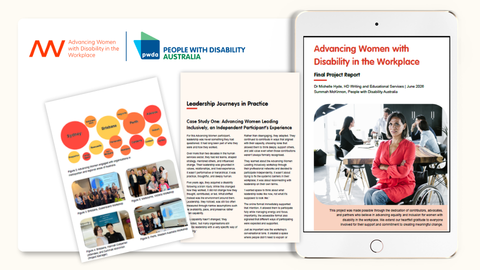
The final report makes six recommendations to strengthen future programs and support longer-term systemic change:
- Support longer-term pathways to employment and leadership.
- Strengthen organisational commitment and accountability.
- Expand mentorship and relational learning models.
- Enhance networking and community pathways.
- Refine learning content for relevance and depth.
- Adopt more flexible and participant-centred evaluation methods.
While this project was not specifically a violence prevention program, improving economic participation, workplace inclusion and leadership opportunities is an important part of addressing gender inequality.
Women with disability must have the same opportunities to participate, lead and make decisions about their futures.
Helping people stay safer online
Technology can be used to monitor, control or harass people. For someone experiencing abuse, even looking for information or support online can carry risks if another person is monitoring their device.
PWDA introduced a Safety Exit Button on our website to help reduce this risk. The blue EXIT button, at the bottom left-hand side of the page, allows you to quickly leave the page if an abusive person or someone monitoring your computer enters the room.
Note: It's important to remember, using this button does not erase browsing history or guarantee that online activity cannot be monitored.
Everyone has a role in ending gender-based violence
Ending gender-based violence requires more than individual services responding to individual experiences. It requires changes to the systems, attitudes and practices that allow violence and discrimination to continue.
People with disability must be included in the design of services and systems intended to protect us. Our experiences must be used to shape how we understand, prevent and respond to violence.
During the 16 Days of Activism, and beyond, PWDA will continue working alongside people with disability, organisations, service providers and governments to challenge discrimination and strengthen the rights of people with disability.
Because everyone has the right to live free from violence.
Learn more about 16 Days of Activism to end Gender-based Violence at UN Women.