
UConn School of Business helps students build clarity and confidence in career-seeking

(Unsplash)
Generation Z's arrival into the workforce has launched a thousand think pieces. Wherever a young jobseeker turns, they can encounter stereotypes about their generation's supposed aversion to hard work — resounding messages that Gen Z is entitled, lazy, and unprofessional.
Kelly Kennedy, Ed.D., UConn School of Business Director of Transformative Learning and Career Education, takes a different tack. Kennedy teaches a required career development course for all business majors across four campuses (Storrs, Stamford, Hartford, and Waterbury). Thanks to this, she has taught upward of 8,000 students in her time at UConn and has witnessed generational shifts in attitudes toward work in real time.

"Every generation in the workforce comes with its complaints, but I think what we're missing is that Gen Z is actually pretty amazing," Kennedy says. "They are vocal, and they can see the world so differently, in ways that can actually help us all have a healthier work environment."
Kennedy recently conducted a study among Gen Z alumni to better understand their attitudes toward work, and the challenges they face when entering the workforce. She found that for these Gen Z workers, the desire for meaningful work was a key motivating factor.
"Despite landing a seemingly perfect job at a top company with an excellent salary and exciting projects, many early-career alumni cite the absence of 'meaningful work' as the primary factor dampening their engagement," Kennedy says.
She believes this is a result of a misalignment between what grads are looking for and what employers are offering. In her work at the School of Business across four campuses, she is exploring avenues to help bridge this gap and create healthier, more fulfilling workplaces for everyone - a timely focus, as Gen Z is poised to comprise 30% of the US workforce by 2030.
"Colleges can't change the workplace, but we can help students figure out what work matters to them, and help them get better positioned to find it," says Kennedy. "We can challenge our students to become more adaptable, more flexible."
That's why she's putting her research into practice at the School of Business and creating more targeted opportunities to help students find their spark.
Confidence in Action
Before she even knew that the concept of "meaningful work" was gaining buzz in the business world, Kennedy was inspired to research it after noticing some trends in student feedback.
When she followed up with alumni in the workforce, Kennedy found that the best predictor of job success and satisfaction was not the extrinsic benefits of a job - perks, exciting projects, even salary - but the intrinsic sense of alignment.
Employees wanted to feel that their work was making a difference in the world, they told her. In turn, they also wanted to feel that their own individual contributions were valued by their team. When these conditions weren't met, students reported lower satisfaction and were more likely to jump ship.
There are no dream jobs, only meaningful work - and it is up to you to define it and find it.
Kennedy noticed that the alumni who found the most meaning in the early years of their careers were those who had worked to develop their self-knowledge while in school.
"The ones that found meaning, it was because they slowed down in their processes at school, took advantage of the opportunities that were offered, and reflected on them," she says.
So she worked to consciously emphasize these skills in her career development course. Her work has found that emphasizing self-knowledge may be just as crucial for Gen Z's career success as the more traditional lessons, like how to send professional emails and how to dress for job interviews.
"In a tough job market, students need to know who they are," she says. "Clarity, even if it evolves over time, is attractive to employers. It shows up as confidence in action: how students articulate their story, make choices, and pursue industries. Based on my research on meaningful work, this clarity is the antidote to the common 'I don't know' response many Gen Z students express."
She tells students, "There are no dream jobs, only meaningful work - and it is up to you to define it and find it."
In addition to building more opportunities for self-reflection and self-understanding throughout business courses, Kennedy has also championed immersive learning experiences. One such experience, a partnership with Connecticut Wealth Management, introduces more than 200 UConn students annually to the world of financial advising. Open to all UConn students (regardless of major or campus), it fills a gap in hands-on opportunities for Gen Z to discover various forms of work, allowing them to gain more clarity by the time they graduate.
Though a select few students are hired into the company directly after graduating, the program as a whole emphasizes skill development, not recruitment.
"Connecticut Wealth Management is giving students a window into this profession while they are still in school, which is so valuable - and that confidence will make them more attractive to an employer," Kennedy says.
Know Thyself
UConn offers many career resources for students, from workshops to resume reviews to job and internship fairs. But what about students who aren't sure where to begin?
One major obstacle Gen Z job-seekers face, according to Kennedy's research, is a lack of clarity about who they are and what they are looking for in a job. Between the COVID-19 pandemic and a rapidly changing economy, they have had fewer opportunities than previous generations to learn the fundamentals of work from the part-time gigs that were once an adolescent rite of passage, like working at the mall or delivering pizzas.
As a result, many "Zoomers" enter college with little understanding of what kind of work they might enjoy.
"Without previous work context, they desire meaning, but they have no idea how to find it," Kennedy says.
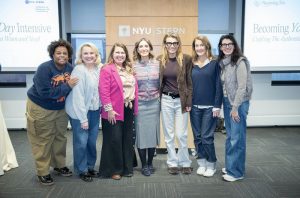
Kennedy is determined to help them find this clarity. In May 2026, she is piloting a new course called "The Business of You," designed precisely for this challenge. She is adapting the Becoming You methodology created by Suzy Welch, professor of management practice at the New York University Stern School of Business. Welch is working closely with Kennedy (who is a member of her first-ever cohort of coaches) to ensure the curriculum meets the needs of UConn BUS students.
Based on self-assessment and reflection, the course is designed to help students identify their values and strengths and understand how they might translate them into a fulfilling career.
"We're having these deep conversations with students, and we're challenging them to reflect," says Kennedy. "We're giving them the tools to find meaning, and to find what matches their aptitude and what they're good at. That's really the biggest gift we can give to students."


