Australians use short-term rental accommodation (STRA) for non-leisure purposes, including during emergencies, medical treatment, work-related travel and periods of housing transition, new findings from Griffith University reveal.
The study titled 'More Than a Bed' was commissioned by Airbnb, and found non-leisure STRA could function as a flexible layer within Australia's temporary accommodation system, complementing hotels and long-term rentals where accommodation needs were urgent, uncertain in duration or required household-style facilities.
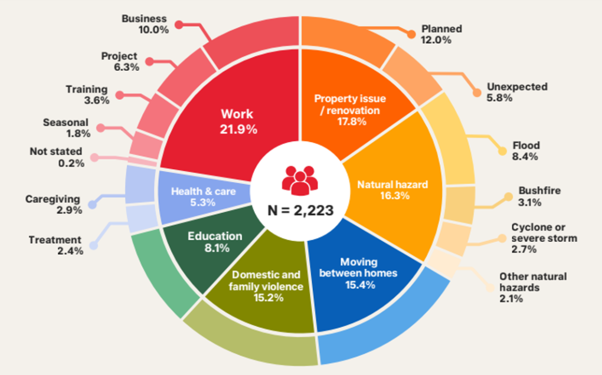
The national survey identified seven main reasons people used short-term rental accommodation for non-holiday stays including:
- Work: 21.9 per cent, the largest individual category
- Property issue and renovation: 17.8 per cent, including planned renovation and unexpected housing displacement
- Natural hazard:16.3 per cent
- Moving between homes:15.4 per cent
- Domestic and family violence: 15.2 per cent
- Education: 8.1 per cent
- Health and care: 5.3 per cent
The study drew on 68 interviews and two national surveys involving 2,223 non-leisure STRA guests and 420 hosts.

Lead researcher Professor Basak Denizci Guillet from the Griffith Institute for Tourism said the findings showed that temporary accommodation needs varied considerably across different circumstances.
"More than 80 per cent of respondents in both the natural hazard and domestic and family violence categories booked immediately or at short notice," Professor Denizci Guillet said.
"Work-related guests often used STRA as a practical base during temporary assignments, while health and care-related stays included patients travelling for treatment as well as family members and carers travelling to support them and often needed extra rooms for children, space for family pets, a functional kitchen and room for daily life.
"Across the study, many guests valued having a stable, home-like place where they could maintain everyday routines, retain a degree of independence and adapt their stay as circumstances changed.
"For many non-leisure guests, STRA was not simply somewhere to sleep, but a temporary living environment during periods of work, care, disruption or transition."
Professor Denizci Guillet said the results had important implications for policymakers, industry participants and organisations involved in STRA.
"The findings suggest that non-leisure uses should be taken into account when assessing the broader implications of STRA policy and regulation," Professor Denizci Guillet said.
"Regulatory settings that affect STRA supply may also influence access to temporary accommodation for healthcare-related travel, workforce mobility, housing disruption and disaster-related displacement."
The report 'More Than a Bed: How short-term rentals support Australians through crisis, care, work and change' was published at Griffith Institute for Tourism.