The UN is significantly scaling up its presence in the Sudanese capital, Khartoum, to expand life-saving operations as the conflict between rival militaries approaches its third year.
UN Resident and Humanitarian Coordinator Denise Brown has returned to the city with a core team, marking a renewed commitment to reaching those in need.
This comes as more than 1.6 million people have recently returned to the capital, despite the persistent threat of damaged infrastructure and explosive remnants of war.
UN Spokesperson Stéphane Dujarric told reporters at Monday's press briefing that the humanitarian situation remains dire, with "skyrocketing" needs and a massive shortfall in international support.
Underfunded
"We need adequate funding to deliver humanitarian assistance in Sudan," Mr. Dujarric stressed, noting that the 2026 Humanitarian Response Plan remains critically underfunded at just 16 per cent.
The Spokesperson also expressed grave concern over a recent drone attack on Al Jabalayn Teaching Hospital in White Nile State, which reportedly killed 10 health workers.
Since the start of the war, more than 200 attacks on healthcare targets have been verified.
"Medical personnel and facilities must be protected, as international humanitarian law requires," Mr. Dujarric reiterated, sounding the alarm that such attacks "continue to endanger civilians and deepen humanitarian needs throughout Sudan."
On the diplomatic front, the Secretary-General's Personal Envoy, Pekka Haavisto, is continuing a regional tour, meeting with key stakeholders in Nairobi and Cairo to explore "practical avenues for de-escalation".
Ukraine: Deadly strikes in Odesa and Nikopol leave civilians dead and injured
A series of devastating attacks across Ukraine has left several civilians dead, including a child, and dozens more injured, according to the UN Office for the Coordination of Humanitarian Affairs ( OCHA ).
Overnight, an attack on the port city of Odesa claimed the lives of several residents. OCHA reported that over a dozen people were wounded in the strike, which damaged homes, a kindergarten, and a local substation.
The damage to energy infrastructure has "disrupted the power supply" in the area. In response, UN aid workers were "promptly deployed to provide emergency assistance" to those affected by the destruction.
Deadly strike
This follows a deadly drone strike on a market in the city of Nikopol, in the Dnipro Region, on Saturday. That attack killed at least five civilians and injured 25 others, including a 14-year-old girl.
At least eight people were hospitalised following the Nikopol strike, with some reported to be in serious condition.
The UN continues to monitor the humanitarian impact as strikes on infrastructure and high-traffic civilian areas continue to claim lives across the country.
UN humanitarians note that more than 25,000 people have been displaced from the Donetsk region so far this year.
"Our partners continue to support Government-led evacuations, assisting the most vulnerable people, including those with limited mobility," the UN Spokesperson said.
Humanitarian Coordinator for Ukraine, Matthias Schmale, stressed that, under international humanitarian law, residents must be protected as they go about their daily lives.
Global water security requires urgent funding boost, new report warns
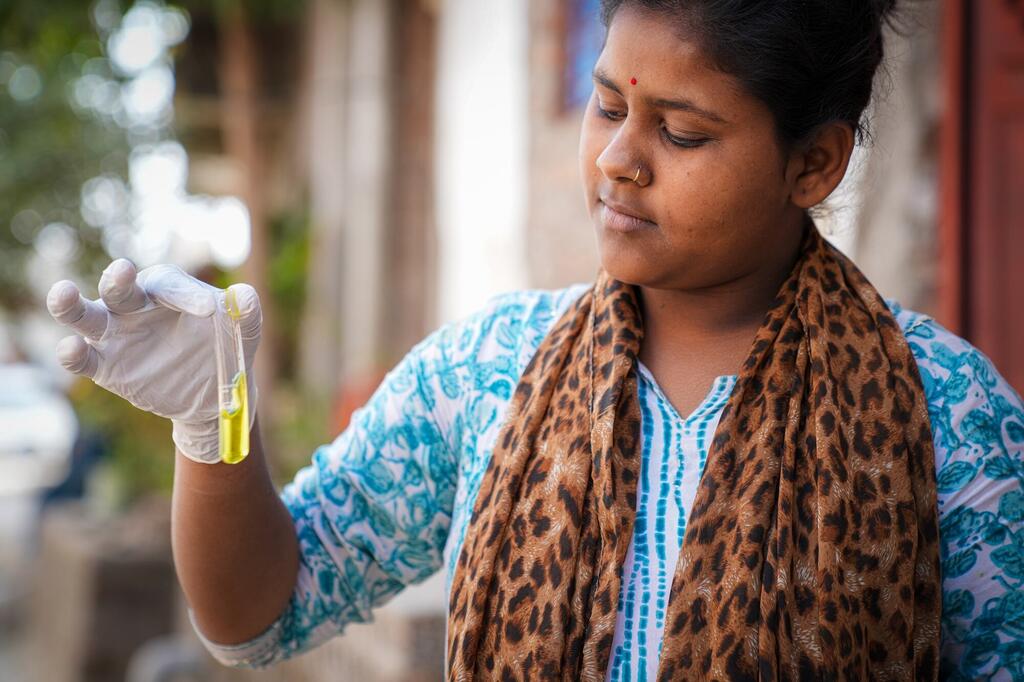
The world faces a massive shortfall in water investment, with at least $200 billion needed annually to secure resources for food, energy and the environment, according to a new report from the International Water Management Institute (IWMI).
The IWMI, a non-profit scientific research organisation and a member of the CGIAR global partnership, works closely with the United Nations and provides regional support for the UN-SPIDER programme.
UN-SPIDER is a platform that ensures all countries can access and use space-based data for disaster management and emergency response.
Underfunded 'priority'
The study highlights that despite water being the "top priority" for climate adaptation in most nations, it receives less than 10 per cent of global climate finance.
Currently, a quarter of the global population lacks safe drinking water. The report notes that while public pledges from recent climate summits remain limited, private sector contributions and "own-source" financing from local water users are becoming vital lifelines for irrigation and sanitation.
"Through this MoU, IWMI will work closely with WMO [the World Meteorological Organization] to strengthen preparedness for floods, droughts and water scarcity by leveraging early warning systems, innovative technologies, tools and applied research," said Mark Smith, Director General of IWMI, highlighting the importance of integrated action.
Experts warn that without systemic changes to how water projects are funded, escalating water insecurity will continue to threaten global food systems and biodiversity.