
AIMS' ReefCloud team is leading a new regional collaboration to strengthen the use of science for the sustainable management of coral reefs in Southeast Asia.
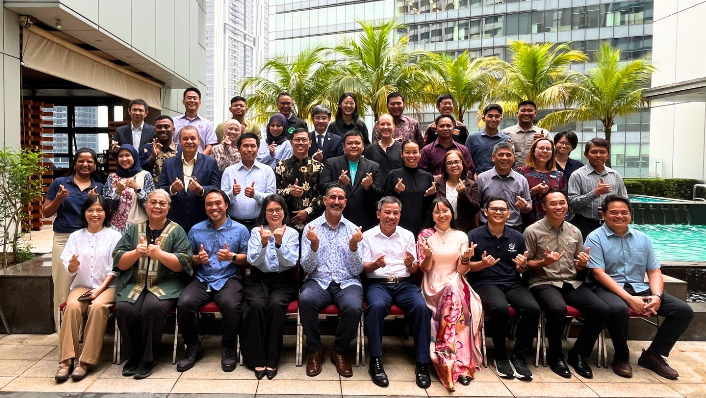
The Regional Coral Reef Monitoring and Management Project was launched in Malaysia in August, bringing together nearly 30 participants across government, academia and NGOs from Malaysia, Indonesia, Vietnam, Brunei Darussalam and the Philippines.
Over the next four years, the project will strengthen regional collaboration and technical capacity to improve coral reef monitoring and data integration. It will also support countries in using advanced science and technology through digital tools such as ReefCloud to inform reef management decisions.
ReefCloud is an open-access, AI-powered digital platform developed by AIMS to monitor, analyse, and share coral reef data globally.
Dr Manu Gonzalez Rivero, AIMS research scientist and lead for ReefCloud, said coral reefs in the Southeast Asia region were vital to the region's economic, social and cultural wellbeing, as well as environmental prosperity.
"Assessing the condition of coral reefs through standardised, robust reef monitoring provides reef managers with the best available evidence to understand changes in reef condition that support effective management.
"We've been working with national teams across the region to enhance monitoring efforts and build capacity, including through using ReefCloud. We're pleased to help bring these conversations to a regional level," he said.
Associate Professor Tan Chun Hong of Universiti Malaysia Terengganu said reef monitoring challenges in Malaysia were shared by other countries in the region.
"Reef monitoring can be hampered by access to remote areas, lack of technical expertise, and long delays in analysing data, leading to challenges in delivering timely data to managers," Associate Professor Tan said.
"At the same time, considerable reef monitoring data are already being collected in Malaysia and across Southeast Asia. The challenge is not only to collect more data, but also to make existing and future datasets more compatible, accessible and useful across institutions and countries".
Associate Professor Tan said that while regional collaboration provided an opportunity to develop common approaches supported by digital tools, technology alone was not enough.
"We also need appropriate policies and regional frameworks that enable responsible data sharing across institutions and national boundaries, while recognising data ownership and national priorities.
"Collaboration at this level is a great step towards overcoming these barriers by having regional visions that strengthen partnerships, address technical challenges, improve data accessibility and advance evidence-based decision-making."
The project is part of the Southeast Asia Maritime Partnerships Program, supported by the Australian Government.
The launch in Malaysia brought scientists, practitioners, and managers from all five nations, as well as regional representatives from UNEP Coordinating Body of the Seas of East Asia (COBSEA), the Coral Triangle Initiative on Coral Reefs, Fisheries and Food Security (CTI-CFF), Global Coral Reef Monitoring Network (GCRMN) East Asia, and the ASEAN Centre for Biodiversity.
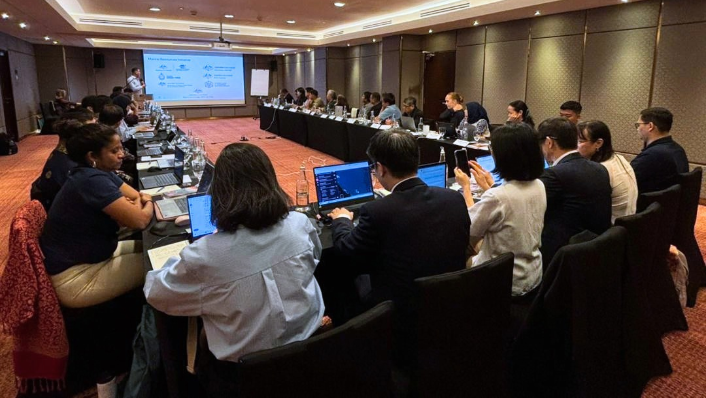
It involved a workshop that focused on a co-designed work plan for the project, identifying priorities and aligning with existing initiatives. Project activities and intended outcomes will be implemented over the next four years.


