
This page contains the online version of the consultation document.
To share your feedback on the consultation, or for further information on the consultation visit the consultation page.
You can download the consultation PDF, or view the online content version below.
Implementing an infringement scheme (use of fees and fines) to support our mandatory data requests: Consultation document content
- Executive summary
- Purpose and structure of this document
- How to make a submission
- How we manage your personal information
- What is our proposal?
- What are mandatory data requests?
- What are infringement offences?
- Legislative framework
- How do we support people and organisations to respond to data requests?
- Why set up an infringement scheme?
- When do we propose using infringement offences?
- What type of behaviour are we aiming to deter?
- How will we ensure our use of infringement offences is consistent?
- How will we ensure infringement offences are used fairly and equitably?
- What are the proposed fee and fine amounts?
- Benefits and costs
Appendix 1: Relevant sections in the Data and Statistics Act 2022
About this consultation
Executive summary
Stats NZ is New Zealand's official data and statistics agency. We deliver high-quality, impartial, and objective official statistics about our country and the lives of its people.
In today's world, people need data and statistics that are meaningful, relevant, and timely. Our role is to deliver these insights to support the living standards of New Zealanders, the economy, and the environment - now and into the future.
To achieve this, Stats NZ regularly requests information from people, businesses, and other organisations. The information we need is so important that responding to our surveys and requests is usually a legal requirement.
We encourage participation by prioritising education on the value of the data shared with us, building trust with communities, and making our processes easier.
We can also use enforcement measures. While enforcement is only ever used as a last resort, it helps send a strong message about the importance of complying with requests and complying by the due date. Currently, the only way we can enforce compliance is through prosecutions. Prosecutions can result in a criminal record, which is not a proportionate response to most forms of non-compliance.
To address this, we are planning to introduce an infringement scheme, including regulations, so we can use infringement offences. Infringement offences provide an incentive to encourage people and organisations to follow the law, and involve the issuing of an infringement notice and require payment of a fee. This may be followed by a fine if the initial fee is not paid. Police issuing tickets to people who are caught breaking the speed limit is an example of an infringement offence.
In the context of mandatory information requests, infringement offences will help to:
- deter conduct that is less serious and does not justify a prosecution
- send a strong message about the importance of complying with these requests, and complying by the due date
- ensure we have a credible enforcement scheme.
Our proposal is that infringement offences would only be used in limited cases after careful consideration, and only for those who deliberately avoid their obligation, not those who are unable to comply. We do not expect infringement offences to be widely used or impact many people. They will only be used in a collection (for example, specific surveys or admin data requests) when there is a persistent issue with non-compliance and/or response times, and other tools have not addressed these issues.
Using infringement offences will not change our overall approach to collecting data. Our focus remains on informing, encouraging, and supporting people and organisations to respond, while minimising the effort required to provide information.
We are continuing to reduce the effort it takes to respond by offering multiple ways to complete surveys, streamlining data collection for businesses through a new survey platform, and making greater use of information already collected by government and organisations (administrative data).
Purpose and structure of this document
We are seeking feedback on introducing an infringement scheme.
This document is divided into two main sections, Introduction and Our proposed design. 'Introduction' provides context on our current collections processes and the rationale for setting up an infringement scheme. 'Our proposed design' sets out how we intend to use infringement offences and where we propose setting the fee and fine amounts, and includes questions for your feedback.
The questions are:
- Do you agree that the most appropriate use of infringement offences is when there is an ongoing issue with non-compliance and other tools have been used? Why? Why not?
- Do you agree that infringement offences should apply to respondents who deliberately avoid their obligation to provide information? Why? Why not?
- Do you have other suggestions about how we can make sure infringement offences are used consistently across collections and cases of non-compliance?
- Do you have other suggestions about how we can make sure infringement offences are used fairly and equitably?
- Given the offence involved, do you think the proposed fee and fine amounts are reasonable? Why? Why not?
- In your view, do the proposed fee and fine amounts provide a credible deterrent? Why? Why not?
- What other costs or benefits do you think could result from introducing infringement offences?
- Do you have any other feedback about how we propose to use infringement offences?
The fee and fine amounts are set in regulation. Your feedback will help ensure these are set at an appropriate level and inform our advice to the Minister of Statistics.
Feedback on other areas of the design will inform our detailed implementation design work, including operational procedures and guidelines.
All submissions will be considered and will help to inform the final design. We will publish a summary of submissions on our website in mid-2026.
How to make a submission
You can make your submission online at stats.govt.nz/infringement-consultation.
If you need help filling out the form, please contact [email protected].
If you cannot make an online submission, you can email it to us at [email protected]. Please indicate clearly which questions you are providing feedback on.
If you email your submission, we will notify you when the summary of submissions is published. We may also contact you if we require further information about your submission, or your submission falls in scope of an OIA. If you do not want us to contact you, please let us know in your email.
Submissions open on 23 February 2026 and close on 6 April 2026 at 5pm.
How we manage your personal information
We keep all submissions in our official records. We may publish submissions on our website or use them to support future design work. Individuals won't be named or identified in publications, but we may name groups or organisations if appropriate.
Sharing your name and email with us is optional, but it allows us to notify you when the summary of submissions is available. We may also get in touch if we need more information about your submission. You can check and correct any personal information you give us, or anything you put in your submission, by emailing [email protected].
The information you give us is subject to the Official Information Act 1982 and the Privacy Act 2020. For more information, see the Ombudsman's website and the Privacy Commissioner's website.
If we receive a request under the Official Information Act 1982 that includes your submission, we might have to share it. We'll talk to you about this if you have provided your contact information.
Avoid including any personal information (like your name or job title) about yourself or anyone else in the free-text fields for each question.
If you have questions about the way we manage your information, contact us at [email protected] or on 0508 525 525.
Introduction
What is our proposal?
Stats NZ is planning to introduce infringement offences that could be used when people or organisations fail to respond to mandatory information requests. This would allow Stats NZ to issue an infringement notice (requiring payment of a fee) to those who deliberately avoid their obligation, but not those who are unable to comply.
This document sets out our proposal for how infringement offences will be used. At a high level, infringement offences will be:
used as a discretionary tool to encourage people and organisations to respond, and by the due date, to mandatory information requests
applied on a collection-by-collection basis (for example, specific surveys or administrative-data requests), not automatically across all mandatory collections
focused on those who will not comply ('hard' non-response), not those who cannot comply for reasons including illness, bereavement, or other circumstances that make it difficult to respond.
What are mandatory data requests?
We collect information from individuals, households, businesses, organisations, and public sector agencies to support the development of official statistics. These statistics are used widely to inform decisions that support our economy, protect the environment, and improve the wellbeing of New Zealanders.
If you are selected to take part in one of our surveys, it is a legal requirement to complete it. We also collect administrative (admin) data - data already collected by public sector agencies and organisations as part of their everyday operations. We will be making more mandatory requests for admin data as we increase our use of this data.
Mandatory requests are necessary to ensure we collect enough data to produce reliable, robust, and trustworthy official statistics. These requests are made under section 23 of the Data and Statistics Act 2022, and information must be provided by the specified date.
We know your information is important. It is protected by legislation and by the safeguards we have put in place to ensure privacy, security, and confidentiality.
Spotlight on… the Household Income and Living Survey
The Household Living and Income Survey is an example of a mandatory data request. This survey provides a detailed picture of the economic wellbeing of New Zealanders. It collects information on:
- household living costs
- income
- savings
- expenditure
- investments.
A statistical selection method is used where everyone in New Zealand has a chance of being included. Each selected household helps represent different people and communities around the country. We survey approximately 25,000 households each year.
Everyone living in the household aged 15 or older needs to take part, and it generally takes 20 minutes for each person to complete the survey. Some people are also required to complete an expenditure diary, which collects information on all purchases made over a seven-day period. The survey is completed face-to-face with our staff, with one self-complete module
What are infringement offences?
Infringement offences are a type of criminal offence that do not result in a criminal conviction. They are a straightforward way to encourage people and organisations to follow the law, and they result in an infringement notice being issued and require payment of a fee. If the fee is not paid on time, the matter is referred to a criminal court, which can impose a fine.
The purpose is to deter conduct that is less serious and does not justify prosecution. Generally, the criminal courts only become involved if the infringement fee is not paid or if the recipient of the infringement notice challenges it.
Legislative framework
The Data and Statistics Act 2022 provides the legislative framework for Stats NZ to collect data for official statistics, lead the official statistics system, and provide safe access to data for research.
It provides for a proportionate enforcement scheme to support compliance with two obligations - to provide data and protect data. A range of tools, including infringement offences, were provided for in the Act to enable a proportionate and effective response to non-compliance. Previously, the only enforcement tool was prosecutions.
Section 88 of the Data and Statistics Act 2022 enables the use of an infringement offence for failing to provide data and provides for infringement fees and fines to be set in regulations. Appendix 1 sets out the full text of the legislative framework for the proposed infringement scheme.
The ability to make regulations is provided by sections 101(1)(a), (b), and (c):
- Section 101(1)(a) provides for the setting of fees for infringement offences (not exceeding $1,000 for an individual and $3,000 for any other case).
- Section 101(1)(b) provides for the setting of fines for infringement offences (not exceeding $2,000 for an individual and $6,000 for any other case).
- Section 101(1)(c) provides for the making of infringement notices and reminder notices.
Sections 68 to 75 set out the process for issuing infringement notices, including what must be in the infringement notice and how it may be served.
How do we support people and organisations to respond to data requests?
The production of quality statistics is dependent on the cooperation and goodwill of our respondents.
This is why our primary focus is on informing respondents about the value of their contribution to official statistics, engaging with communities to encourage people and organisations to respond, and ensuring respondents have what they need to feel comfortable providing information.
We also take our responsibility to minimise the burden of responding to an information request very seriously and we continue to take steps to make our processes easier. This includes engaging with respondents to smooth the process, as well as developing surveys and supporting materials in a range of languages and completion methods. Other initiatives include making greater use of information already collected by government and organisations (admin data) and a new survey platform to enhance our data-collection processes for businesses. The new platform includes an easy-to-use interface, the ability for respondents to save and return to a survey, and pre-filled data from previous surveys.
Enforcement is only ever used as a last resort. Currently, our only enforcement tool is prosecutions. As prosecution is a disproportionate response to most forms of non-compliance, we have only ever used prosecutions for not completing the census.
Figure 1 below illustrates our overall approach to survey compliance. We also use this approach to support compliance with admin-data requests.
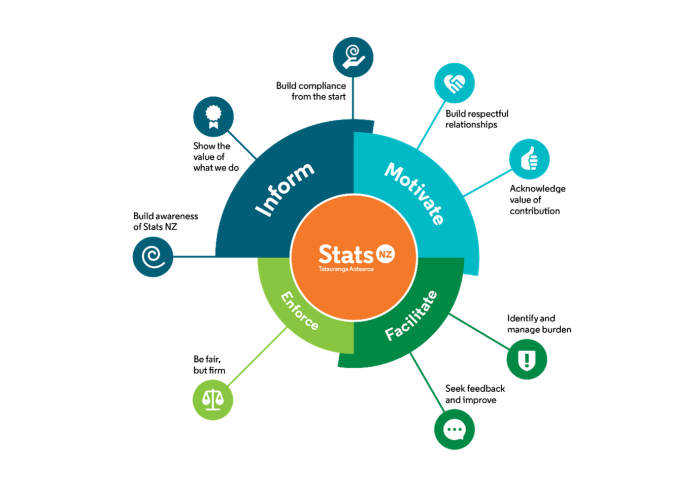
Figure 1: Our approach to survey compliance
Having infringement offences available will not change our overall strategy to support and enable people and organisations to respond.
Why set up an infringement scheme?
Introducing infringement offences will do three things:
- provide a discretionary and more proportionate response to non-compliance
- ensure we have a credible enforcement scheme
- help encourage people and organisations to respond by the due date.
A more proportionate response
Under the Data and Statistics Act 2022, Stats NZ can, and does, issue mandatory requests for information. All our household and individual surveys and business surveys are mandatory. We also make mandatory requests for admin data.
When people or organisations refuse to provide the legally required information, our only enforcement tool is prosecution. Prosecutions can result in a criminal conviction, which is not a proportionate response to most forms of non-compliance. Prosecutions are also costly and time-intensive for enforcement agencies and the courts.
Introducing infringement offences will provide Stats NZ with a more proportionate way to deter and respond to non-compliance, while leaving prosecutions for the most serious instances of non-compliance.
A credible enforcement scheme
An enforcement scheme should be credible - there must be a credible risk that non-compliance will be detected and that enforcement action will be taken. Without a credible enforcement scheme, mandatory data requests can easily be perceived as voluntary and can restrict our ability to produce timely and high-quality official statistics.
Because prosecutions are not a proportionate response to most forms of non-compliance, our practice has been to only use them for our most significant survey, the census, and for the most serious instances of non-compliance. As our most visible collection, census prosecutions have a 'demonstration effect', supporting compliance with future censuses and our other data collections.
However, how we collect data is changing. We are increasing our use of admin data, including a move away from a full-field enumeration census to an admin data-first census. This change in collection methods and the shift from a full-field enumeration census (where everyone in New Zealand must take part) means we need to reconsider our approach to enforcement.
Modernising New Zealand's data system has more information.
While prosecutions could be applied to any collection, the bluntness of the tool means it's not appropriate to rely on it as our first and only enforcement tool. Introducing infringement offences will provide us with an alternative tool, reduce our reliance on prosecutions, and improve the credibility of our enforcement approach.
Encourage more timely responses
Responding to our information requests, and responding by the due date, is critical to ensuring we can continue to produce timely, high-quality statistics. Longer response times can cause production delays, meaning we cannot publish results as quickly as our customers would like. It can also mean more resource is needed to follow up and support people and organisations to respond.
Achieving the response rates we need to produce high-quality data can be a lengthy process. Across 2024 and 2025, only 4 of our 33 business surveys (12 percent) had a return rate of more than 50 percent by the due date. After the due date, we follow up with those who have not responded to remind them of their obligation and provide information, support, and encouragement, as required, to ensure we meet our target response rate.
The collections process is also lengthy for our two social surveys. For the Household Income and Living Survey in 2024, only 7 percent of respondents had completed the survey after the first visit, with an average of 3.7 visits or calls required to achieve our desired response rate. For the Household Labour Force Survey, only 12 percent of face-to-face interviews and 22 percent of phone interviews resulted in a completed survey after the first visit/call. An average of 2.8 visits and 5.7 calls were required to reach our desired response rate.
Carefully building awareness of potential enforcement measures could send a strong message early in the process about the importance of providing information and motivate respondents to respond by the due date.
What enforcement tools are used by other national statistical organisations?
We reviewed the enforcement tools used by national statistical organisations (NSOs) in Australia, the UK, and Canada. These NSOs do not have infringement offences; they can only prosecute for non-compliance, with a successful prosecution resulting in a conviction.
Very few prosecutions are taken by these NSOs and they are most commonly used for failing to complete a census form. This is similar to how prosecutions are used by Stats NZ, where only a small number of prosecutions are sought - typically between 30 to 50 people - for refusing to take part in the census.
Our proposed design
This section outlines how we intend to use infringement offences.
When do we propose using infringement offences?
Infringement offences can only be applied to mandatory data requests.
They will be used as a tool of last resort and applied on a collection-by-collection basis (for example, specific surveys or admin-data requests). As a discretionary tool, they will not automatically be used across all mandatory collections. This is because every collection is unique and different tools may be needed to support the collection process.
We propose using infringement offences in a collection when:
- there is a persistent issue with non-compliance and/or response times - that is, non-compliance and/or response-time delays can be seen across several cycles of a survey
- other tools, such as community engagement and different completion methods, have been used but have not addressed issues with non-compliance.
Question 1
Do you agree that the most appropriate use of infringement offences is when there is an ongoing issue with non-compliance and other tools have already been used? Why? Why not?
What type of behaviour are we aiming to deter?
Infringement offences will be aimed at respondents who deliberately avoid their obligation to respond to a mandatory information request.
We will not use them if there are good reasons for not complying with a request. We understand that some will be unable to comply due to sickness, bereavement, or other circumstances making it difficult to comply.
Question 2
Do you agree that infringement offences should apply to respondents who deliberately avoid their obligation to provide information? Why? Why not?
How will we ensure our use of infringement offences is consistent?
A central team will manage infringement offences. This team will be responsible for:
- deciding whether it is appropriate to issue an infringement notice
- issuing the infringement notices
- managing any related correspondence from respondents.
Managing this process centrally, rather than each survey or admin-data collection having its own team, will help ensure infringements are implemented in a consistent way across different collections, as well as across individual cases of non-compliance.
Monitoring and reporting will show us how infringements are being implemented across different collections. This will help to identify any inconsistent practices and ensure learnings from using infringements in one collection can be applied to another.
Question 3
Do you have other suggestions about how we can make sure infringement offences are used consistently across collections and cases of non-compliance?
How will we ensure infringement offences are used fairly and equitably?
We know there are a range of factors that can impact respondents and their ability and willingness to participate. These factors include the data-collection mode (for example, face-to-face interview, paper survey, online form, direct provision of admin data), how easy it is to provide the information, the sensitivity of the data being collected, as well as location-specific events (for example, an extreme weather event). We also know that some respondents and communities find it more difficult to respond to our information requests.
To support the fair and equitable use of infringement offences, we will carefully consider these factors and their potential to impact compliance for a particular collection, group of respondents, or community. As infringement offences are a discretionary tool, we can use this information to support decisions about whether it is appropriate to use infringements.
Concerns about fairness and equity may be raised because some people or organisations are more likely to receive an information request due to oversampling. Oversampling of groups with certain characteristics improves the quality of statistics for those groups.
On the other hand, respondents who do comply with information requests may consider it unfair that there is no enforcement action for those who do not comply.
Fair and equitable implementation of infringement offences is important for maintaining trust and confidence and this is why it will be used as a discretionary tool. Regular monitoring and reporting will help to identify if infringement offences are disproportionately impacting a particular region, sector, or community. If we identify a concerning trend, we can take action to address the issue and change our processes to ensure future use of infringement offences is fair and equitable.
Question 4
Do you have other suggestions about how we can make sure infringement offences are used fairly and equitably?
Spotlight on… changing census collection processes in response to Cyclone Gabirelle
A range of factors can impact respondents' ability and willingness to comply with information requests. Sometimes these factors are known, for example when the information request relates to a sensitive topic or the length of a survey. In other cases, an unforeseen event can take place that impacts people's or organisations' ability to engage and respond. Changing our collection processes in response to these factors with fairness and equity in mind is key to ensuring we build goodwill and trust with respondents.
As an example, we changed our 2023 Census collection processes when Cyclone Gabrielle hit with devastating force in February 2023.
On 13 February 2023, field staff were due to begin visiting households with census packs - the first stage of an eight-week collection process. The cyclone hit during the first week of this process.
In areas impacted by the cyclone, the collection process was delayed until it was safe and appropriate to resume. The collection plan was revised with the aim of collecting the information required for the census and to support recovery without placing an additional burden on communities.
We changed our collection process by:
- extending the collection process by eight weeks
- supporting iwi collectives involved in Te Mana Whakatipu (iwi-led collection) to adapt to the situation and empowering them to make changes that would provide the best outcomes for their rohe
- working closely with local agencies and other iwi organisations to bring census field activities and cyclone response and recovery work together (for example, welfare visits and the delivery of aid)
- in some circumstances, collecting priority information only, such as name, date of birth, usual address, Māori descent, and iwi affiliation
- providing collections staff with training on how to approach sensitive questions, such as questions around housing quality.
What are the proposed fee and fine amounts?
Infringement offences result in an infringement notice being issued and require payment of a fee. The fee is a fixed amount, set in regulation. If an infringement fee is not paid in full by the due date, it may be referred to a criminal court where a fine can be imposed. The fine amount is at the discretion of the court, with the maximum amount also set in regulation.
When developing the proposed fee and maximum fine levels, we considered the level of harm, affordability, appropriateness of the penalty for the target group, and consistency with other infringement offences. Fees for comparable offences relating to the provision of information are provided in table 1 below.
Table 1: Other infringement schemes relating to the provision of information
| Infringement Scheme | Details |
| Biosecurity Act 1993 Biosecurity (Infringement Offences) Regulations 2010 | Fee of $100 for individuals and corporations for failing to answer questions while in a biosecurity control area |
| Resource Management Act 1991 Resource Management (Infringement Offences) Regulations 1991 | Fee of $1,000 for individuals and $2,000 for companies for failing to provide information about someone who may be breaching resource-management requirements |
| Building Act 2004 Building (Infringement Offences, Fees and Forms) Regulations 2007 | Fee of $500 for failing to provide information or documentation on completion of building work |
As there is no public safety risk for failing to respond to a mandatory information request from Stats NZ, we propose setting the fee and maximum fine amounts at the lower end of the fee scale indicated in table 1 above.
Table 2: Proposed fee and maximum fine amounts for Stats NZ infringement scheme
| Fee amount | Maximum fine amount | |
| Individuals | $100 | $300 |
| Bodies corporate (eg, businesses, non- government organisations) | $500 | $1,500 |
All infringement fees must be paid into a Crown Bank Account, as required by section 74 of the Data and Statistics Act 2022. Stats NZ does not keep any funds from the payment of infringement fees.
Question 5
Given the offence involved, do you think the proposed fee and maximum fine amounts are reasonable? Why? Why not?
Question 6
In your view, do the proposed fee and maximum fine amounts provide a credible deterrent? Why? Why not?
Benefits and costs
The benefit of an infringement scheme is that Stats NZ will be able to respond to refusals in a more timely, proportionate, and cost-effective way. This will result in a more credible and usable enforcement system. Infringement offences may also encourage more timely responses and therefore require less work following up with respondents.
An infringement scheme will result in costs to people and organisations who refuse to respond to a mandatory request and receive an infringement notice. Proposed infringement fees are $100 for individuals and $500 for bodies corporate (for example, businesses). In addition, there will be costs for Stats NZ to implement the scheme, which will come from baseline funding.
While we expect additional labour costs, efficiency gains, such as needing fewer resources to follow up with respondents, may help to offset this.
Question 7
What other costs or benefits do you think could result from introducing infringement offences?
Final question
Question 8
Do you have any other feedback about how we propose to use infringement offences?
Thank you for your contribution
Thank you for taking the time to consider our proposal. We value your feedback.
Feedback provided on the proposed design of the scheme will inform our detailed implementation work, including the development of operational procedures and guidelines, to ensure that our use of infringement offences is consistent, fair, and equitable. This feedback will also inform work on the development of our broader enforcement policy covering our two enforcement tools - infringement offences and prosecutions.
Feedback on the proposed fee and fine amounts will inform our advice about where these should be set in regulation. The Minister of Statistics may then seek Cabinet's agreement to infringement regulations. If Cabinet agrees, Stats NZ will be able to use infringement offences to support our mandatory requests for information.
A summary of the feedback we receive will be published on our website in mid-2026.
Appendix 1: Relevant sections in the Data and Statistics Act 2022
Infringement offence
88 Infringement offence for failing to provide data
A person who fails to comply with section 29(1) commits an infringement offence and is liable to-
(a) an infringement fee of the amount prescribed in the regulations; or
(b) a fine imposed by a court not exceeding the amount prescribed in the regulations.
29 Obligation to comply with request
(1) An individual, public sector agency, or organisation to which a request for data is made
under section 23 or 26 must provide the data by the date, and in the manner and form, specified in the request.
(2) Subsection (1) does not apply-
(a) if legislation other than this Act expressly prevents the provision of the data; or
(b) to any data the provision of which is identified in the request or otherwise to be voluntary; or
(c) in the case of a request made to a public sector agency, to any data the public sector agency refuses to provide under subsection (3).
(3) A public sector agency may refuse to provide data if providing the data to the Statistician for the production of official statistics would be likely-
(a) to prejudice the security or defence of New Zealand or the international relations of the Government of New Zealand; or
(b) to prejudice the entrusting of information to the Government of New Zealand on a basis of confidence by-
(i) the Government of any other country or any agency of the Government of any other country; or
(ii) any international organisation; or
(c) to prejudice the maintenance of the law, including the prevention, investigation, and detection of offences, and the right to a fair trial.
(4) In the case of a request to an Office of Parliament, the Office of the Clerk of the House of Representatives, or the Parliamentary Service, the provision of all the data requested is to be treated as voluntary.
(5) Except with the prior approval of the Statistician, responding to a request by referring to another document from which the data can be obtained does not constitute compliance with the request.
Procedure for infringement offences
68 Interpretation
In sections 69 to 73,-
authorised person means-
(a) the Statistician; or
(b) the chief executive of a public sector agency that is authorised under section 25 to request data on behalf of the Statistician.
69 Infringement offences
(1) A person who is alleged to have committed an infringement offence may-
(a) be proceeded against by the filing of a charging document under section 14 of the Criminal Procedure Act 2011; or
(b) be issued with an infringement notice under section 70.
(2) Proceedings commenced in the way described in subsection (1)(a) do not require the leave of a District Court Judge or Registrar under section 21(1)(a) of the Summary Proceedings Act 1957.
(3) See section 21 of the Summary Proceedings Act 1957 for the procedure that applies if an infringement notice is issued.
70 When infringement notice may be issued
An authorised person may issue an infringement notice to a person if the authorised person believes on reasonable grounds that the person is committing, or has committed, an infringement offence.
71 Revocation of infringement notice before payment made
(1) An authorised person may revoke an infringement notice before-
(a) the infringement fee is paid; or
(b) an order for payment of a fine is made or deemed to be made by a court under section 21 of the Summary Proceedings Act 1957.
(2) The authorised person must take reasonable steps to ensure that the person to whom the notice was issued is made aware of the revocation of the notice.
(3) The revocation of an infringement notice before the infringement fee is paid is not a bar to any further action as described in section 69(1)(a) or (b) against the person to whom the notice was issued in respect of the same matter.
72 What infringement notice must contain
An infringement notice must be in the form prescribed in the regulations and must contain the following particulars:
(a) details of the alleged infringement offence that fairly inform a person of the time, place, and nature of the alleged offence:
(b) the amount of the infringement fee:
(c) the name and address of the agency whose chief executive issued the notice:
(d) how the infringement fee may be paid:
(e) the time within which the infringement fee must be paid:
(f) a summary of the provisions of section 21(10) of the Summary Proceedings Act 1957:
(g) a statement that the person served with the notice has a right to request a hearing:
(h) a statement of what will happen if the person served with the notice neither pays the infringement fee nor requests a hearing:
(i) any other matters prescribed in the regulations.
73 How infringement notice may be served
(1) An infringement notice may be served on the person who the authorised person believes is committing or has committed the infringement offence by-
(a) delivering it to the person or, if the person refuses to accept it, bringing it to the person's notice; or
(b) leaving it for the person at the person's last known place of residence with another person who appears to be of or over the age of 14 years; or
(c) leaving it for the person at the person's place of business or work with another person; or
(d) sending it to the person by prepaid post addressed to the person's last known place of residence or place of business or work; or
(e) sending it to an electronic address of the person in any case where the person does not have a known place of residence or business in New Zealand.
(2) Service on an officer of a body, or on the body's registered office, is deemed to be service on the body.
(3) Unless the contrary is shown,-
(a) an infringement notice (or a copy of it) sent by prepaid post to a person under subsection (1) is to be treated as having been served on that person on the fifth working day after the date on which it was posted; and
(b) an infringement notice sent to a valid electronic address is to be treated as having been served at the time the electronic communication first enters an information system that is outside the control of the authorised person.
74 Payment of infringement fees
All infringement fees paid for infringement offences must be paid into a Crown Bank Account.
75 Reminder notices
A reminder notice must be in the form prescribed in the regulations, and must include the same particulars, or substantially the same particulars, as the infringement notice.
Regulations
101 Regulations
(1) The Governor-General may, by Order in Council, make regulations for the following purposes:
(a) prescribing fees for infringement offences under this Act, which,-
(i) in the case of an individual, must not exceed $1,000; and
(ii) in any other case, must not exceed $3,000:
(b) prescribing maximum fines for infringement offences under this Act, which,-
(i) in the case of an individual, must not exceed $2,000; and
(ii) in any other case, must not exceed $6,000:
(c) prescribing infringement notices and reminder notices:
(d) providing for anything this Act says may or must be provided for by regulations:
(e) providing for anything incidental that is necessary for carrying out, or giving full effect to, this Act.
(2) Regulations made under this section are secondary legislation .


