
Flooding on the B1127 between Wrentham and Southwold is set to reduce thanks to a new drainage system installed by Natural England in the Easton Valley.
Flooding on the B1127 Wrentham to Southwold Road could be significantly reduced following the installation of an overflow system in the Easton Valley by Natural England.
The innovative drainage system, completed at the beginning of March, addresses a long-standing flooding challenge whilst protecting one of Britain's most important wildlife habitats.
Natural England has installed pipes beneath the beach to create an additional drainage route. The emergency overflow complements an outfall managed by the Environment Agency which has become increasing difficult to operate due to coastal erosion.
Adam Burrows, Senior Reserve Manager, Natural England said:
The 140-hectare Easton Valley reedbed supports rare breeding birds including bitterns and marsh harriers. Rising water levels had prevented successful nesting as well as causing periodic road closures. We hope the new drainage system will maintain optimal water levels, enabling wildlife to thrive whilst keeping the road open.
This project demonstrates how working with nature can simultaneously manage flood risk, support wildlife, and maintain access for communities.
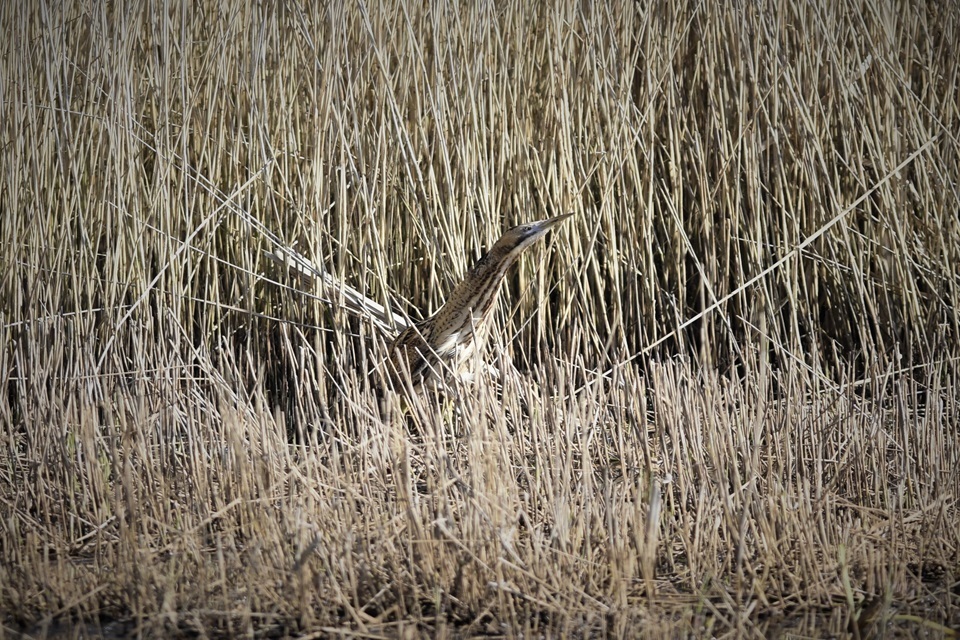
A nesting bittern (credit Harry Tucker, Natural England)
Coastal erosion has made managing the valley's water levels increasingly difficult. The beach has retreated significantly since the 1950s. When the existing outfall became blocked, the valley could become flooded with both fresh or salt water and sometimes both.
The emergency overflow will also reopen a public footpath which was frequently submerged by raised water levels and reduce inland diversions on the King Charles III England Coast Path by 2.5 miles. The valley's saline lagoons host rare species including the starlet sea anemone and sand lagoon shrimp.

Marsh Harrier (credit Harry Tucker, Natural England)
Natural England will continue to work with the Environment Agency and Suffolk County Council to monitor the system's effectiveness as part of the adaptive approach to managing this dynamic coastal environment.


