New research in South Australia warns koala densities in some areas of the state, including the Mount Lofty Ranges, are above what is considered sustainable.
Published in Ecology and Evolution this month, the research provides the first comprehensive population estimate for the region and identifies a cost-effective, humane solution to stabilise current unsustainable koala numbers.
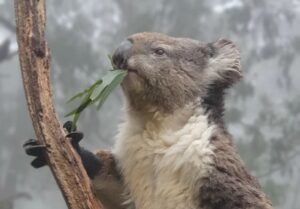
Led by Dr Frédérik Saltré, from the Australian Museum and the University of Technology Sydney, with Flinders University and University of Wollongong researchers, the study shows that SA's koala population in the Mount Lofty Ranges, currently numbers around 10% of Australia's total population, which is threatening its long-term survival.
They say that without intervention, this number could grow by a further 17-25% over the next 25 years, impacting food supply, vegetation and native habitats.
"Koalas are in steep decline across much of eastern Australia, but in South Australia's Mount Lofty Ranges, the opposite problem is happening: a booming koala population. This should be good news, but these numbers are concerning," says Dr Saltré.
"Many areas now have koala densities far beyond what the ecosystem can sustain, creating a growing risk of severe over browsing that could rapidly damage the very forests koalas rely on for food. In the next few decades, following this trajectory, there will almost certainly be a terrible situation of mass koala starvation and death."
Using advanced spatial modelling and data from thousands of citizen science observations, researchers found koala densities in many areas are above what is considered sustainable.

Senior author, Flinders University Professor Corey Bradshaw told the ABC that hormonal fertility control is the most ethical form of population management, as opposed to translocation or culling.
He likens the koalas in the Mount Lofty Ranges to an "insurance population" for Australia. Unlike South Australian koalas, those in Queensland and New South Wales are considered an endangered species due to threats of land clearing, urbanisation and climate change.
Co-author of the new article, Professor in Evolutionary Biology Vera Weisbecker, from Flinders University's College of Science and Engineering, says: "Together with the wombats, koalas are the only living representatives of the vombatiforms, which include the iconic extinct vombatiform megafauna such as the rhino-sized Diprotodon or the flesh-eating Thylacoleo. Koala conservation is therefore crucial to preserve Australia's unique evolutionary heritage."
She says the koalas were only introduced to the Mount Lofty Ranges in the 1960s, "but they thrived in the area and are an important additional population to safeguard the species against extinction."

Dr Saltré and his team found the answer through testing multiple fertility-control strategies, which demonstrated that sterilising approximately 22% of adult females annually, focusing on high-density hotspots rather than across the entire region, would stabilise the population at an estimated cost of $34 million over 25 years.
"The novelty lies in the proactivity of the approach: instead of spending money on a conservation plan without knowing whether it will succeed, we use computer simulations to identify in advance which strategies are most likely to work - optimising both costs and taxpayer investment," Dr Saltré says.
Another author Dr Katharina Peters, from the University of Wollongong, adds: "We are faced with a difficult conservation dilemma, because traditional methods of population management, like culling or relocation, either raise ethical concerns from the public or are not appropriate for such an iconic native animal.
"How do we manage a species that is now threatened by its own abundance, and do so in a way that protects both animal welfare and long-term ecosystem health?"

As climate change continues to reshape habitats and species distributions, the researchers say such evidence-based and anticipatory approaches will become increasingly essential for managing high-profile species where public values and ecological needs collide.
This research builds on previous work sequencing the approximately 20,000 genes in the koala to open up opportunities for medical treatments, provide knowledge about how koalas evolved, and indicate how best to conserve the species.
The article, 'Balancing high densities and conservation targets to optimise koala management strategies' (2026) by Frédérik Saltré, Katharina J Peters, Daniel J Rogers, Joël Chadoeuf, Vera Weisbecker and Corey JA Bradshaw
First published: 12 January 2026 https://doi.org/10.1002/ece3.72470.
Acknowledgements: Funding provided by the SA Department for Environment and Water. FS and CJAB were also supported by the Australian Research Council (Centre of Excellence for Australian Biodiversity and Heritage, CE170100015 and Linkage Project, LP210100450).