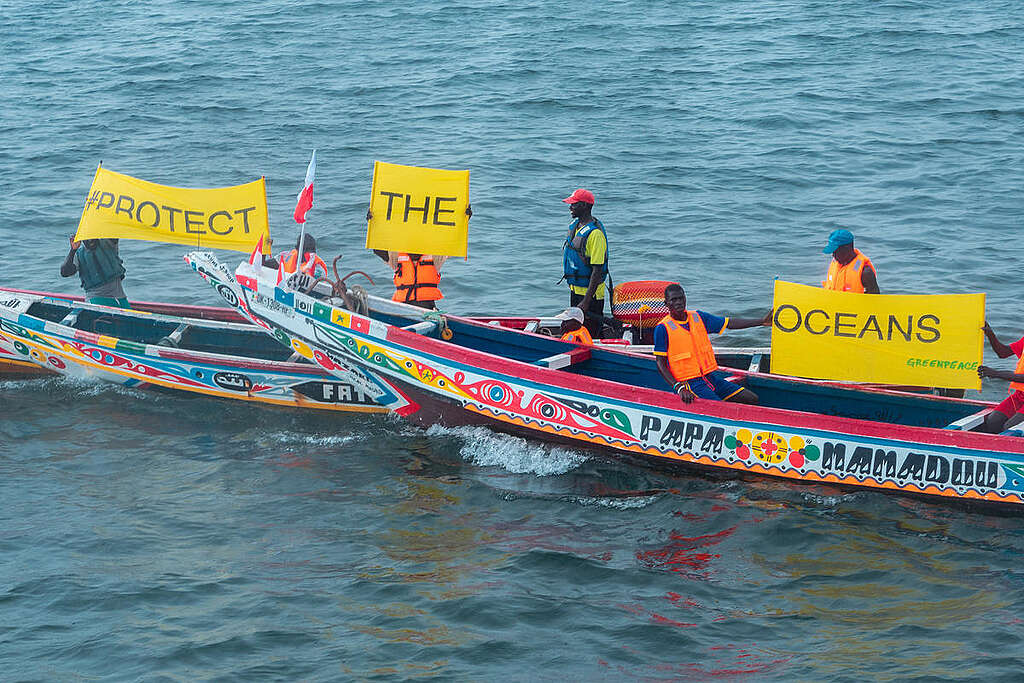
This World Oceans Day, we are celebrating a truth that global policy keeps ignoring: the people who have lived closest to the ocean for centuries are often the ones keeping it alive. But while governments keep signing deals to "save the ocean," the people actually doing the work are rarely in the conversation.
Greenpeace's latest report documents what coastal communities already know, and what global policy keeps getting wrong: the path to a healthy ocean runs through the people protecting it. Here is what the people, and the data, are telling us.
1. Ocean protection has been happening for millennia
Expertise built over millennia of stewardship should be hard to ignore. And yet governments somehow keep managing to do so.
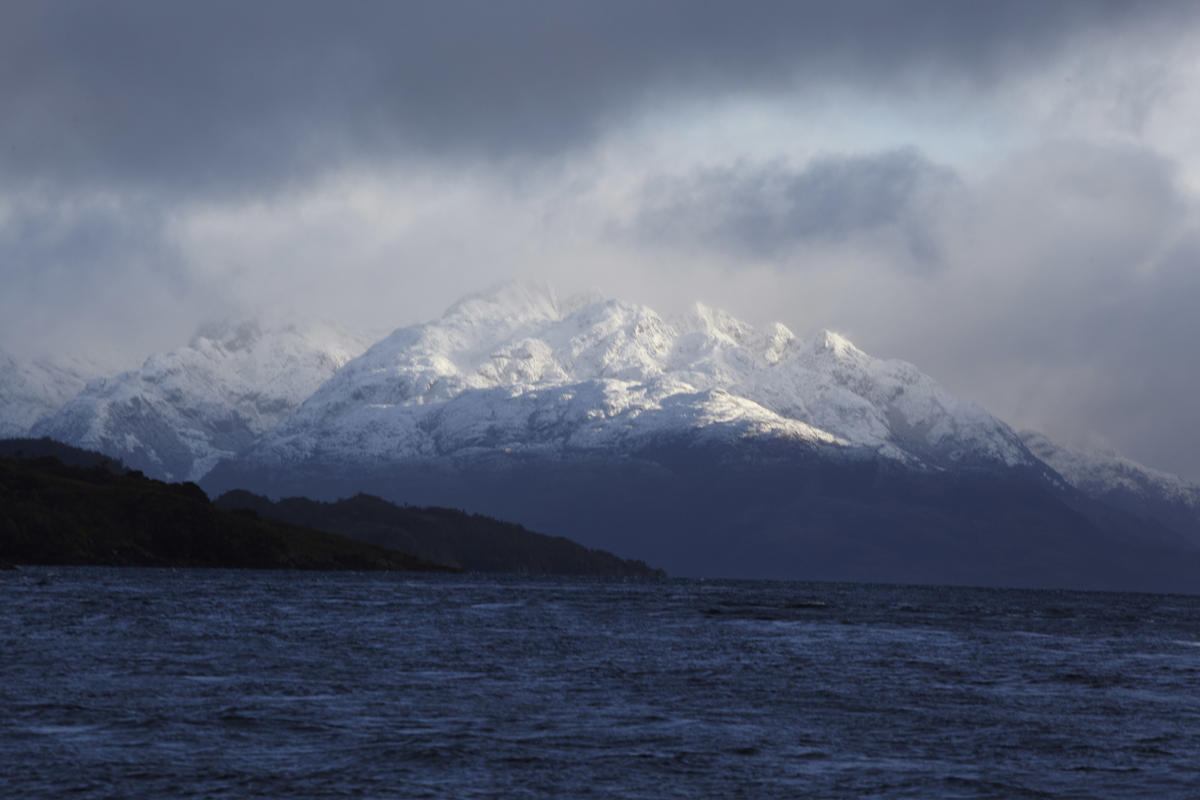
From the Kawésqar people in Chile, who have navigated and cared for the waters of Patagonia for more than 6,000 years, to the artisanal fishers of southern Thailand – Indigenous Peoples and local communities hold generations of knowledge about how marine ecosystems work, what keeps them healthy, and what puts them at risk.
In the Los Lagos region of Chile, the local community manages their maritorio (their interconnected sea-land territory) through traditional seed collection and sustainable mussel and seaweed farming. In this area, they haven't just revitalised their cultural traditions; they have successfully triggered the recovery of vulnerable species and created a natural barrier against the polluting activities of industries close by.
This is not just heritage. This is expertise. The kind that no corporate manual, no government decree, and no international framework has ever come close to replicating. And yet it is the first thing to get ignored when decisions get made.
2. Where communities lead, the ocean thrives
Research tells us that marine ecosystems tend to be healthier when local communities hold real decision-making power over their territories. Unlike industries focused on short-term profit, these communities understand a fundamental truth: protecting their livelihoods means keeping the ocean healthy and full of life for generations to come.
In Kawawana, Senegal, a decade of community-led stewardship brought back more than 20 fish species, along with manatees and dolphins, to waters that had been pushed to the edge.
These are not isolated success stories. It is a pattern repeated around the world: when communities have secure rights and the power to act on them, nature recovers.
3. People and nature can thrive together
We are constantly told that in times of crisis – war, inflation, energy insecurity – nature must be sacrificed in the name of economic survival.
Coastal communities are proving the opposite. They are not only defending what exists, they are building something better.
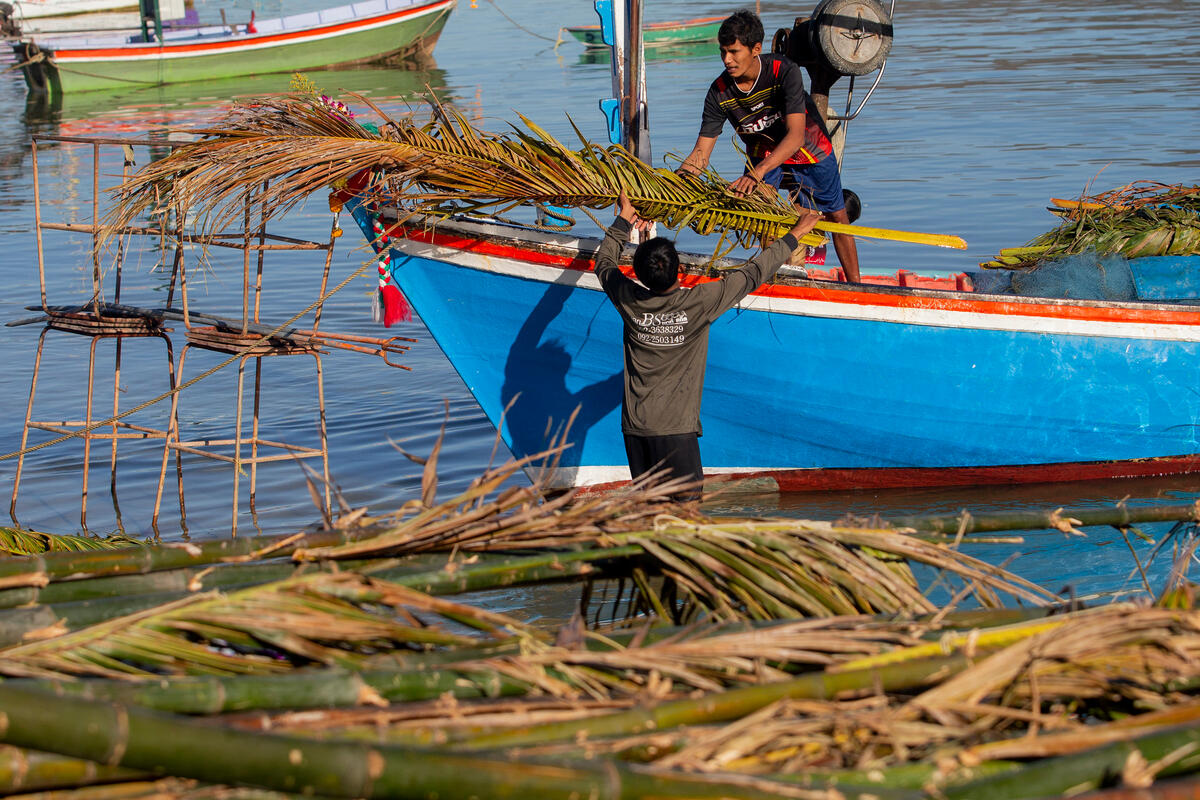
In Chana, southern Thailand, this knowledge is applied through the "Talae Na Baan" (Homefront Sea) programme, where communities act as primary guardians of their local waters. Together with other communities they created "Fish Homes" – traditional artificial reefs constructed from natural materials like bamboo poles and coconut fronds – to restore marine biodiversity, and implemented common regulations for coastal management. The result? Fish populations increased – and the communities' income rose by 20% within one year. This is what ocean protection looks like when local people have real power, real resources, and real decision-making authority.
4. Protecting ecosystems can feed millions
Coastal communities are not just protecting the ocean. They are protecting the world's food supply.
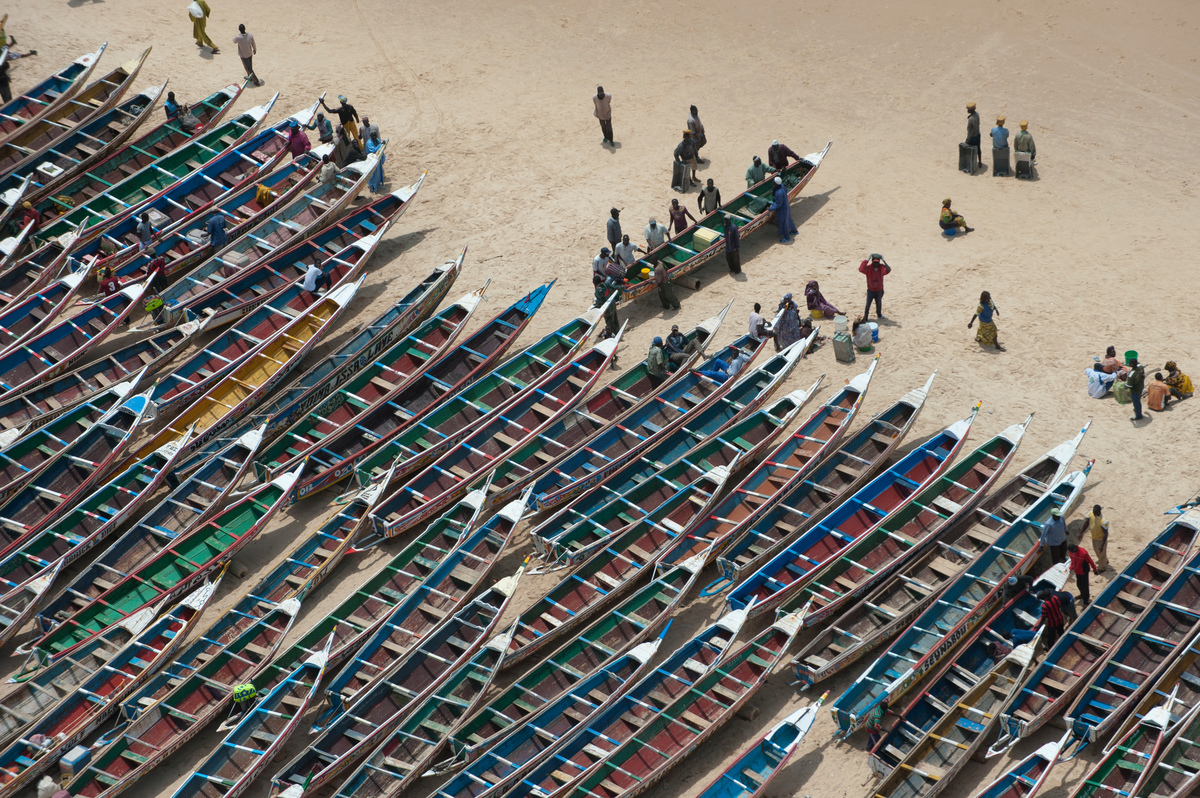
Small-scale fisheries account for at least 40% of the global catch and cover 20% of the diet of 2.3 billion people worldwide. Not only that, the fish they catch is often proven to be more sustainable and with a lower carbon emissions per kilo.
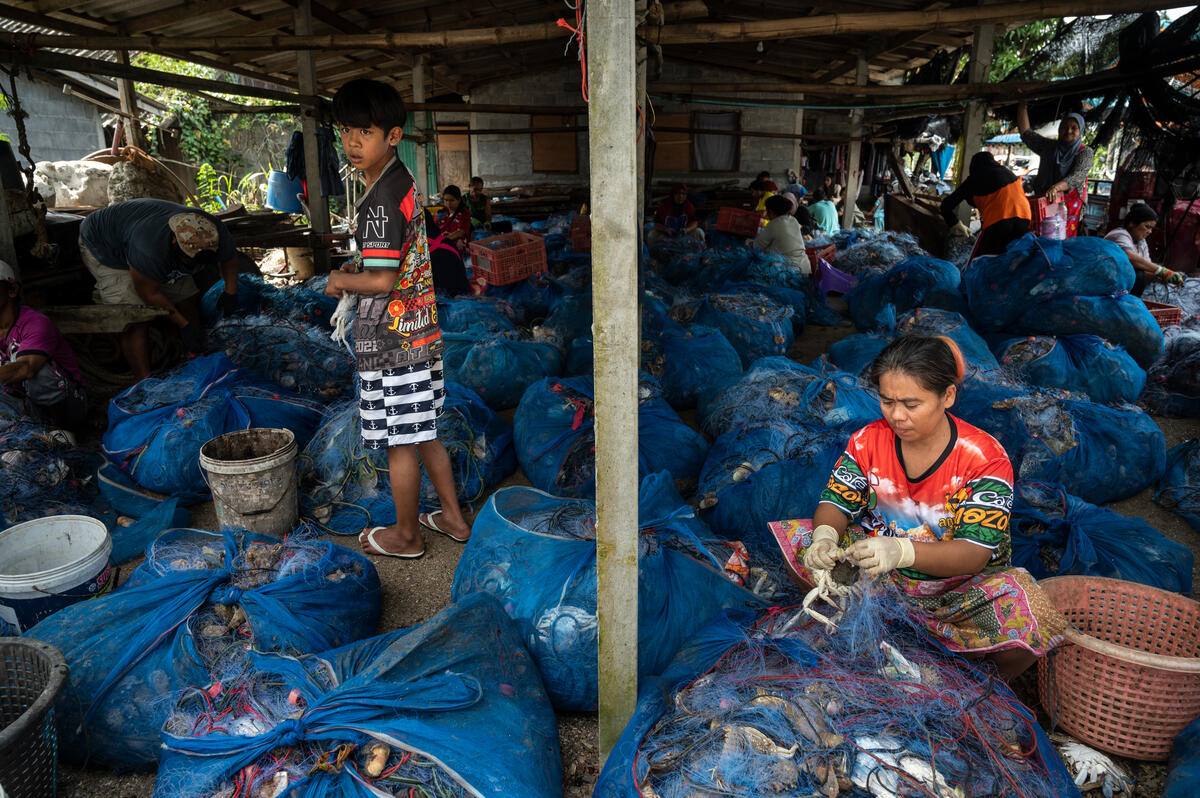
Yet industrial fleets are stripping those same waters bare, diverting fish that could feed people into animal feed for export markets. In Senegal alone, enough fish to feed 33 million people disappears into the fishmeal industry every year.
5. Standing with coastal communities means standing with women.
Protecting coastal communities is, at its heart, also a matter of gender justice. Women make up around 40% of the global small-scale fisheries workforce, sustaining local food systems, economies, and ecosystems, yet their labour and leadership are still too often overlooked.
In Sri Lanka, women are at the heart of one of the world's largest community-led mangrove restoration programmes. Through more than 1,500 local communities, women are leading mangrove propagation, reforestation, and coastal protection, linking ecosystem recovery directly to economic independence for their families and communities.
In Senegal, women fish processors in Kayar recently helped lead historic legal action against a fishmeal factory accused of polluting local air and drinking water, while diverting fish away from local communities and into animal feed for export.
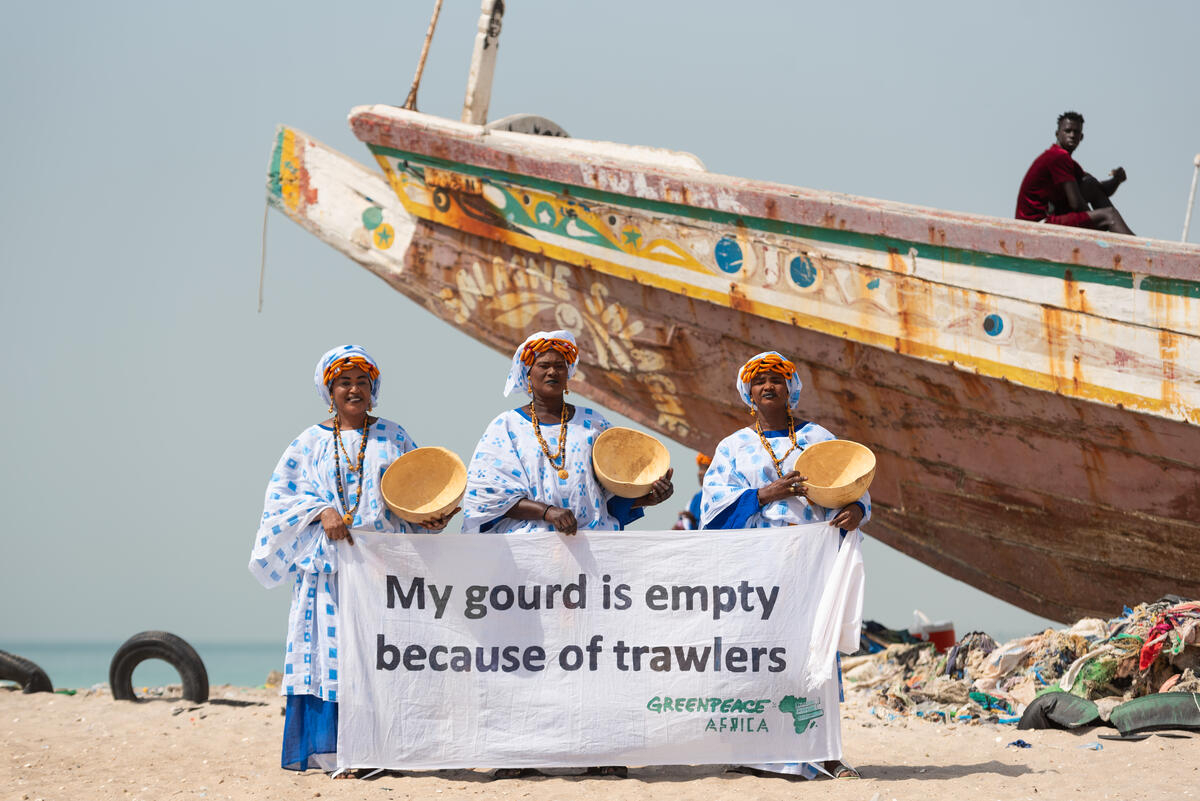
If governments are serious about ocean protection, women's leadership in coastal communities must be recognised.
Global ocean targets must include community leadership
These are not local disputes. They are part of a global struggle over who gets to shape the future of the ocean.
Less than 10% of the world's oceans are protected right now. Most of that protection exists only on paper. The global target world leaders have committed to is 30% by 2030, but protected areas only work if they are actually protected. Too often, conservation exists on paper while destructive activities continue in practice.
Industrial destruction does not just damage nature. When a fishmeal factory moves in and hoovers up the fish that feed a coastal town, that town loses everything: its food, its income, its future. But when industrial fishing, aquaculture, port developments, shipwreck disasters or fossil fuel projects threaten marine ecosystems, coastal communities are often the first to push back.
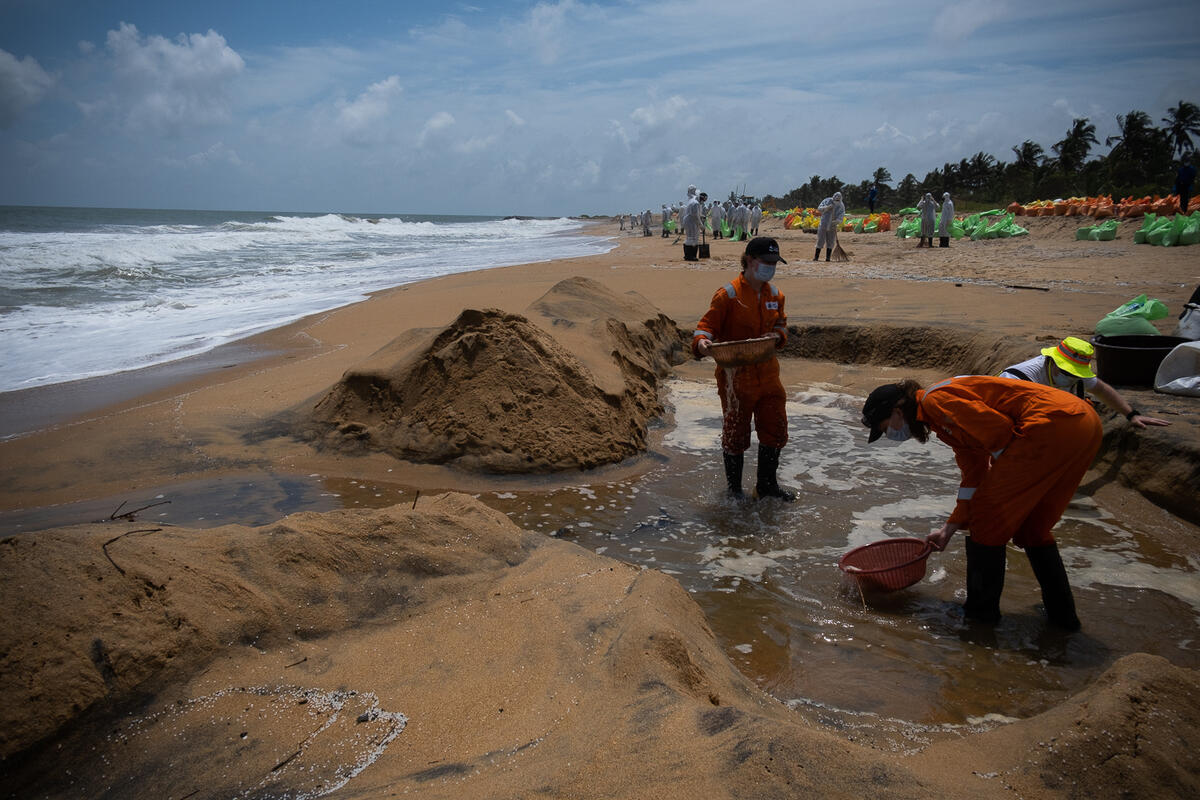
Community-led conservation, whether through Indigenous and traditional territories, traditional fishing grounds, or community managed marine areas is already delivering real protection in many parts of the world.
If governments are serious about meeting global biodiversity targets, they need to support and recognise these efforts, not work around or against them.