
Across Timor-Leste's varied landscapes, farming is a labour-intensive way of life for many rural households, demanding long hours of manual work throughout the growing cycle.
For example, in the high-altitude area of Raebuti Udo village farmers' fields are typically smaller than one hectare. Still, they require around 40 days for land preparation by hand, 30 days for planting, 20 days for harvesting and a further 20 days for managing post-harvest activities each season.
Similar challenges are seen in other regions and across other staple crops, including maize, as well as in vegetable production. In most cases, Timorese farmers rely on their harvests for daily food. Even so, agriculture is the country's main economic activity, employing more than 66% of rural communities.
Yet in a nation where most of the population is under 24, young people are increasingly seeking opportunities outside the farm. This shift places growing pressure on the remaining, often older, farmers to produce enough simply to sustain production.
Even with long hours spent in the fields, limited soil fertility keeps yields low and restrains its nutritional value.
Farmers shaping research priorities
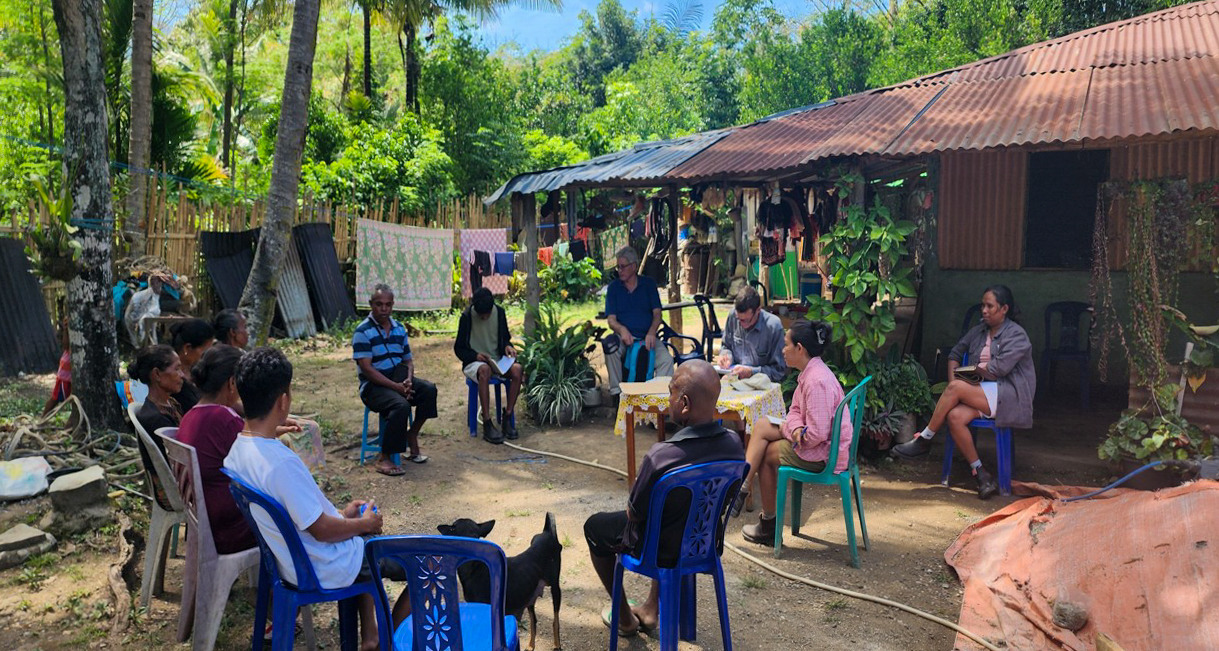
Building on Timor Leste farmers' existing knowledge and practices, an ACIAR supported project is working with farming communities to explore practical options that reduce the time and effort required in the fields, improve crop yields, or both. The four-year $2.95 million project, launched in 2024, involves farming communities in six villages across three municipalities with different geographical conditions. The work is led by Charles Darwin University (CDU), partnering with Universidade Nacional Timor Lorosa'e (UNTL); To'os Servisu Kma'an (TOSKA), the Ministry of Agriculture, Livestock, Fisheries and Forestry and Dom Bosco Technical Institute.
Project Leader Dr Penny Wurm from CDU said the project is designed around farmers' priorities from the outset, including the selection of participating communities, which was informed by early consultations with farmers and local partners.
'Farmers are not just participants in this research, but they are actively shaping it,' said Dr Wurm. 'Farmers shared the challenges they face in their daily farming and what they hope to achieve. Together, we have identified and developed interventions and trials that are tailored to the unique conditions at each site.'
'The project brings together Australian and Timorese researchers, government and farming communities to explore practical options for addressing challenges in local farming systems, in ways that are aligned with national priorities,' said Dr Johnvie Goloran, ACIAR Research Program Manager, Soil and Land Management. He said the work reflects ACIAR's long term partnership with Timor Leste, with a focus on learning alongside communities as the research continues.
Practical options with promising results
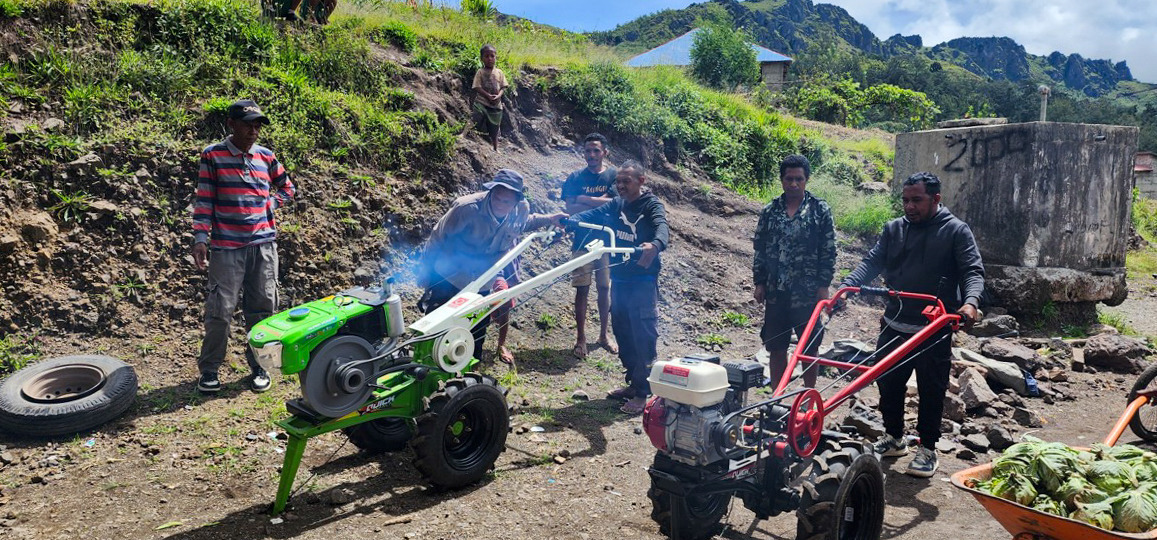
Project activities include trialling small-scale machinery such as seeders, hand tractors and brush cutters to reduce heavy manual labour; on farm soil nutrient trials that farmers can observe and discuss directly; and testing simple crop tunnels to reduce damage from unpredictable weather.
Just as important, the project strengthens sharing and learning between farmers. TOSKA Country Leader Ms Marcia e Silva said close engagement with farmers is central to how the trials are being run.
'By testing options together in the field, farmers can see results directly, helping them understand what works in their own conditions and motivating them to learn more and share that learning with others' said Ms e Silva.
Although the project is still in its half-way stage, initial results are encouraging. Ms Cecilia Soares, a lead farmer in Baucau, said she is happy to be involved.
'I am learning new things about how to grow my crops better, especially about giving the soil the right nutrients,' said Ms Soares. 'When the soil is healthier, the plants grow better and I can produce healthier food for my family.' Other members of her farming group are also starting to see the benefits from participating.
Complementing its community outreach, the project actively strengthens national research capabilities. 'By embedding final-year students in field research, we bridge the gap between study and practice, while upgrading our lecturers' capabilities through international collaboration,' said Dr Marcal Gusmão from UNTL.
More to learn
Key next steps in the work include analysing data from the first round of trials, continuing labour productivity and nutrition measurements and refining fertiliser options that are effective, affordable and appropriate for local conditions.
'With two more years of research ahead, the focus is on using evidence from these trials to refine science-based innovations and work with partners to strengthen pathways for adoption across Timor-Leste,' said Dr Goloran.
Learn more about the project here.


