
More than 1,000 days of war in Sudan have left millions of children out of school, displaced or exposed to grave violations, the UN Deputy Secretary-General said on Friday, calling for renewed action to end the conflict.
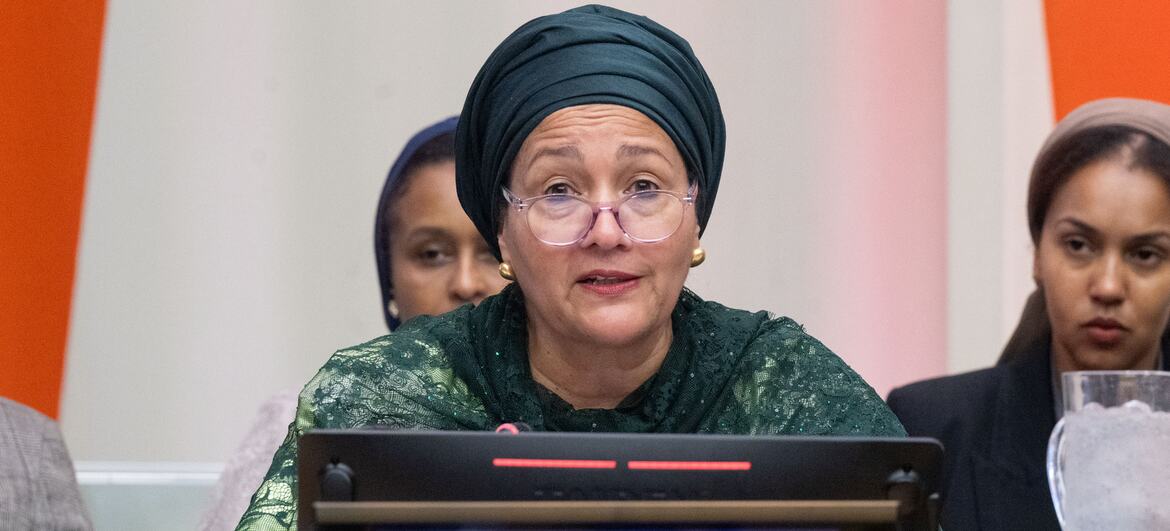
Amina Mohammed was speaking to Security Council members during an informal meeting on safeguarding education in Sudan, organised under a framework known as the Arria formula.
"Among everything this war is taking, one of the most significant is the future of Sudan depriving the education of its children," she said .
Education under fire
At least eight million school-aged children remain outside the classroom, she said, "with a disproportionate impact on millions of displaced children," especially those who have fled to other countries.
In battle-scarred Darfur alone, nearly three quarters of schools have been damaged, destroyed or otherwise rendered non-functional since fighting erupted in April 2023.
"Five children in every six are out of school, and parents will tell you they would rather keep their children at home than send them to a classroom, because home for them is the only place left where they can keep them safe," she said.
She noted that since 2024, the UN has verified more than 67 attacks on schools across Sudan, while over 154 instances of military use of schools have been reported, though the true scale is undoubtedly greater.
A 'frontal assault' on child safety and dignity
Ms. Mohammed described attacks against schools as "frontal assaults on children's safety and their dignity" because they lose protective spaces, opportunities for social development alongside peers, and access to essential services such as school feeding programmes, healthcare, and mental health support.
At the same time, more than half of all teachers in Sudan have gone unpaid, yet many continue teaching "against all odds," she added.
"I could read numbers to you for the whole of my five minutes and still fall short of what is being done to Sudan's children, especially its girls," she said Ms. Mohammed.
"Sudan has already lost a generation to its earlier wars, and it is losing another one now."
Paying the price
The Deputy Secretary-General said that this year, the UN and partners have brought more than a million Sudanese children back into some form of learning, but it is simply not enough.
"This is a war that men started," she continued. "But it is being paid for on the backs of women, and on the backs of children who had no say in any of it but suffer most."
She said it is time to silence the guns and to pull Sudan back from the brink of losing another generation of its children.
Children cannot wait
She called for Security Council members to do their utmost to bring the conflict to an end, create the conditions for peace, and the enabling environment to get Sudan's children back to learning.
"I urge you to do everything within your power to do so, for the young Sudanese living through this war today, and for future generations who will inherit whatever is left of their country.
Ms. Mohammed upheld education as being both lifesaving and life-changing because it protects children today and lays the foundations for peace, recovery and stability tomorrow.
"Sudan's children have waited 1,210 days for the war to end," she said. "They should not have to wait any longer."


