
Scientists, Traditional Owners and Rangers on the Tiwi Islands, off the Northern Territory coast, are partnering to understand the risks to threatened marine turtles and track their movements from nesting to feeding grounds across thousands of kilometres.
Researchers from AIMS, Integrated Marine Observing System (IMOS), Sydney Institute of Marine Science , Charles Darwin University and Northern Territory Government visited Imalu Beach on Melville Island to carry out field work with the Tiwi Rangers and Traditional Owners for two projects focused on olive ridley turtles.
AIMS research scientist Dr Phillipa Wilson said it was important to learn more about the species to protect them.
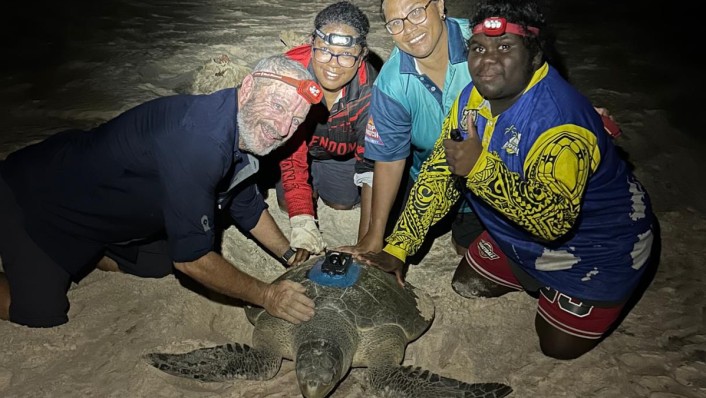
"Four species of turtle nest on the Tiwi Islands and they are all listed by the Australian government as threatened," said Dr Wilson. "This includes the olive ridley turtle, which nests in nationally significant numbers on Imalu Beach."
Tiwi Ranger Dominic Tipiloura said protecting the turtles was vital.
"Turtles are important for us; they are one of our main sea foods. We are trying to protect the eggs and the hatchlings so we've got more hatchlings in the future," he said.
One of the projects is investigating the risks to olive ridley turtles at Imalu Beach.
"Rangers have reported that lots of turtles are being taken by predators like dogs, pigs, crocodiles and goannas, and that nests are getting washed away by high tides due to sea level rise and coastal erosion," explained Dr Wilson.
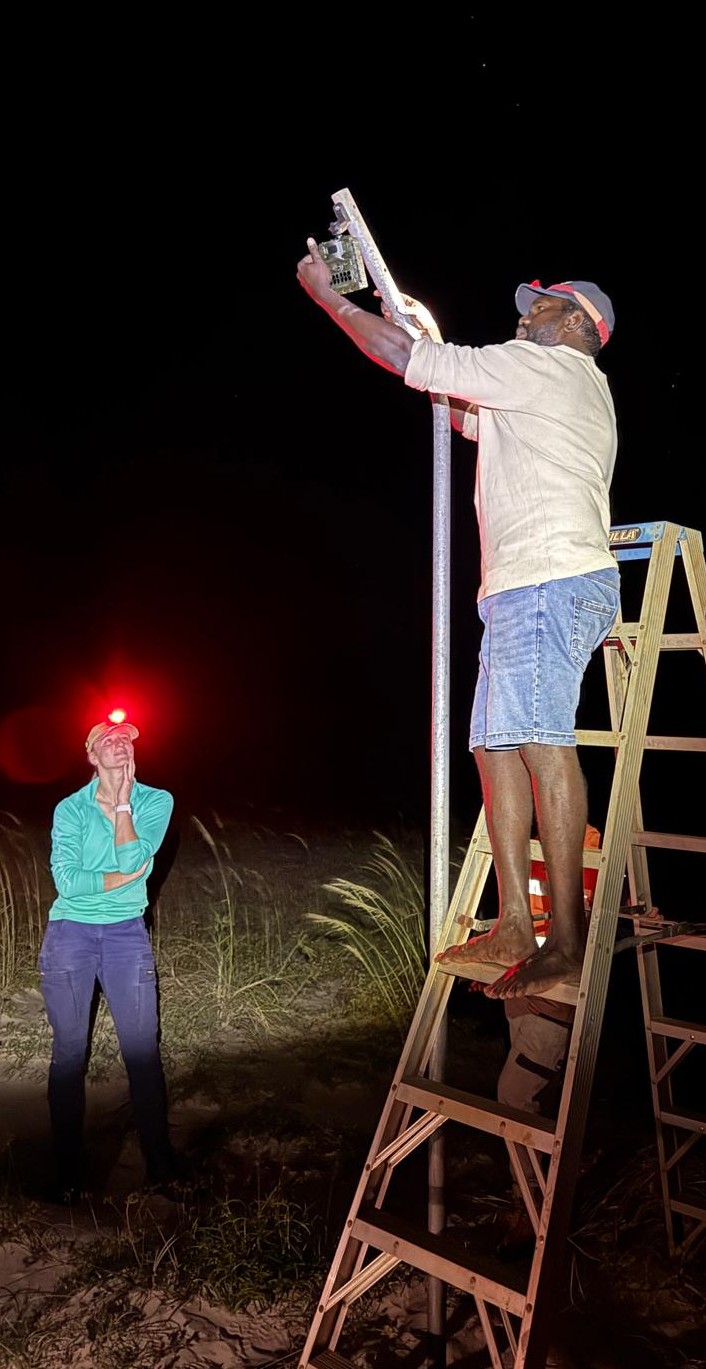
To research these issues, the team deployed cameras and nest loggers to monitor nest predation, erosion rates and nest temperatures at the beach.
AIMS senior scientist Dr Michele Thums said warmer temperatures in nests produces more females.
"With climate change, there is a concern that we will only get female hatchlings," she said. "If nests get too hot or wet, it can also affect how many eggs develop and survive. We also see a change in temperature if predators dig up the nest, so we can learn a lot from nest loggers."
The project is also providing training to rangers to enable ranger-led turtle monitoring on sea Country. It is funded by the NT Aboriginal Ranger Grants Program and in part by the Australian Government's Department of Climate Change, Energy, the Environment and Water 'Marine Turtle Climate Change Resilience and Nest Protection' program.
"By working together, we can learn from each other and share knowledge," added Dr Wilson. "Merging Indigenous knowledge with modern scientific research methods will strengthen outputs and provide important information to help us look after the turtles so they are around for the future."
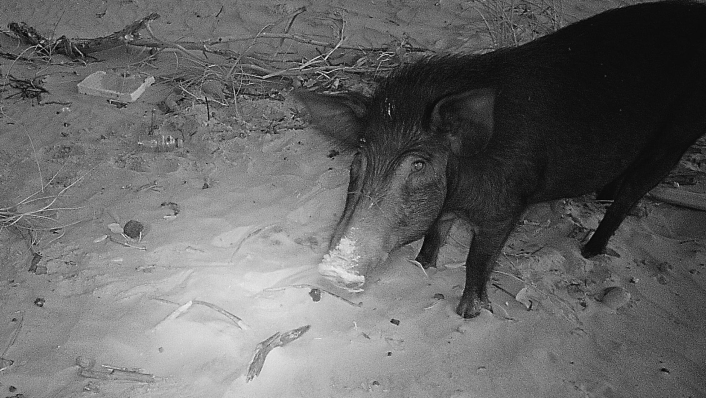
Scientists, Tiwi Rangers, Traditional Owners and Junior Rangers from Tiwi College recently returned to excavate nests marked during the two-week survey to see how many hatchlings survived. The team also retrieved cameras and loggers. These will help them determine how many nests were predated and by which species.
Dr Wilson added: "Once we know this, we can determine whether mitigation is necessary and, if so, feasible mitigation options like nest protection and predator control interventions will be co-designed to protect the turtles and to maximise hatching and nesting success."
For the second project, the team attached satellite tags to 20 adult turtles as part of a research effort which began in 2022. The tags are transmitting data about the turtles' migratory pathways, where they are feeding, and their habitat use.
"This data helps us to understand which areas we need to look after to protect turtles," added Dr Wilson.
The tags also record their diving behaviour as they search for food, and they log sea temperature, depth and salinity providing data on the oceanography around the Tiwi Islands and beyond.
Mr Tipiloura said he liked putting the trackers on the turtles.
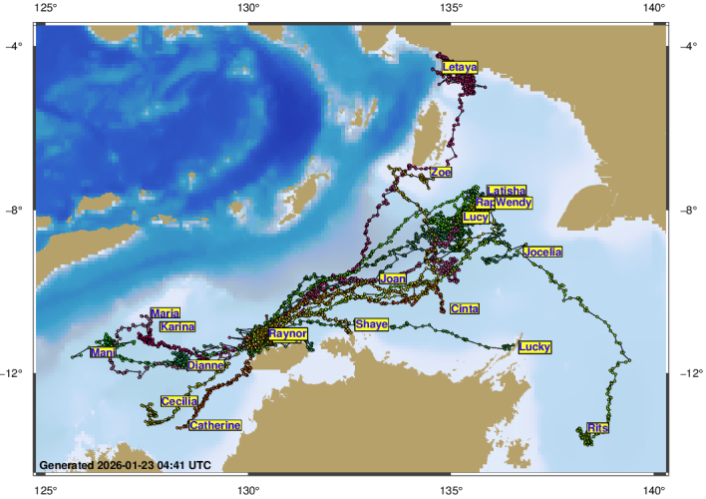
"It's interesting to see where they go, how far they swim from the islands, how far they travel, where they are nesting.
"I enjoy working with the researchers, doing the research, it's really interesting. We learn a lot especially with the trackers, it's good to track the turtles."
IMOS Animal Tracking Lead Professor Rob Harcourt said: "The information provided by these tags is making an essential contribution to our understanding of oceanography in Northern Australia and is providing crucial observations needed to assess and forecast storms and cyclones."
"We have recorded the turtles swimming some incredible distances. One of the turtles has migrated to foraging areas in Indonesia, another to the Gulf of Carpentaria - it is invaluable data when it comes to the management and protection of these species."
The tagging project is a collaboration between AIMS, the Integrated Marine Observing System (IMOS), Sydney Institute of Marine Science , the Tiwi Rangers, Tiwi Resources , and the Tiwi Land Council.


