Improved early warning systems and strong disaster management plans are successfully saving lives and protecting communities in the world's most active tropical cyclone basin in the western North Pacific. But rapidly intensifying storms and growing exposure continue to threaten millions of people each year.
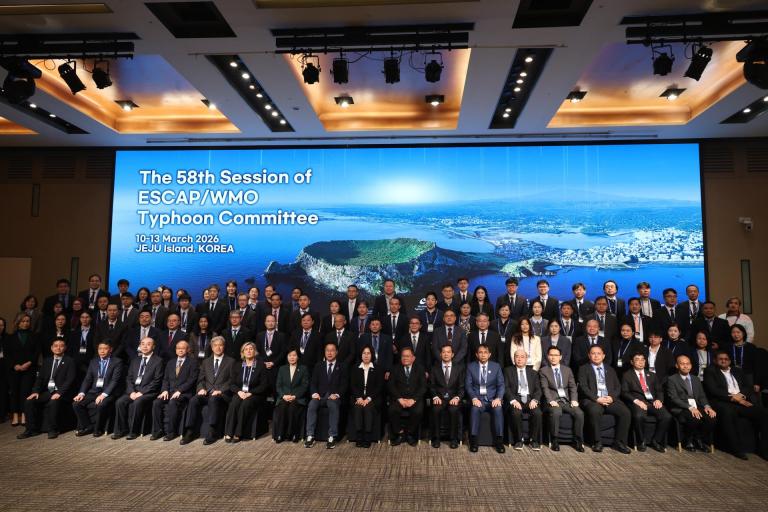
The Typhoon Committee - an intergovernmental body under the auspices of the Economic and Social Commission for Asia-Pacific and the World Meteorological Organization - wrapped up its annual session on 13 March with renewed commitment to regional coordination and exchange of data and know-how to reduce the death and destruction wreaked by typhoon-related disasters, and enhancing the socio-economic benefits of the services.
It urged governments to allocate the resources necessary to strengthen operational readiness, disaster mitigation and risk reduction, whilst advancing the forecasting potential of Artificial Intelligence.
"Tropical cyclones are the world's most dangerous natural hazards. They can destroy generations of work in a matter of minutes," said WMO Secretary-General Celeste Saulo in an opening message to the meeting in Jeju, Republic of Korea. "This region unfortunately witnesses this every single year."
"We are seeing more rapidly intensifying tropical cyclones, more dangerous rainfall and coastal flooding threatening megacities," she said. "Tropical cyclones respect no national boundaries and have no national passport. They have cascading impacts across our economies and communities. That's why we need regional collaboration and data sharing," she said.
"We must accelerate our efforts to ensure reliable and actionable early warnings for all hazards - single and compound, especially in the most vulnerable communities," said Celeste Saulo.
2025 season
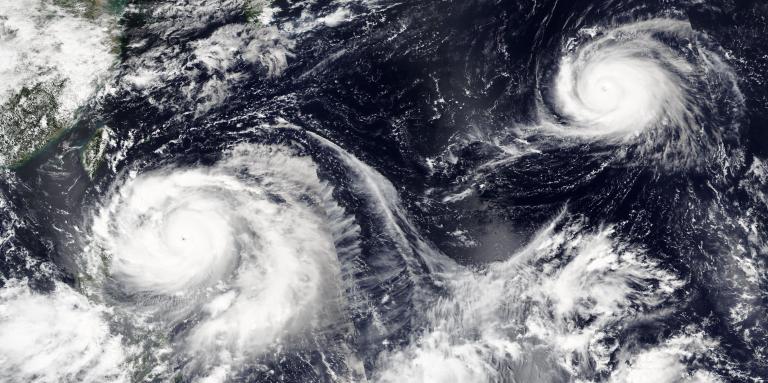
The 2025 typhoon season in the western North Pacific and the South China Sea was very active, with 27 named tropical cyclones. Collectively, these events caused more than 700 fatalities and nearly US$10 billion in damages and prompted millions of people to be evacuated out of harm's way.
Typhoon Ragasa was the strongest tropical cyclone in the Western North Pacific and South China Sea in 2025, reaching an estimated 110 knots (205 km/h) at peak intensity and affecting southeastern China, the Philippines and Thailand. Hong Kong, China triggered the maximum Hurricane Signal No. 10. The storm generated hurricane-force winds, widespread damage, and extensive coastal flooding. There were major transport disruptions, including the cancellation of over 700 flights. There were 100 injuries but no loss of life - testimony to the success of early warnings and early action.
Ten typhoons made landfall in China in 2025, affecting a total of 9.5 million people across 12 provinces and forcing the emergency evacuation of 3.5 million people. Thanks to the forecasts and early warnings and successful disaster management, there were just ten fatalities.
"Your collective commitment and your technical excellence save countless lives and livelihoods," said Celeste Saulo.
Cooperation and innovation
Since its establishment in 1968, the Typhoon Committee has brought together meteorological, hydrological, and disaster management agencies across the region.
WMO's Regional Specialized Meteorological Centre (RSMC) - Typhoon Center Tokyo continues to provide authoritative tropical cyclone forecasts, satellite analysis and best-track guidance to support Members.
The 14-Member Committee plays a central role in delivering on the United Nations Early Warnings for All (EW4All) initiative, which aims to ensure that everyone on Earth is protected by life-saving early warning systems.
More countries in the region - most recently Cambodia and the Lao People's Democratic Republic - are now among the champions of Early Warnings for All and adopters innovative Artificial Intelligence (AI) technologies in tropical cyclone forecasting that have the potential to be game-changers.
AI is increasingly used by Members of the Typhoon Committee to enhance tropical cyclone monitoring, forecasting, impact assessment, and disaster risk management and there is a regional AI data-exchange portal supporting collaborative forecasting.
Key application areas include typhoon track and intensity forecasting, satellite and radar data analysis, impact-based forecasting and risk assessment, disaster response and emergency management, data integration and decision support.
New office holders
Members elected Dr Mi-Seon Lee, Administrator of the Korea Meteorological Administration as Chairperson of the Typhoon Committee. Ms Koh Li-na, Director-General of the Singapore Meteorological Services, was elected Vice-Chairperson.
The Committee also approved several changes to the list of tropical cyclone names, including the retirement of eight names - Wipha, Co-may, Matmo, Mitag, Ragasa, Bualoi, Kalmaegi and Fung-wong - due to the severity of the damage they caused.