
Gene Pendergast wasn't exactly enthusiastic when his cardiologist, Javier E. López, recommended cardiac rehabilitation for a condition causing chest pain.
"Quite frankly, I didn't know what the program involved," Pendergast admitted. "I knew I needed to exercise more. I've heard that a million times, but that didn't mean I wanted to."
During his previous doctor's visit, a positive nuclear scan revealed angina, which is chest pain caused by reduced blood flow to the heart muscle. Pendergast faced a reality check. The diagnosis was serious and he was potentially looking at a stent procedure. Instead, Lopez recommended a structured rehab program to help manage his condition and reduce future risk.
Despite his reluctance, Pendergast decided to give cardiac rehab a try.
What is cardiac rehab?
Cardiac rehabilitation is a medically supervised program that combines exercise, lifestyle changes and education to help people recover from heart conditions and reduce the risk of future complications.
At UC Davis Health, cardiac rehab spans 12-weeks in a gym on the lower level of a medical building where exercise and education sessions can last up to 90 minutes. A team of experts —heart doctors, exercise physiologists, nurses, dietitians, diabetes specialists, pharmacists and psychology counselors — run the program. They work together to give each patient advice and education to make the heart stronger and improve health.
On his first day in cardiac rehab, Pendergast arrived unsure of what to expect. During his first session, he rode an exercise bike, lifted weights and practiced simple moves, all under the guidance of medical experts. They even taught him the best ways to sit down and stand up from a chair.
"At my age, I guess getting up from a meal at a table can even be a challenge," joked Pendergast. "You don't want a three-legged table or you might embarrass yourself."
Throughout his workout, Pendergast wore a telemetry monitor so staff members could watch his vital signs from a bank of video screens nearby. They observed his heart rate, blood pressure and oxygen levels to ensure he could exercise safely.
"I was pleasantly surprised by how encouraging the team was," shared Pendergast. "They weren't critical at all — they genuinely cared about my well-being and were focused on helping me improve."
Improved heart health
During his three months in the program, Pendergast completed one hour of exercise each visit. He attended classes on healthy eating, physical activity, stress reduction and medication management.
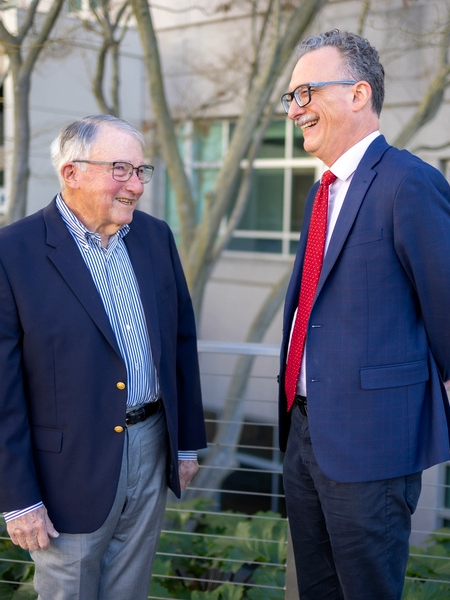
By the end of the program, he had lost 12 pounds and trimmed four inches from his waist. His blood pressure improved, his LDL cholesterol (bad kind of cholesterol) reached its lowest level ever and his chest pain disappeared. This happened without any changes to his medications.
Pendergrast's hesitancy about the program was now a thing of the past.
"I'm so glad I was referred to cardiac rehab. Honestly, I wish I had started sooner — I'd be even better off today," Pendergast shared. "I feel so much more confident about my health now."
Since completing rehab, he is more motivated to exercise on his own. He walks a mile and a half every day and meets with his trainer weekly. Best of all, he no longer needs a heart procedure.
A leader in cardiac rehab
The UC Davis Cardiac Rehabilitation Program started more than 20 years ago, thanks to Tissa Kappagoda and his team. It was the first program like this in the Sacramento area. López, the medical director, continues the program's strong focus on innovation and high‑quality care, which has led to an impressive success rate.
Among the patients who join the program, 68% improve their exercise capacity by at least 10%. Also, 91% of those who graduate finish with their blood pressure under control.
"We are proud to have one of the highest cardiac rehab graduation rates in the country. While the national average is in the 20% range, UC Davis consistently graduates patients at rates in the 80% range," said Rachel Labiak, assistant nurse manager for cardiac rehabilitation. "We believe this success comes from our team‑based approach. Our patients show up, stay involved and graduate — and they truly get something meaningful from the program."
The program is also certified by the American Association of Cardiovascular and Pulmonary Rehabilitation. This shows its strong commitment to patient safety, high‑quality care and excellent results.
"Success stories like Gene's are the result of the hard work of our cardiac rehab team, who give patient‑centered care to every person in the program," added López.


