
The Swedish Higher Education Authority (UKÄ) will be auditing KI's quality-assurance processes in education and research over the coming two years. The audit will be based on a self-assessment, which will now commence.
The self-assessment will be led and coordinated by Vice President Martin Bergö .

"We've decided to optimise the balance between the work we'll need to put into this and making sure the process is actually usable," he says. "So we'll be focusing all our efforts on the issues that can be translated into concrete work methods and processes that will make practical improvements to our activities."
Self-assessment as a basis
All Swedish higher education institutions (HEIs) undergo regular audits of their quality-assurance work. For this audit period, KI will be joined by Mälardalen University, the Royal College of Technology, the Beckman College of Design, Stockholm University of the Arts and the Stockholm University College of Music Education.
The audit requires each institution to conduct a self-assessment of its quality-assurance processes. The resulting document then goes to form the basis of a peer review.

"To ensure the reliability of its evaluations, UKÄ experts also interview students, teachers and management," says Magnus Johansson , quality coordinator at the KI's Office of Legal, Planning and Economic Affairs (JPE). "A number of quality-assurance processes are then selected for more detailed scrutiny. KI is to submits its self-assessment to the UKÄ this coming autumn. We can expect an evaluation around mid-2027."
The audit will focus on the processes KI has in place for quality assuring research and education, which is to say the processes it uses for making sure that the students are given every opportunity to achieve their intended learning outcomes and that the researchers are provided with what they need to conduct research of a high standard.
Supporting development
The UKÄ audit also includes ensuring that processes, routines, responsibilities and roles are clearly described in KI's steering documents and fully implemented.
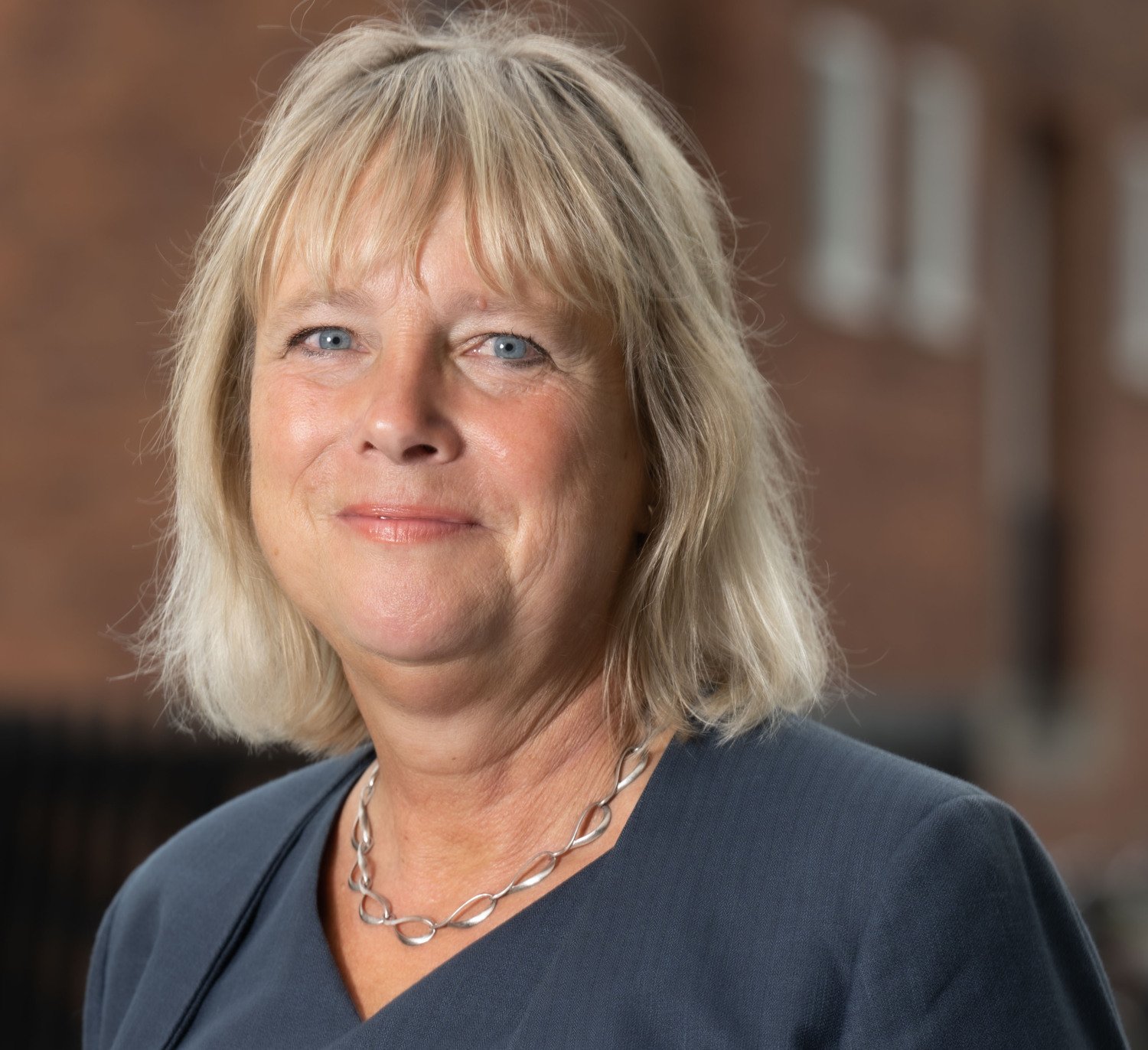
"The UKÄ does these audits to help us develop the right conditions for delivering quality research and supplying skilled healthcare professionals," says Professor Anna Kiessling , academic advisor for the development of KI's systematic quality work. "The audit procedure itself gives us an opportunity to review our support and broaden everyone's knowledge and understanding of everything that goes on at KI."
The last time the UKÄ conducted such an audit at KI was in 2019-2020. This time, however, it only covered quality assurance in education. Since then, the UKÄ's remit has been extended so that its HEI audits now include quality assurance within research as well.
"It's important to stress that the UKÄ does not audit research outcomes or individual research processes," says Johansson. "What the audit focuses on are the processes in place at KI for quality assuring the conditions we've established to enable our researchers to conduct research of a high standard, and this includes things like infrastructure, administrative support, competence provision and career support."
The UKÄ audit step by step
KI conducts a thorough review of its own quality-assurance work from which it draws up a self-assessment report for submission to the UKÄ this autumn.
The UKÄ selects some areas for closer scrutiny through interviews with selected employees.
The UKÄ returns a preliminary report to KI for comment, after which the UKÄ issues its final evaluation, which in this case is expected in the middle of 2027.


