
At a time when some state laws dictated where different races could live, Parkway Village, built to house some of the first UN staff in New York in 1947, led the way in eliminating racially segregated housing in the United States.
In the United States of that period, laws in many states enforced separate schools, transportation and bathrooms based solely on race. The military was still segregated, laws prohibiting interracial marriage remained in place and many housing developments enforced "whites-only" policies.
One early resident and later UN staff member, Carlos Figueroa, remembered being friends with children from Europe, the Middle East, Asia, Africa, Latin Ameria and the Caribbean. Growing up together, they sampled cuisines, learned about their cultures and picked up on small bits of their languages.
By 1952, nearly 500 United Nations families resided in Parkway.
"It was enlightening to see kids from countries and cultures which are traditional rivals - Indians and Pakistanis, Arabs and Jews, for example - playing together, attending the same schools and, if not learning to love and trust one another, at least finding a way to get along in an atmosphere of cooperation and understanding," Mr. Figueroa said.
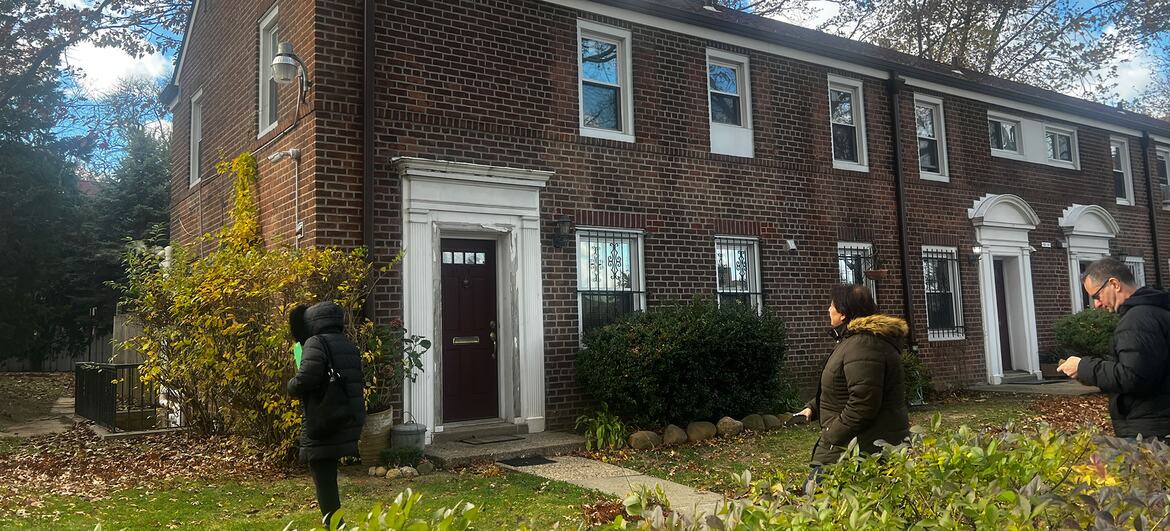
Among the Parkway's quaint low-rise homes, winding paths and open lawns lived staffers from over 50 countries, including Nobel Laureate Ralph Bunche.
"Since its earliest days, the United Nations has sought to be a leader in eliminating racial discrimination worldwide," said Rula Hinedi, head of the UN tour guides, who recently led a fact-finding mission to Parkway Village.
"There are few clearer intentions to put this principle into practice than the development of Parkway Village when the UN first decided to permanently locate to New York in December 1946."
Confronting segregation in NYC
In the immediate aftermath of the Second World War, New York City faced a serious housing crisis, and this was compounded by the return of 900,000 US servicemen from overseas.
"New York seemed to be 150,000 to 250,000 apartment units short of the housing needs that were required at the time and yet there were thousands of diplomats getting ready to make their home in New York City," New York historian, Chris McNickle, told UN News.
However, it was the requirement from the United Nations for the host city to provide housing for staff without discrimination that would cause an even greater challenge. Many housing developments in New York, such as Manhattan's famous Stuy-Town or Fresh Meadows, practised racial segregation.
The organization knew that it would need somewhere to accommodate its incredibly diverse staff, especially at a time when "it was very difficult for black people to secure an apartment, sometimes impossible," Mr. McNickle said.
Parkway Village, then just a plot of land nestled deep in a quiet corner of the borough of Queens, was the solution that the UN and the City of New York came up with.
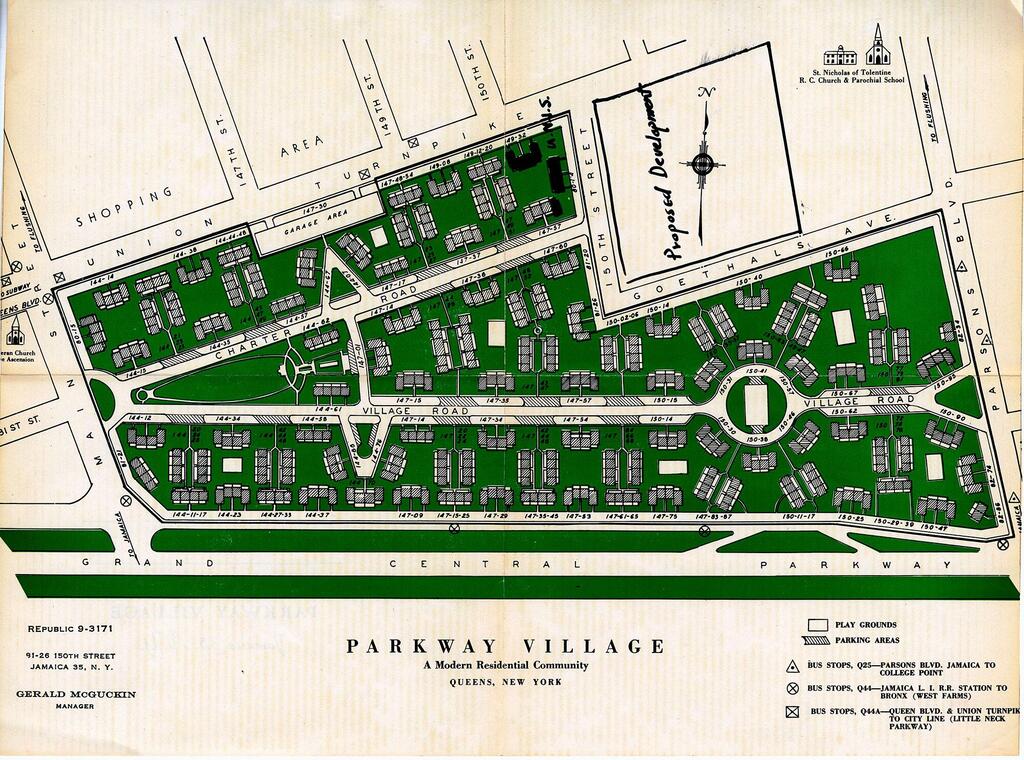
The United Nations Village
Built from scratch in 1947 on 34 acres of undeveloped land, Parkway comprised 687 apartments sparsely located in small groups across the property, with views in every direction.
Described by current resident, Judith Guttman, as the "country in the city", the Village fostered a "communal" atmosphere for its residents. With buildings covering just 15 per cent of the space and the UN school and nursery on site until the early 1980s, Ms. Guttman said "it was so community-oriented and had a very culturally open atmosphere, that for many years no fences between the homes were built...it was the perfect place to raise kids."
'Atmosphere of cooperation and understanding'
Beyond the familial atmosphere, the development also provided a haven for civil rights activists, Nobel laureates and UN staff from countless countries who wouldn't usually have been able to live together given the racial laws in place in that period.
One UN staff member who benefited from the village's integration was Ralph Bunche, the first Black person to win the Nobel Peace Prize following his mediation efforts on behalf of the UN in the late 1940s Arab-Israeli conflict.
Moving past discrimination
As Parkway Village continues as an historical symbol of the UN's push to promote racial equality, the UN independent human rights expert on contemporary forms of racism, Dr. Ashwini K.P. , said that progress has been made.
"Over the past 80 years, the world has moved from openly codified racism toward a global consensus that racial discrimination is unacceptable," she said.
However, speaking ahead of the International Day for the Elimination of Racial Discrimination , marked annually on 21 March, she added "racism continues to manifest in different forms" and "shape access to education, healthcare, economic opportunity, and political power."
"Ending racial discrimination requires sustained political will, measurable accountability and a commitment to equality that is lived and not merely declared," she said. "Confronting it openly is how we diminish its power and reclaim our collective humanity."


