
Moving goods around the world could soon become cheaper, faster and far more flexible, following the adoption of a new United Nations-backed agreement that modernises the paperwork behind global shipping.
The UN Convention on Negotiable Cargo Documents creates, for the first time, a single document that can be used for trains, trucks and planes which allows logistical changes to be made for goods already on the move.
That means valuable cargo can be sold, rerouted or used to secure financing during what could be a long journey, not just before being loaded aboard.
"This is a real game changer for international trade," said Anna Joubin-Bret, Secretary of the UN Commission on International Trade Law ( UNCITRAL ), which led the three-year negotiations. "One single document of transport which is multimodal, fully electronic, and negotiable."
From Brazil to Paraguay, via Azerbaijan
Today, negotiable transport documents mainly exist for goods travelling by sea, where voyages can take weeks. Goods such as oil or cocoa are often sold several times at sea as prices fluctuate.
By contrast, goods moving by road, rail or air are usually consigned to a single buyer and destination - limiting flexibility and access to financial instruments.
James Hookham, Director of the Global Shippers Forum, described a hypothetical shipment of commodities travelling from a supplier in Brazil to a subsidiary in Paraguay.
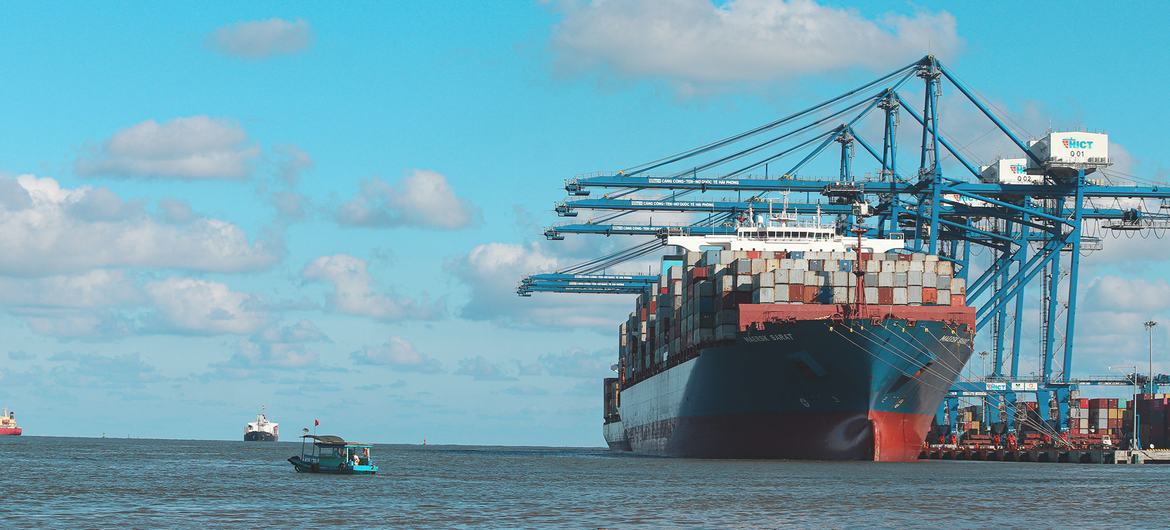
"Market conditions change," Mr. Hookham said. "While the goods are on their journey, which might take several days, you may find a buyer willing to pay a better price somewhere else."
Under the new system, he said, those goods could be sold mid-journey to a buyer in, say, Azerbaijan, changing the destination en route.
"It's almost like crossing out the address on an envelope after it's already been mailed."
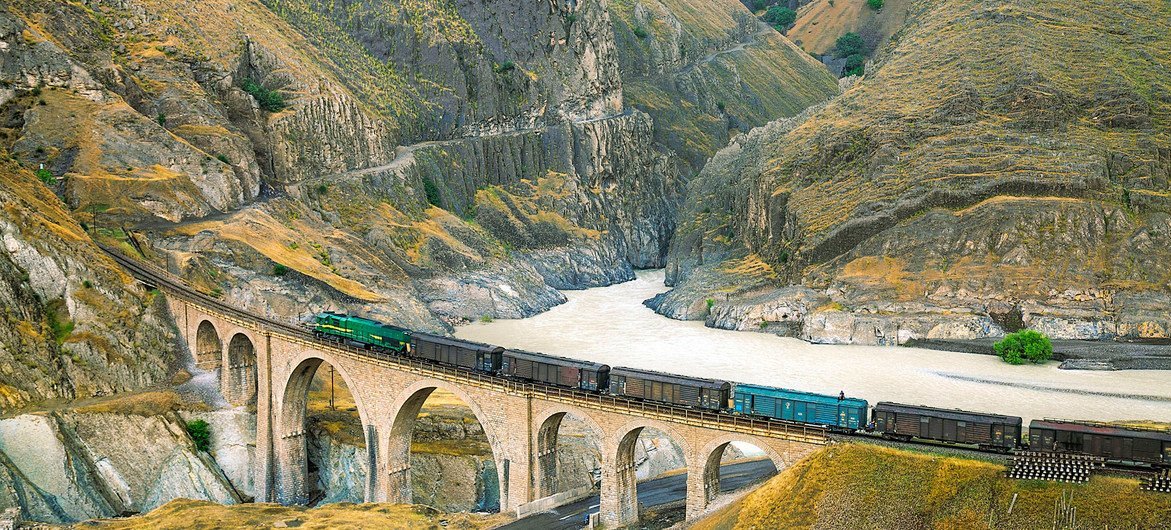
The goods heading to Paraguay by boat could be taken by plane to Istanbul, Türkiye, and then put on a train to Azerbaijan - none of which could be done under today's restrictions.
Wide ranging benefits
This kind of flexibility is becoming essential as new trade corridors open across Central Asia, between China and Europe, and throughout Africa - often including routes serving landlocked countries.
The new convention "allows you to not just abandon the goods because they're sold by date expires," he said, adding that sources of disruption to international trade continue to multiply.
Mr. Hookham noted the negative impact of recent tariffs turmoil and unexpected extreme weather events - such as Hurricane Melissa's recent disruption of trade routes in the Caribbean - and Red Sea cargo seizures.
If Plan A isn't going to work for you, or it's going to cost you a lot of money, this is the alternative
The convention aims to reduce risks for banks and carriers by providing clear legal rules on who owns the cargo at any point in time.
That legal certainty, Mr. Hookham said, makes banks more likely to finance deals and helps carriers avoid disputes over delivering goods to the wrong party.
"If Plan A isn't going to work for you, or it's going to cost you a lot of money, this is the alternative," Mr. Hookham said.
First to sign up?
The convention will be especially important for landlocked and developing countries, helping them integrate further into the global trading system and reduce costs.
Interest has already been expressed by African and Central Asian countries, and by major trading nations including China, which launched the process that has led to this week's breakthrough, at the UN back in 2019.
The negotiation process which included wide consultations, is an example of "effective multilateralism," Ms. Joubin-Bret underlined.
The UN General Assembly adopted the resolution supporting the convention on 15 December. A signing ceremony is planned for the second half of 2026 in Accra, Ghana.
The treaty will enter into force once ten countries ratify it.


