
As the UNESCO World Heritage Committee meets to evaluate new sites, criticism of the consequences of UNESCO status is growing. Sophie Starrenburg, assistant professor at the Grotius Centre, says UNESCO interests can conflict with local communities and put human rights under pressure.
The debate about the consequences of UNESCO World Heritage status is particularly relevant now that the UNESCO World Heritage Committee is meeting from 19 to 29 July 2026 in Busan, South Korea, to discuss the World Heritage List. Since the World Heritage Convention came into force in 1978, only three World Heritage sites have been completely removed from the list. In many places, criticism is growing over the consequences that come with UNESCO designation. In the run-up to this meeting, international media asked Sophie Starrenburg to explain and interpret the protection of cultural heritage and UNESCO's role.
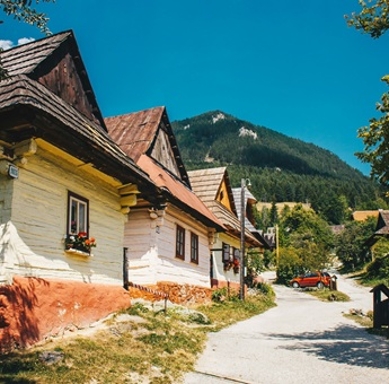
Casus Vlkolínec
One example is Vlkolínec, a mountain village in Slovakia that is on the World Heritage List, but whose residents are advocating for its removal because of the effects of UNESCO status. The village is famous for its exceptionally well-preserved traditional wooden houses.
Residents argue that UNESCO status has turned their village into an open-air museum. They point to overtourism, while the economic benefits for villagers have remained limited in their view. They also experience strict restrictions imposed by UNESCO protection rules on renovations and the daily use of their homes, because the historical authenticity of the village must be preserved.
The residents are therefore calling for greater participation and a better balance between heritage protection and quality of life. Starrenburg adds that in such painful situations, people get the feeling that their daily lives must give way to the interests of an international body that feels far removed from them.
'Human rights are still often subordinate to the interest of protecting the cultural value of heritage.'
A UNESCO designation is quite exceptional and not easily lost, even when local communities deliberately seek that outcome. If UNESCO receives information indicating that the standards are no longer being met, it can send a group of experts to monitor the situation on site. If the situation does not improve, the World Heritage Committee can vote at its annual meeting to remove the site from the list. Starrenburg argues that dialogue should take place before reaching that point.
UNESCO has limited powers
Finding a balance between the advantages and disadvantages of listing cultural heritage has been a challenge for cultural heritage treaties since their inception. 'For a long time, human rights played no explicit role in these treaties, and even today they are still often considered subordinate to the interest of protecting the cultural value of heritage.'
According to Starrenburg, UNESCO's ability to intervene is also limited. The organisation can provide technical and financial support for the protection of world heritage, but it has few means to supervise how national governments deal with the interests of local communities. Everyone is aware of the shortcomings, but the possibilities to change the system are limited.
More participation for a better balance
Precisely because UNESCO itself has only limited possibilities to safeguard the interests of local communities, Starrenburg believes that the solution is greater emphasis on participation. According to UNESCO guidelines, local communities should be involved in the nomination and management of World Heritage sites.
In practice, however, local populations have little influence, especially regarding the management of heritage sites that have been on the World Heritage List for a long time. According to the scholar, participation is often little more than a formality, because the conditions and the final outcome have effectively already been determined in advance.
'Residents should be involved more intensively and given greater influence over decision-making.'
Starrenburg finds it disappointing that World Heritage status does not always benefit the people who have maintained the heritage for generations. Local residents have preserved the value of these heritage sites and deserve greater respect for doing so. She therefore argues that 'residents should be involved more intensively and have a greater say in decision-making.' Only when their interests are taken into account from the very beginning can a better balance be achieved between heritage protection and quality of life.
The World Heritage List continues to grow
The continued growth of the World Heritage List only exacerbates these problems. States often oppose the removal of sites because they see it as a form of punishment. Yet the list cannot continue to grow indefinitely.
For UNESCO, it is difficult to keep tabs on what is happening at all these locations, and this becomes even more challenging as more sites are added. We also need to accept that the character of a place changes over time. 'The fact that a site is not on the World Heritage List does not mean that it has no value.'
For the residents of Vlkolínec, the outcome will have to wait. Despite extensive media attention, the mountain village is not on the agenda for the upcoming meeting of the World Heritage Committee in Busan.
The UN organisation UNESCO's World Heritage programme includes the world's most remarkable buildings, areas, and natural sites. These locations are unique and have outstanding cultural, historical, or natural value, making them significant for all humanity. By carefully managing and protecting this heritage for future generations, we continue to have the opportunity to learn about the heritage of others. This contributes to greater understanding, appreciation, and mutual respect. There are nearly 1,250 World Heritage sites worldwide, 13 of which are in the Netherlands, including Kinderdijk.


