
Key points
- A new paper examines three case studies of applying virtual fencing in commercial mixed cropping farms in southern Australia.
- It found virtual fencing successfully contained cattle within designated areas in cropping paddocks, with digitally mapped grazing boundaries able to be reshaped and moved to reflect crop condition and soil variability.
- The study identifies opportunities for virtual fencing to benefit both cropping and grazing production as well as soil protection in mixed systems.
On mixed cropping farms, grazing decisions rarely stay fixed for long. Crop damage, shifting soil conditions and seasonal risk can all force boundaries to move – sometimes at short notice, and within the same paddock.
Virtual fencing uses GPS-enabled collars to create digital boundaries, guiding livestock using audio cues and behavioural learning rather than physical fences. What role could it play in helping farmers – and livestock – adapt to the complexity of mixed farming systems?
"More than half of Australian grain growers still run livestock – mostly sheep, but also cattle – and managing grazing precisely in large cropping paddocks is difficult," said Dr Rick Llewellyn, Senior Principal Research Scientist with CSIRO.
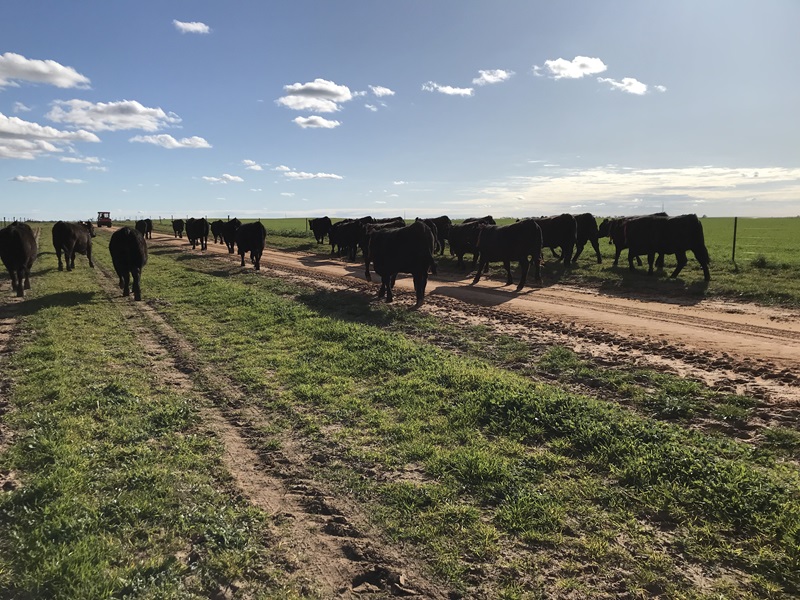
"That's why there's so much interest in technologies like virtual fencing. These studies are a stepping stone towards applying virtual fencing in mixed farming systems, using cattle as an entry point."
The adoption of virtual fencing is on the rise across Australia , supported by recent regulatory changes in states including New South Wales, South Australia and Victoria. But until now, most research and on-farm use has focused on pasture-based systems.
Virtual fencing has also shown promise in dual purpose cropping, where crops such as canola can offer grazing value before being set for grain production. These trials, however, asked a harder question: could the same level of control be achieved inside active cropping paddocks, where boundaries may need to shift frequently and margins for error are far smaller?
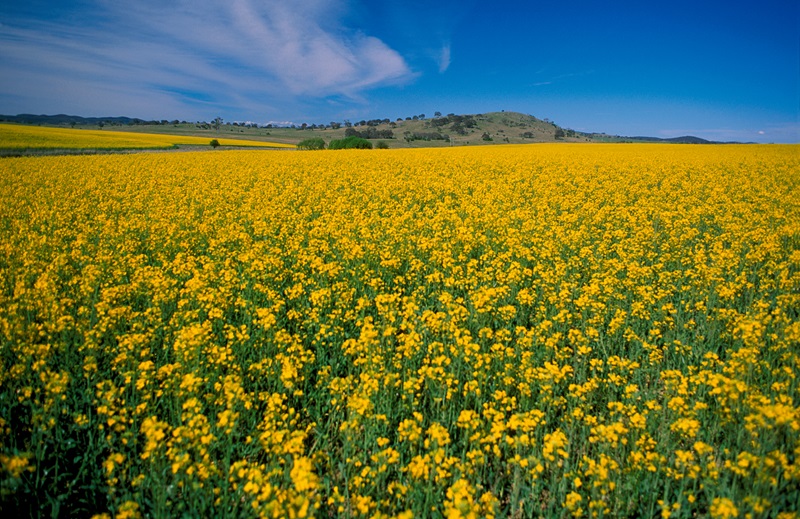
The question comes at a time of significant land-use change in Australian mixed farming. Recent analysis suggests nearly 900,000 hectares of grazing land have shifted into cropping in the past two years , highlighting the economic drivers pushing more land toward crop production.
The study, funded by the Grains Research and Development Corporation (GRDC), Australian Wool Innovation (AWI) and CSIRO, builds on more than a decade of CSIRO research into virtual fencing and animal behaviour. The research team includes Jackie Ouzman, Rick Llewellyn, Dana Campbell, Caroline Lee, Damian Mowat and Jim Lea.
The paper Applying virtual fencing technology for grazing and crop management: three case studies with cattle in southern Australian mixed farming systems , published in the journal Animal Production Science, examines how virtual fencing performs inside commercial mixed cropping paddocks.
Testing virtual farming in mixed crop systems
The study is among the first to test virtual fencing in commercial mixed farming operations. Across three South Australian case studies, researchers used pre-commercial eShepherd® virtual fencing to control grazing pressure within active cropping paddocks.
The trials were conducted on commercial properties at Long Plains, Heath and Pinnaroo, in collaboration with producers Peter Cook and Amanda Nickolls. Technical support was provided by the Gallagher eShepherd® team, with additional support from Mallee Sustainable Farming Inc .
The question was not simply whether cattle could be contained, but whether virtual fencing could operate as a practical management tool in mixed farming systems, where grazing decisions are closely tied to cropping potential, soil variability and seasonal conditions. Could targeted grazing, for example, be used to improve weed control or optimise groundcover to reduce erosion risk?
Central to that challenge was flexibility – whether digital boundaries could be reshaped and moved frequently to suit different grazing objectives.
"The boundaries weren't static," said Jackie Ouzman, Senior Research Technician with CSIRO. "Across the trials we moved from simple straight strip fence lines to more complex, contoured boundaries, and showed that the technology and the livestock can manage that level of complexity."
Virtual fencing successfully restricted cattle to designated areas, allowing grazing pressure to be concentrated where it was needed – such as for weed control – while protecting more vulnerable parts of the paddock from overgrazing or crop damage.
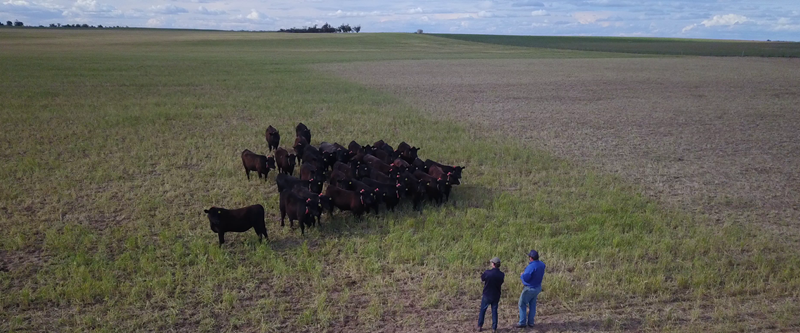
Grazing cattle inside cropping paddocks
Mixed crop–livestock systems are common across southern Australia, but they present particular challenges. The research team worked on commercial crop–livestock farms in the Adelaide Plains and southern Mallee of South Australia over three years. Each trial involved 40 to 60 cattle grazing within cropping paddocks under different management objectives.
A key finding of the study was how quickly cattle adapted to the virtual fencing system. In the dual-purpose crop grazing trial that involved the most complex and frequent fencing shifts, 95 per cent of boundary interactions involved animals responding to the audio cue alone, without receiving a mild electrical pulse.
"This audio-only response is a clear indicator that animals are learning the system," said Dr Caroline Lee, Senior Principal Research Scientist with CSIRO.
"They're associating the sound with the boundary and adjusting their behaviour accordingly."
The results align with previous research showing that cattle learn virtual boundaries over time, with differences between individual animals. Herd behaviour also played a role, with cattle responding not only to their own cues but to the reactions of nearby animals.
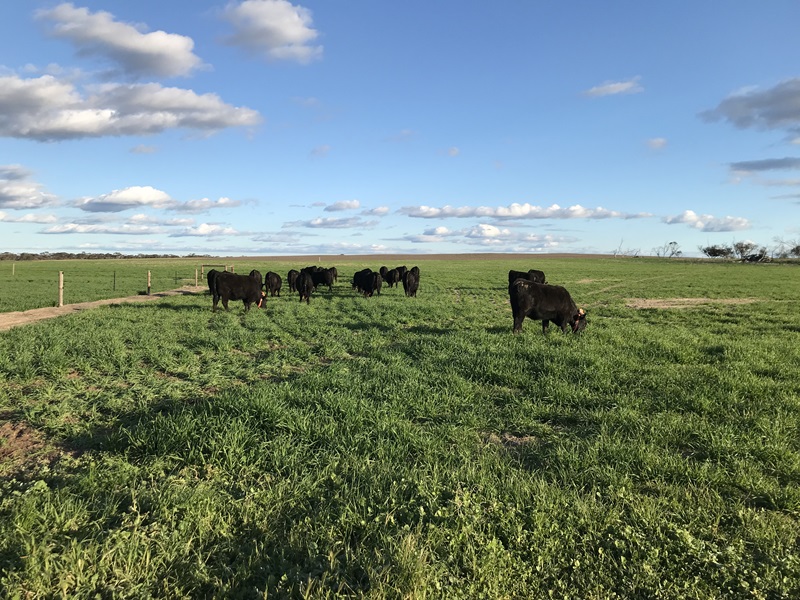
"The animals adjusted quickly and began responding to the audio cues," Dr Lee added. "Within the first few days – depending on how often they interacted with the boundary – most cattle were responding to the sound alone."
The trials also highlighted limitations. At one site, containment was reduced when some heifers were in heat and bulls were present in a neighbouring paddock, demonstrating how strong social drivers can temporarily override virtual boundaries. They also highlighted the need to consider water source management if the full potential of dynamic virtual fencing is to be achieved.
"That's an important reminder that this is a management tool, not a set-and-forget solution," said Dr Dana Campbell, Senior Research Scientist with CSIRO.
"Understanding animal behaviour and paddock context remains critical."
Impacts on pasture and groundcover
While cattle containment was consistently achieved, grazing outcomes varied between sites.
"One trial focused on grazing areas that wouldn't be harvested because they were frost- or weed-damaged. Another used heavier grazing for weed management after a hay crop was taken off. The third looked at short-term grazing before a crop was set aside to grow through to maturity and harvest – giving farmers a way to graze safely without damaging the crop," Dr Llewellyn explained.
"What virtual fencing gives you is more control," he said. "How that control translates into crop or pasture outcomes depends on how it's used and the conditions it's used in."
At the Pinnaroo sites, where front and back virtual fences were shifted frequently, the technology helped maintain more even biomass cover across large, variable paddocks – including retention of groundcover on erosion-prone sandy rises. In frost-affected crop areas, targeted grazing allowed cattle to utilise otherwise unproductive sections without compromising the rest of the paddock.
In many mixed systems, grazing has to stop for the whole paddock because one area becomes too vulnerable. These trials show how virtual fencing could allow better utilisation at the whole-paddock level.
What this means for mixed farming in Australia
The implications extend beyond cattle. Sheep remain the dominant livestock species in most mixed farming regions, and the researchers note that similar benefits could be realised if cost-effective virtual fencing systems are developed for sheep.
"There's growing interest from producers in how this technology could fit into mixed farming and our other trial work has shown that sheep have the potential to learn and be managed just as well as cattle if the right sheep technology can be developed," Dr Campbell said. "What this research does is provide real-world evidence of where it works, where it struggles, and what questions need to be explored next." The potential application for this exciting technology has grown even further with the recent news that SA, NSW and Victoria will join other Australian states in allowing the commercial use of virtual fencing technology by farmers.


