The microbat exclusion process is underway in West Dapto Road.
Key points:
- Steps are underway to exclude the microbats roosting in a culvert on West Dapto Road.
- A pre-exclusion inspection confirmed at least 20 microbats (and possibly as many as 25) were in the culvert.
- Council is committed to keeping the community updated on the project and timeframes, once known, for reopening to traffic.
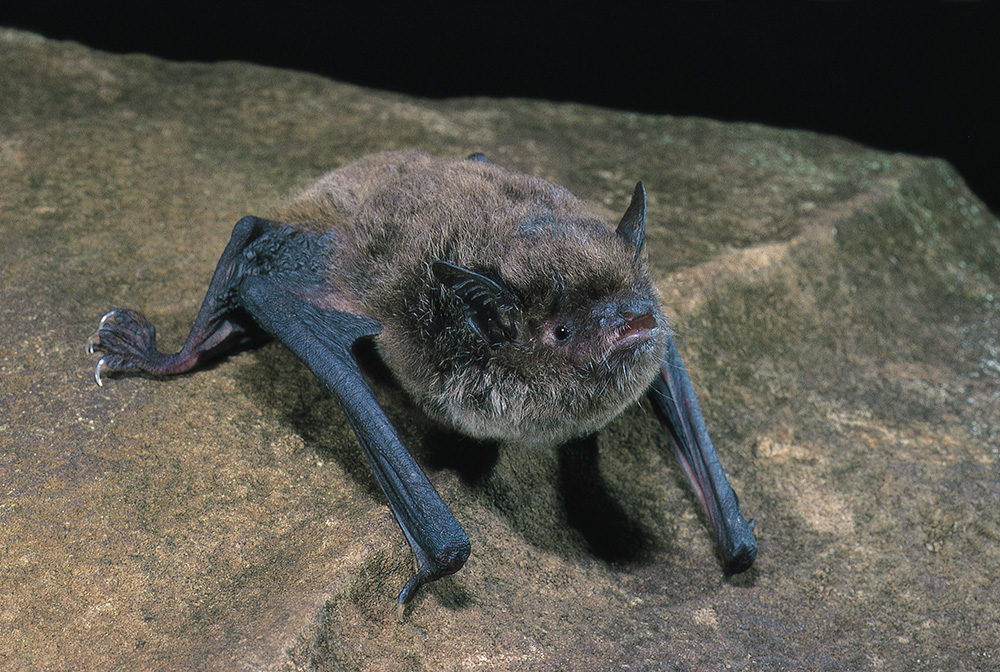
Above image: A Southern Myotis microbat. Photo by Pavel German / DCCEEW
Steps are underway to exclude the Southern Myotis microbats, who are roosting in a culvert on West Dapto Road.
The exclusion process has started following confirmation from an ecologist that overnight temperatures had met the condition within the NSW Department of Climate Change, Energy, the Environment and Water-issued threatened species licence.
A pre-exclusion inspection confirmed at least 20 microbats (and possibly as many as 25) were in the culvert. At least two of the tiny mammals have left the structure since the exclusion started at the end of last week.
"We are very well aware that this project has caused significant upset and disruption to the community, and while work has continued onsite around the microbat zone, this feels like a real step forward towards the reopening of West Dapto Road to traffic,'' Lord Mayor of Wollongong Councillor Tania Brown said.
"We know the news that the weather conditions are allowing for us to start excluding the microbats is positive. However, we do not yet have a definitive timeframe on when this will be completed. This means we also don't have a clear answer yet on when the road will reopen to traffic. I can assure the community as soon as we have an indicative timeframe, we will provide an update.''
Southern Myotis microbats are a threatened species under the NSW Biodiversity Conservation Act and they typically live in heavily wooded areas, but in areas undergoing urbanisation, they can be found in bridges and culverts, particularly through winter hibernation.
Council cannot forcibly remove the threatened species and the exclusion process involves monitoring the site, and sealing any gaps at nighttime once the microbats leave to forage. It's a gradual process, as the microbats come out of their winter hibernation and overnight temperatures are above 12 degrees.
"We don't have a definitive timeframe on when the microbats will leave the culvert but, as conditions warm up and they come out of hibernation and leave to collect food, the site will be closely monitored and exclusion steps will continue,'' Cr Brown said.
"We've already got alternative habitat sites in areas right near the structure to make it easy for them to find a home away from the culvert site.''
Away from the culvert, works are progressing at the site with the project now about 82 per cent complete.
"We, like the community, want to see this road reopened to traffic as soon as possible and we're doing everything we can to make this happen,'' Cr Brown said.
"I want to be clear – reopening the road to traffic isn't about finishing the project in its entirety and having a ribbon cutting ceremony. This is about getting it to a point where vehicles can safely drive through the site while works are able to continue in the area to complete this project.''
Works now completed include the relocation of all high voltage electrical services, gas, potable water and NBN infrastructure, while placement of the lower and upper layers of pavement and kerb and gutter installation has started at the western end.
Roundabout construction has also started, and piling works in preparation for the installation of the pedestrian bridge were recently completed.