
With El Niño firmly established and expected to strengthen further through February 2027, governments, communities, and partners are intensifying efforts to manage the impacts.
El Niño and La Niña are opposite phases of a naturally occurring climate pattern known as the El Niño-Southern Oscillation (ENSO), involving fluctuating ocean temperatures in the central and eastern equatorial Pacific, coupled with changes in the overlying atmosphere. Specifically, El Niño is characterized by unusually warm ocean surface temperatures in the central and eastern Pacific.
WMO has stepped up support across its 194 Members in response to El Niño. WMO quarterly El Niño/La Niña Updates and monthly Global Seasonal Climate Updates guide early action by tracking El Niño and other climate drivers. Regional Climate Outlook Forums help national weather and water services tailor forecasts for decisionmakers, while the WMO Coordination Mechanism provides expert advice for humanitarian preparedness and early action.
WMO projects are a critical part of the El Niño efforts. Projects allow for implementation at the regional and national levels, enabling authoritative warnings and advisories to be shared in a timely manner to enable informed decision-making and action. Across Africa, Asia, the Caribbean, and the Pacific regions, WMO-supported initiatives have been providing operational, technical, and institutional support to enhance preparedness and early action. The following is a scan across the regions on what WMO projects are accomplishing in the context of El Niño.
Strengthening national institutional resilience in Cabo Verde
In Cabo Verde, WMO support is strengthening Cabo Verde's preparedness for, and response to, El Niño by enhancing the country's capacity to produce, share and use timely weather and climate information. Support to Cabo Verde's National Institute of Meteorology and Geophysics (INMG) includes launching its new website, improving data exchange, facilitating access to global forecasting products, and disseminating forecasts and alerts in Common Alerting Protocol (CAP) format. These improvements strengthen the national multi-hazard early warning system (MHEWS) and provide decisionmakers with more timely, accessible and actionable information for El Niño preparedness and response.
Through the CREWS Accelerated Support Window Cabo Verde project , the country developed and validated a national MHEWS roadmap with time-bound actions to deliver early warnings for all. This has been supported by two national resolutions, one establishing the MHEWS national coordination mechanism and the other rolling out the implementation of the MHEWS national roadmap.
The project is also strengthening the institutional foundations needed for sustainable MHEWS delivery. This includes developing INMG's new National Strategic Plan, Human Resources Plan and Capacity Improvement Plan, as well as exploring a socio-economic assessment to demonstrate the value of its services, advocate for increased resources and raise the institution's visibility.
Beyond INMG, the project is helping secure high-level political support for MHEWS and enabling the development and validation of a national Early Warnings for All roadmap. By bringing together relevant ministries and sectors, the roadmap will establish a coordinated, whole-of-government approach to strengthening MHEWS, including preparedness for and response to El Niño and other climate-related hazards.
Strengthening drought preparedness and water resilience in Cambodia & Lao PDR
In Southeast Asia, WMO-supported activities are helping Cambodia and Lao PDR strengthen resilience to one of the most common consequences of El Niño: drought.
Through the CREWS-funded project , both countries are developing National Integrated Water Resources Management Plans and National Action Plans on Drought Management and Adaptation for 2025-2030. These initiatives seek to integrate water management, land-use planning and climate information into coherent national strategies that support sustainable water resource management and climate resilience.
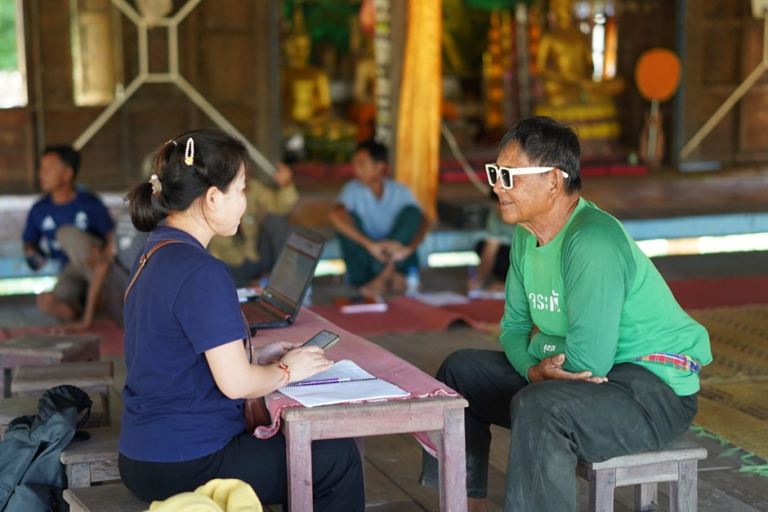
The drought action plans are designed to strengthen national capacity to assess, manage and reduce drought risks while improving long-term adaptation to increasingly variable climate conditions. By providing structured frameworks for decision-making, these plans support sectors such as agriculture, water supply and rural development that are particularly vulnerable to El Niño-related rainfall deficits.
Seasonal Monsoon Forums supported in both countries further strengthen preparedness. The wet-season forum was held in May 2026, while a dry-season forum is scheduled for November 2026, providing opportunities for forecasters, decisionmakers and sectoral users to examine seasonal outlooks and plan accordingly.
Advancing multi-hazard early warning systems in the Caribbean
The Caribbean region faces a complex mix of hydro-meteorological hazards that can be influenced by El Niño, including drought, heat stress, wildfire risk and changes in tropical cyclone activity.
Through the CREWS Caribbean 2.0 project and related regional initiatives, WMO is helping countries improve forecasting capabilities, warning dissemination and regional coordination.
A major milestone is the regional workshop on Impact-Based Forecast and Warning Services (IBFWS) and the Common Alerting Protocol, held in Trinidad and Tobago in May 2026. The workshop brought together NMHSs, disaster management agencies and other stakeholders to strengthen practical application of impact-based forecasting and warning dissemination. Particular emphasis was placed on improving communication to vulnerable and last-mile communities.
At the same time, significant progress has been made in strengthening regional meteorological data exchange. The Caribbean WIS 2.0 Complementary Training Workshop equipped specialists from 16 NMHSs with the skills required to configure WIS 2.0 systems, automate data sharing and publish operational meteorological datasets. Enhanced data exchange is critical for improving regional forecasting accuracy and supporting early warning services during climate extremes.
Operational forecasting capacity is also being strengthened through the Severe Weather Forecasting Programme (SWFP)-Caribbean. During the June 2026 Operational Testbed Workshop in Barbados, forecasters from across the region participated in simulations, case studies and operational exercises. The workshop also established an operational coordination mechanism linking forecasting centres and national focal points, creating a stronger framework for coordinated action during severe weather events.
The region continues to promote preparedness through broader stakeholder engagement. Youth awareness initiatives gained international recognition through the Caribbean Lightning Safety Awareness Contest, which was highlighted in the COPE Disaster Champions publication as an example of disaster preparedness education for children.
Together, these initiatives are helping Caribbean countries transform regional climate and weather information into coordinated national action before hazards materialize.
Enhancing water security and early warnings across Pacific island states
Pacific Small Island Developing States (SIDS) are highly vulnerable to El Niño impacts, particularly prolonged drought, water shortages and disruptions to agriculture and livelihoods.
Through the Scale Up Inclusive Early Warning and Action in the Pacific (CREWS SIEWAP) project and the Drought Resilience and Early Warning (DREW) Pacific project, WMO is supporting various countries and territories in the Pacific to strengthen preparedness and resilience.
National Climate Outlook Forum (NCOF) support has been provided for Papua New Guinea and Tokelau, enabling them to interpret seasonal forecasts and develop context-specific preparedness measures ahead of expected climate impacts.
The project are also supporting the development of Drought Management Plans across participating countries, helping establish structured approaches for drought preparedness, monitoring and response.
Regional collaboration remains a cornerstone of implementation. Support to the Pacific Islands Climate Outlook Forum (PICOF), the Samoa Groundwater Strategy and community-based early warning activities in the Federated States of Micronesia are helping strengthen climate services and water security across the region.
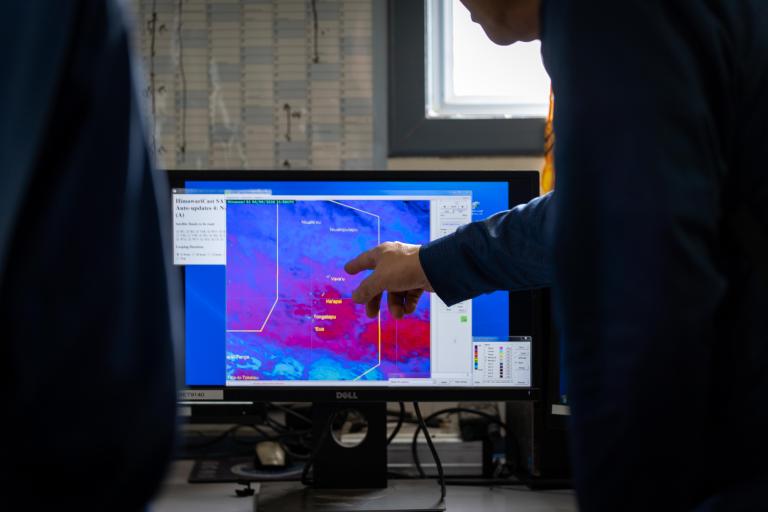
In Vanuatu, community-level resilience measures are demonstrating tangible results. High-resolution impact data collection has been completed across Epi, Ambae and Santo islands, public awareness materials have been produced, peer-review arrangements established and community-based water tank projects implemented ahead of schedule. These interventions help communities better understand local climate risks while improving access to water during drought periods associated with El Niño conditions.
Turning warnings into early action
The global El Niño response highlights the importance of connecting climate science with practical implementation.
From strengthening national meteorological services in Cabo Verde, to drought planning in Southeast Asia, operational forecasting in the Caribbean and water resilience initiatives across the Pacific, WMO projects are helping countries ensure that authoritative climate information reaches those who need it most.
NMHSs are critical to El Niño preparedness and response. As the authoritative source of weather, climate and water information, NMHSs provide the forecasts, warnings, and climate services that enable governments, humanitarian organizations, businesses, and communities to act ahead of hazardous events.
However, forecasts alone do not save lives. Effective preparedness requires NMHSs to work closely with disaster management authorities, sectoral ministries, humanitarian partners, the private sector and local communities to translate climate science into informed decisions and early action.
This collaborative approach lies at the core of the Early Warnings for All (EW4All) initiative. EW4All brings together the diverse investments, partnerships, programmes and technical efforts needed across the entire MHEWS value chain, from risk knowledge, observations and forecasting, to warning dissemination, preparedness and early action. El Niño preparedness and response has been bolstered thanks to the progress on EW4All.


